
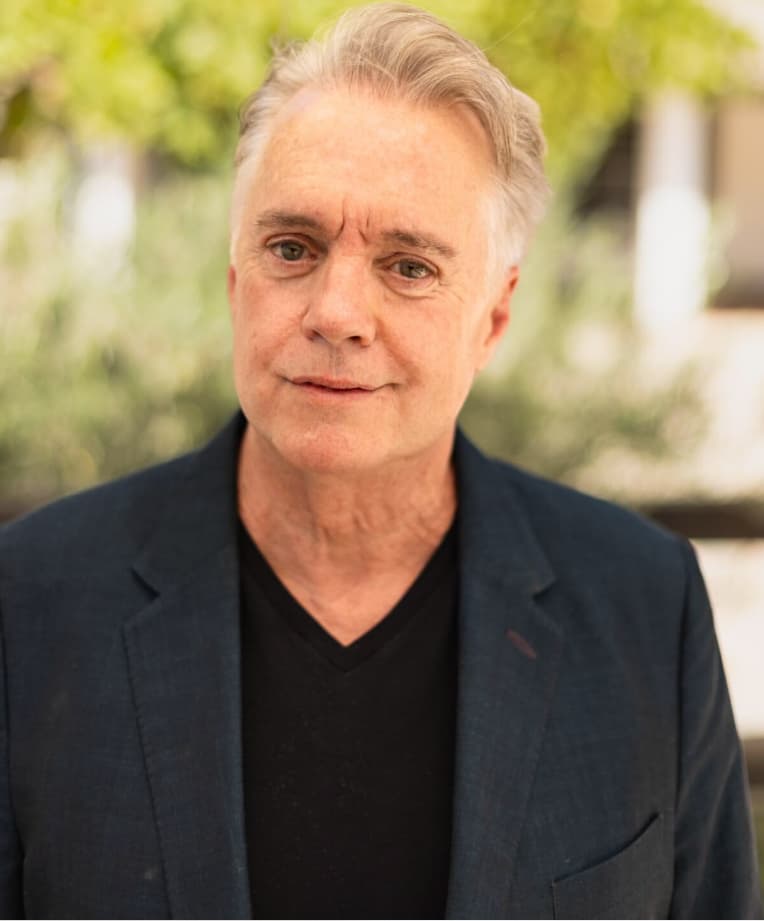
A tender revival of longing and timeless romance—“Unchained Melody” reborn through a heartfelt live performance that bridges generations and memories.
When Shaun Cassidy stepped onto the stage at City Winery Boston on New Year’s Eve, few could have predicted just how deeply his rendition of “Unchained Melody” would resonate. Originally immortalized by The Righteous Brothers in 1965, the song had already secured its place in the canon of timeless ballads—reaching No. 4 on the Billboard Hot 100 that year and becoming one of the most beloved love songs of the 20th century. Written by Alex North and Hy Zaret in 1955, it was first composed for the prison film Unchained, yet its meaning has long transcended that origin, evolving into a universal expression of longing, separation, and emotional devotion.
By the time the Righteous Brothers recorded their now-legendary version—featuring the soaring, almost spiritual lead vocal of Bobby Hatfield—the song had already been interpreted multiple times. But it was Hatfield’s voice that gave it an almost sacred dimension. Decades later, the song found renewed life in 1990 when it was prominently featured in the film Ghost, once again climbing charts worldwide and reawakening its emotional power for a new audience.
It is within this rich historical tapestry that Shaun Cassidy’s performance must be understood. Known in the late 1970s as a teen idol with chart-topping hits like “Da Doo Ron Ron,” Cassidy was once more associated with youthful exuberance and pop sensibilities than with deeply introspective ballads. His albums—particularly “Shaun Cassidy”—enjoyed tremendous commercial success, with multiple singles reaching the Billboard Top 10. Yet as the years passed, Cassidy gradually stepped away from the spotlight, eventually reinventing himself as a respected television writer and producer.
That is precisely why this live performance feels so quietly profound. There is no longer any need to prove anything—only to feel, to remember, and to share. His interpretation of “Unchained Melody” is not an attempt to rival the original, but rather a gentle conversation with it. The voice, now seasoned by time, carries a different kind of weight. Where Hatfield soared, Cassidy reflects. Where the original cried out in youthful yearning, this version lingers in memory—softened, yet perhaps even more poignant.
The setting itself—an intimate venue on the threshold of a new year—adds another layer of meaning. New Year’s Eve has always been a moment of reflection, a quiet turning of pages. In that context, a song like “Unchained Melody” becomes something more than a love song. It becomes a meditation on time itself: on what has been lost, what has endured, and what continues to echo in the heart long after the moment has passed.
There is also something deeply human in the way Cassidy approaches the song. He does not overreach vocally, nor does he attempt to recreate the grandiosity of earlier renditions. Instead, he allows the melody to breathe, trusting its inherent beauty. This restraint, often overlooked in contemporary performances, recalls an earlier era of musicianship—when emotion was not forced, but revealed gradually, almost reluctantly.
In revisiting a song so closely tied to the past, Cassidy invites listeners to revisit their own histories as well. The lyrics—simple, almost unassuming—carry an emotional universality that few compositions achieve. “Oh, my love, my darling…”—these are not merely words, but echoes of moments lived and felt, perhaps long ago, yet never entirely gone.
In the end, this performance is not about reinvention, but remembrance. It reminds us that great songs do not age—they evolve alongside us. And in the hands of an artist willing to approach them with humility and sincerity, they can still speak, perhaps more softly than before, but with a clarity that time itself has refined.