
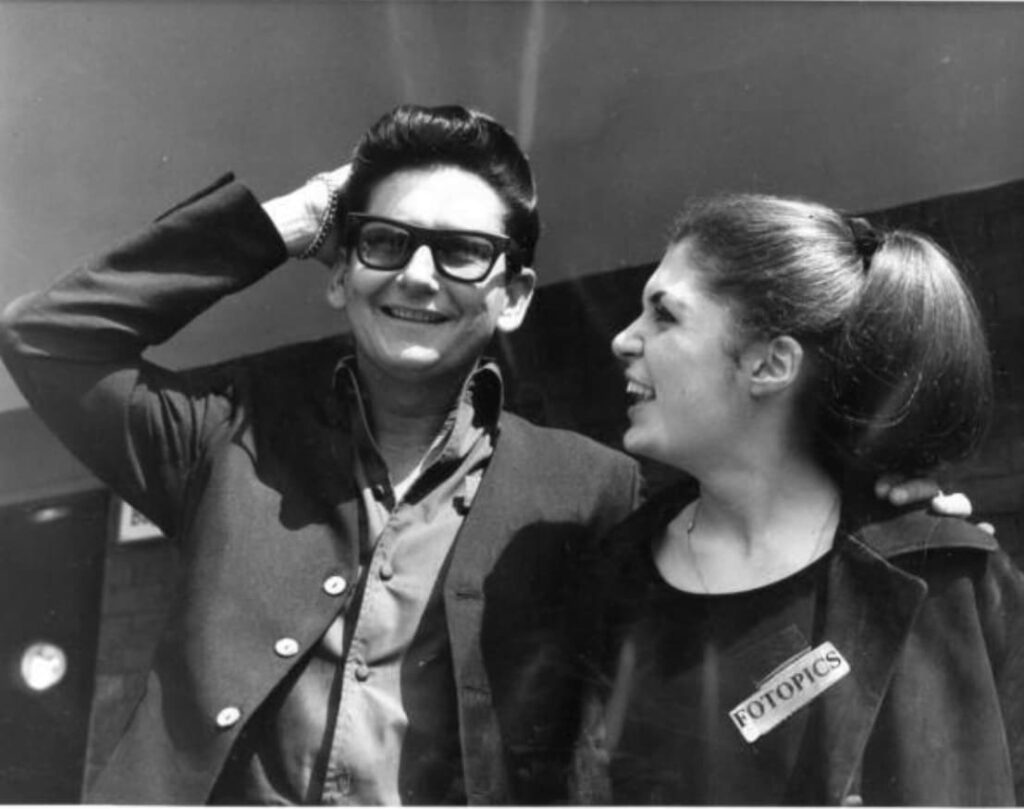
A Timeless Duet of Heartbreak and Redemption That Transcends Generations
Few songs in popular music carry the emotional weight and quiet devastation of “Crying”, and fewer still have been reborn with the same haunting power as the duet between Roy Orbison and k.d. lang. Originally written and recorded by Roy Orbison in 1961, the song climbed to No. 2 on the Billboard Hot 100 and became one of his defining hits during his golden era with Monument Records. Decades later, in 1987, Orbison revisited the song in a remarkable duet with k.d. lang for the soundtrack of the film Hiding Out. This version earned them a Grammy Award for Best Country Collaboration with Vocals in 1989, introducing the song to a new generation while preserving its fragile, aching soul.
The story behind “Crying” has always carried an air of quiet mystery. Orbison himself often spoke of its deeply personal nature, though he never fully disclosed the real-life inspiration. Like many of his finest works, the song feels less like a narrative and more like an emotional confession—an unguarded moment where pride collapses and vulnerability takes over. Written during a time when Orbison was crafting a unique identity—melding operatic vocals with rock and roll sensibilities—the song stood apart from the upbeat trends of the early 1960s. It dared to linger in sorrow, to stretch a single emotional moment into something almost cinematic.
In its original form, “Crying” is built on restraint. Orbison’s voice begins softly, almost conversational, before gradually rising into that unmistakable falsetto—an emotional release that feels both inevitable and overwhelming. By the time he reaches the final crescendo, the listener is no longer simply hearing a song; they are witnessing a man come undone. That was Orbison’s rare gift—he didn’t just sing heartbreak; he embodied it.
The 1987 duet with k.d. lang adds an entirely new dimension. Where Orbison’s original performance feels solitary, this version becomes a shared lament. Lang’s voice—clear, controlled, and deeply expressive—intertwines with Orbison’s like a second heartbeat. She does not attempt to overshadow him; instead, she meets him in that emotional space, amplifying the sorrow without ever tipping into excess. Their voices rise together in the climactic passages, creating a moment that feels almost sacred, as if two souls are confessing the same pain from different lifetimes.
What makes this duet especially poignant is the context in which it was recorded. By the late 1980s, Roy Orbison was experiencing a long-overdue resurgence in his career, collaborating with artists who had grown up admiring him. His participation in the supergroup Traveling Wilburys and projects like this duet reminded the world of his singular voice. Meanwhile, k.d. lang, still early in her career, approached the collaboration with a deep reverence for Orbison’s artistry. Their partnership felt less like a commercial endeavor and more like a passing of emotional truth between generations.
Lyrically, “Crying” speaks to a universal human contradiction—the desire to appear strong in front of someone who once held your heart, only to break down the moment they are gone. Lines about smiling through the encounter, pretending indifference, and then succumbing to tears capture a kind of emotional honesty that rarely fades with time. It is not dramatic heartbreak; it is quiet, private sorrow—the kind that lingers long after the world has moved on.
There is also something profoundly dignified about the song. It does not beg for sympathy or resolution. Instead, it allows the listener to sit with the feeling, to recognize themselves in that moment of weakness. That is why “Crying” has endured for over half a century—it does not belong to any one era. It belongs to anyone who has ever tried to hide their pain and failed.
Listening to the duet today, one cannot help but feel a sense of continuity—of music as a living, breathing memory. The voices of Roy Orbison and k.d. lang do not merely perform a song; they preserve a feeling, suspended in time. And in that suspended moment, we are reminded that some emotions never age—they simply wait for the right voice to bring them back to life.