
“I’m Not Your Stepping Stone”: A Timeless Cry for Self-Respect in the Midst of Sixties Turmoil
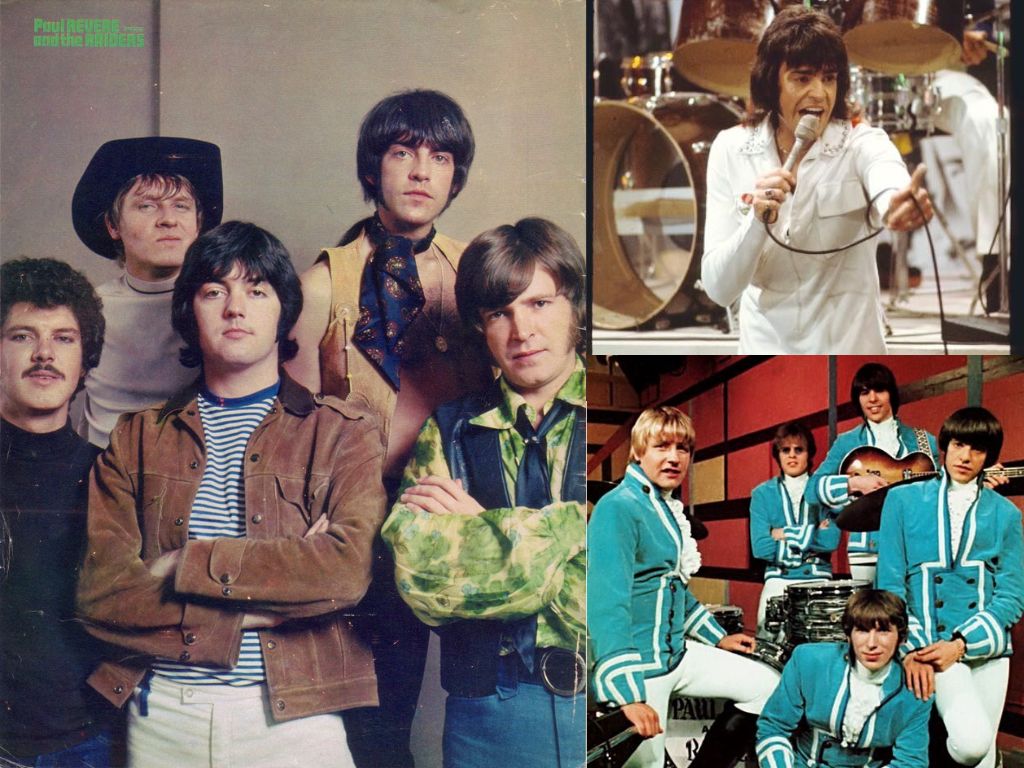
Ah, the mid-1960s. A time of seismic shifts, weren’t they? The world felt like it was spinning faster, and the music, oh, the music kept pace, sometimes even setting the rhythm for the cultural revolution unfolding around us. And few bands embodied that raw, unadulterated energy quite like Paul Revere & The Raiders. They were the American answer to the British Invasion, a whirlwind of colonial costumes and blistering garage rock that burst onto our television screens and airwaves.
One particular track, a snarling, defiant anthem, perfectly captured a certain independent spirit that was brewing. I’m speaking, of course, of “(I’m Not Your) Steppin’ Stone”. Released in May 1966 on their album “Midnight Ride”, this gem didn’t climb the singles chart as a standalone for Paul Revere & The Raiders; rather, the album itself peaked at a respectable number nine on the U.S. Billboard 200 albums chart. It’s worth noting that while the Raiders introduced the song to many, it was The Monkees’ version, released later in November 1966 as the B-side to “I’m a Believer,” that truly became a chart phenomenon, soaring to number 20 on the Billboard Hot 100 in 1967. This often leads to some confusion, with many recalling The Monkees’ rendition more readily, but let’s be clear: the Raiders laid down the original, gritty blueprint.
The story behind “I’m Not Your Steppin’ Stone” is one of classic Brill Building craftsmanship. It was penned by the prolific songwriting duo of Tommy Boyce and Bobby Hart, who were responsible for a string of hits for various artists, including The Monkees themselves. They originally intended the song for Paul Revere & The Raiders, and the band wasted no time in making it their own. The Liverpool Five, an English band, also recorded it earlier in 1966, but their version remained unreleased at the time the Raiders put theirs out. The song’s musical simplicity – a driving, repeating chord progression of E major, G major, A major, and C major in the verse, and a similarly direct bridge – lends itself to its raw, unpolished power. It’s a sonic punch to the gut, a testament to the no-frills, high-octane sound that defined much of garage rock.
The meaning of “(I’m Not Your) Steppin’ Stone” is laid bare with an almost brutal honesty. It’s a fiery rejection of being used, a declaration of self-worth against someone who views another merely as a means to an end. The lyrics paint a vivid picture of a person who has evolved, perhaps gained some success or notoriety, and is now attempting to discard those who helped them on their way up. “You’re trying to make your mark in society / You’re using all the tricks that you used on me,” Mark Lindsay snarls, his voice dripping with righteous indignation. It’s a sentiment that resonates deeply, whether it’s about a former lover who’s moved on to greener pastures, a climbing acquaintance who forgets their roots, or simply the universal struggle against exploitation. For those of us who came of age in the ’60s, this song spoke to a burgeoning sense of independence, a refusal to be defined or exploited by others, a desire to stand on our own two feet in a world that often tried to categorize and control.
Paul Revere & The Raiders were more than just a band; they were a cultural phenomenon. Their flamboyant, Revolutionary War-inspired costumes and energetic stage performances on shows like Dick Clark’s Where the Action Is (which they essentially became the house band for) made them household names. They were masters of blending R&B influences with the raw edge of garage rock, creating a sound that was both rebellious and undeniably catchy. “Midnight Ride”, the album on which “I’m Not Your Steppin’ Stone” first appeared, is considered by many critics to be a pinnacle of their output, also featuring hits like “Kicks.” The album was so significant that it was certified gold and even appeared in the book 1001 Albums You Must Hear Before You Die.
Listening to “(I’m Not Your) Steppin’ Stone” today, it still carries that undeniable force, that unyielding spirit. It’s a reminder of a time when rock and roll wasn’t just about catchy melodies, but about attitude, defiance, and a loud, clear voice for personal liberation. It’s a song that, much like the best memories, still crackles with life, transporting us back to those vibrant, tumultuous years when everything felt possible, and the music was the soundtrack to our awakening. And for a generation that learned to navigate a rapidly changing world, this song served as a powerful reminder: know your worth, and never let anyone walk all over you.