
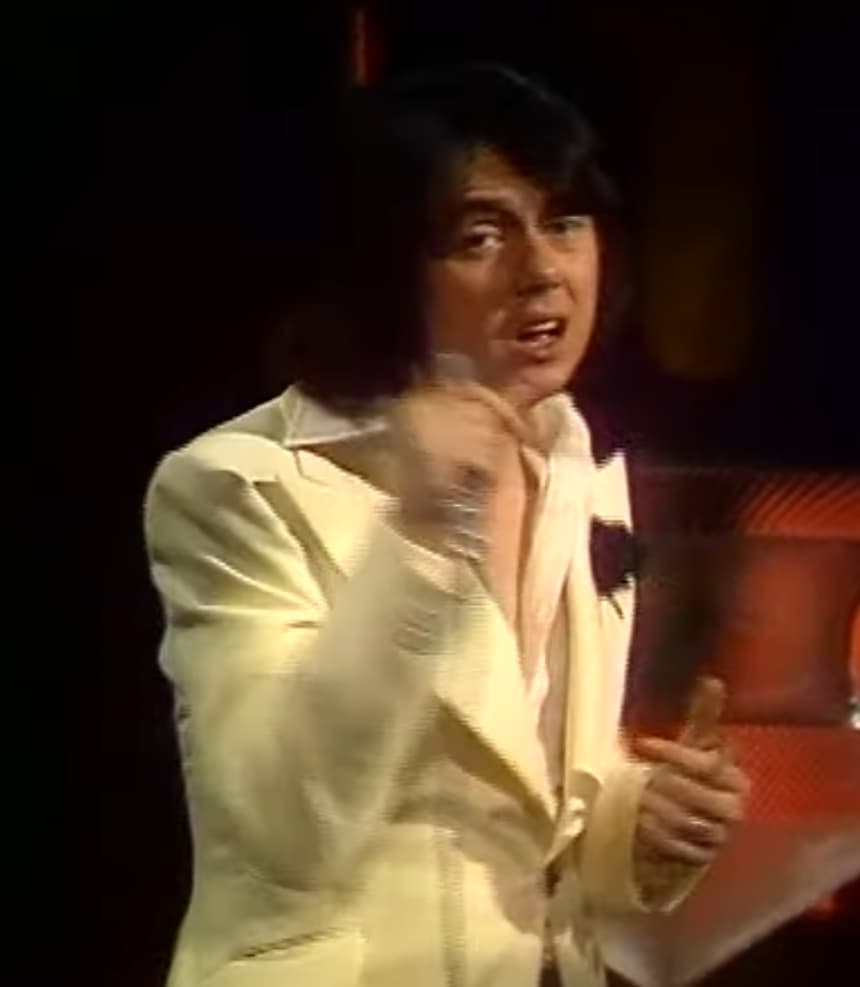
“Your Baby Ain’t Your Baby Anymore” captures the bittersweet ache of young love slipping through one’s fingers — an emotional piece that resonated with listeners across Europe in 1974 and revealed the depth of Paul Da Vinci’s soul as both a singer and songwriter.
In the deep summer of 1974, after the dizzying heights of fame that came from his unforgettable voice on The Rubettes’ international smash “Sugar Baby Love”, Paul Da Vinci stepped out on his own. With “Your Baby Ain’t Your Baby Anymore,” he offered the world a song that was more than a mere pop tune. It was a confession wrapped in melody — a vulnerable reflection on love’s impermanence, sung with a voice that carried both youthful wistfulness and the weight of real emotional experience.
Released on 7 June 1974 by Penny Farthing Records, this single became Da Vinci’s most significant solo success. In the UK Singles Chart, it climbed to No. 20, a respectable position that marked his transition from background session singer to an artist with a narrative to tell. Yet the song’s journey did not stop there — in countries like the Netherlands and Belgium, it struck an even deeper chord, reaching as high as No. 4 and No. 5 respectively, proving that its emotional message transcended language and borders.
Listening to “Your Baby Ain’t Your Baby Anymore” feels, in many ways, like revisiting a cherished memory of a dance hall lit by soft lights and filled with couples swaying close, once sure of tomorrow and now quietly unsure. Paul’s voice, familiar to many as the soaring falsetto behind Sugar Baby Love, here returns with a slightly lower register — still rich and expressive — delivering lyrics that speak to the universal truth of love’s fragility. The refrain, poignant and almost conversational, feels as though an old friend is whispering secrets across a dimly lit table.
Behind the scenes, this song symbolizes a pivotal moment in Da Vinci’s career. After declining to become an official member of The Rubettes — the group that would carry Sugar Baby Love to worldwide acclaim — Paul pursued his own artistic path. Collaborating with Edward Seago, he co-wrote and co-produced “Your Baby Ain’t Your Baby Anymore,” a decision that allowed him to express a more personal musical identity.
The track stands as a reminder that chart success is only one part of a song’s legacy. While it may not have topped the UK charts, its resonance across Europe and the emotional connection it fostered with listeners remain undiminished by time. Each note feels like a page from a diary — confessional yet melodic, wistful yet hopeful. It captured a fleeting moment in the 1970s when pop music still bore the heartfelt imprint of its creators’ own experiences and longings.
For older generations, hearing “Your Baby Ain’t Your Baby Anymore” can feel like rediscovering a dear memory: the warmth of a summer evening, the ache of a goodbye, and the unforgettable timbre of a voice that once seemed to echo from every radio and jukebox. Paul Da Vinci didn’t just record a song; he shared a feeling — the tender ache of love remembered, and the quiet hope that whatever has slipped away might someday be sweetly recalled.