
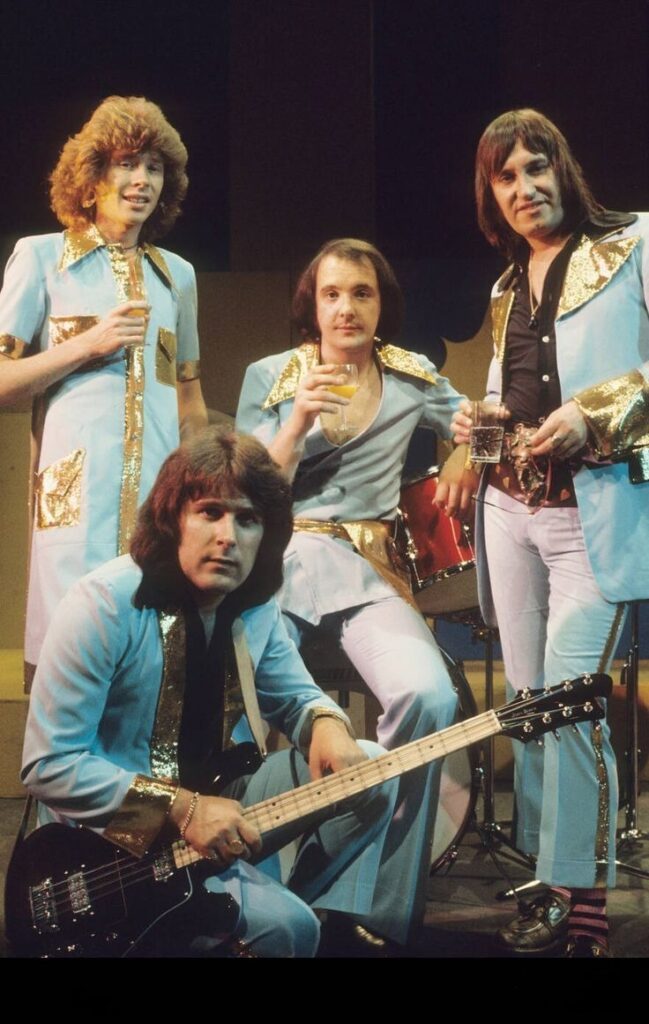
A haunting reflection on youth, war, and the fragile line between innocence and destiny
When “The Black Eyed Boys” by Paper Lace was released in 1974, it arrived quietly in the shadow of a much larger storm. The British pop group from Nottingham had just conquered the transatlantic charts with “Billy Don’t Be a Hero”, a No.1 hit in both the UK Singles Chart and the U.S. Billboard Hot 100. Inevitably, any follow-up would be measured against that towering success. Yet while “The Black Eyed Boys” did not match the global chart dominance of its predecessor, it still reached No.11 on the UK Singles Chart in mid-1974—a respectable position that confirmed Paper Lace were more than a one-hit wonder in their homeland.
Released as a single from the album “Paper Lace” (1974), the song continued the band’s collaboration with songwriters and producers Mitch Murray and Peter Callander, the same team responsible for their earlier smash. But whereas “Billy Don’t Be a Hero” dramatized the tragedy of a young soldier with almost theatrical directness, “The Black Eyed Boys” carried a subtler, almost folkloric weight. It felt like a campfire tale passed from one generation to the next—mysterious, cautionary, tinged with sorrow.
The phrase “black eyed boys” itself evokes layered imagery. On the surface, it suggests youthful mischief, boys who have seen trouble and carry its mark. But in the lyrical narrative, it hints at something deeper: the haunting transformation of innocence into hardened experience. The song tells the story of young men drawn into conflict, changed by it, and remembered not for their laughter but for the darkness in their eyes. It reflects the uneasy spirit of the early 1970s, a time when memories of World War II were still vivid in Britain, and the Vietnam War was unfolding across the Atlantic. The song doesn’t specify a battlefield; instead, it speaks in archetypes—allowing listeners to connect it with wars past and present.
Musically, Paper Lace maintained their signature blend of pop accessibility and dramatic storytelling. The arrangement is built on steady rhythms, layered harmonies, and a melodic line that lingers long after the final chord fades. There is a certain earnestness in the vocal delivery—unpolished in the most human way. Unlike the glam flamboyance of contemporaries such as The Sweet or the hard-edged rock emerging from bands like Deep Purple, Paper Lace operated in a gentler register. They told stories. They leaned into melody. They allowed sentiment to stand unapologetically at the center.
The success of “The Black Eyed Boys” in the UK—though modest compared to the band’s chart-topping hit—reinforced the appetite for narrative pop songs in the early ’70s. It belonged to a tradition that included tracks like “Run Joey Run” by David Geddes and even earlier melodramatic ballads of the 1960s. These were songs that unfolded like short films, inviting listeners to picture faces, places, and fates.
Behind the scenes, Paper Lace were navigating the unpredictable currents of pop fame. Formed in Nottingham and initially performing under different names in the late 1960s, they gained national exposure through the ITV talent show “Opportunity Knocks.” That victory opened doors—but it also set expectations. By the time “The Black Eyed Boys” climbed to No.11, the band understood that sustaining success required both consistency and reinvention. In many ways, this single represents their effort to deepen their narrative identity rather than simply replicate a formula.
What gives the song its lasting resonance is not merely its chart position or its commercial performance. It is the way it captures a universal ache—the realization that youth is fleeting, that history leaves marks, that behind every uniform or headline there is a young face once filled with dreams. The “black eyes” become a metaphor for experience too heavy for innocence to bear.
Listening to “The Black Eyed Boys” today, one is struck by its quiet sincerity. There are no ironic winks, no studio excesses. It belongs to a time when storytelling in pop music could still carry a moral undertone without sounding preachy. The song asks us to remember, to reflect, and perhaps to recognize that every generation has its own “black eyed boys”—young lives shaped by forces larger than themselves.
In the grand tapestry of 1970s pop, Paper Lace may not have dominated the decade’s headlines beyond their major hit, but with “The Black Eyed Boys”, they offered something enduring: a melody that carries memory, and a story that lingers like an old photograph—edges softened by time, yet never entirely faded.