
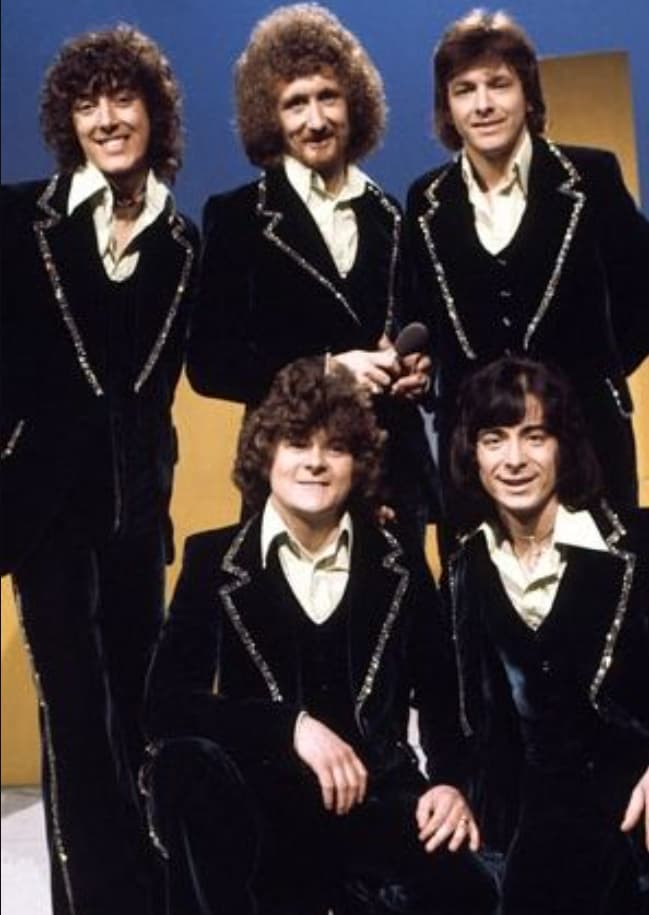
A haunting plea against blind heroism and the quiet tragedy of love left behind
When “Billy Don’t Be a Hero” burst onto the airwaves in 1974, it carried with it more than a catchy chorus—it carried the echo of marching boots, the tremble of young love, and the quiet dread of a telegram no one ever wishes to receive. Performed by the British pop group Paper Lace, the song quickly became one of the year’s most unforgettable hits, reaching No. 1 on the UK Singles Chart in March 1974 and later climbing to No. 1 on the US Billboard Hot 100 in August 1974. For a brief, poignant moment, this Nottingham band stood at the summit of both sides of the Atlantic, their voices entwined with a story that felt both timeless and painfully immediate.
Written by the songwriting duo Mitch Murray and Peter Callander, the song is set against the backdrop of war—often assumed by listeners to be the American Civil War because of its lyrical imagery of soldiers and regiments. Yet the song was never meant to depict a specific conflict. Instead, it functions as a universal anti-war ballad, a deeply personal appeal wrapped inside a deceptively buoyant pop arrangement. The central voice is that of a young woman pleading with her beloved not to chase glory on the battlefield: “Billy, don’t be a hero, don’t be a fool with your life.” That single line captures the tension between romanticized valor and the raw cost of war.
What makes Paper Lace’s version so affecting is its contrast. The melody is bright, almost jaunty—an accessible pop sound that fits comfortably within the early 1970s radio landscape. Yet beneath that tuneful surface lies a narrative of heartbreak. As the story unfolds, Billy ignores the plea, charges into battle, and is ultimately killed. The final verse delivers the devastating coda: the heroine refuses to accept the medal awarded posthumously. In that gesture, the song quietly dismantles the very notion of “heroism” it questions. A medal cannot replace a life; honor cannot fill the empty chair at the table.
It is important to note that in the United States, the song was also recorded by Bo Donaldson and The Heywoods, whose version reached No. 1 earlier in June 1974. Yet it is Paper Lace who are often remembered for giving the song its original transatlantic identity. Their success was not accidental. The early 1970s were still shadowed by the Vietnam War, and although the lyrics avoid modern references, the emotional climate of the era made the song resonate powerfully. Listeners heard in Billy’s story an echo of contemporary headlines and personal losses. The ambiguity of the setting allowed the song to transcend any single war, speaking instead to the universal ache of waiting, worrying, and grieving.
For Paper Lace, “Billy Don’t Be a Hero” was their defining moment. While they would later release other hits such as “The Night Chicago Died,” it is this tender and tragic single that remains etched in collective memory. The arrangement—layered harmonies, steady drumbeat, and a sing-along chorus—creates an almost communal experience. One can easily imagine it playing on a summer radio, windows open, the melody drifting through warm evening air, even as the lyrics tug at something far more somber.
There is a particular poignancy in how the song frames courage. It does not condemn bravery outright; rather, it questions the blind pursuit of glory when weighed against love and human life. In doing so, it joins the lineage of reflective 1970s pop songs that dared to challenge traditional narratives without resorting to overt protest. Its restraint is its strength. The emotion is not shouted; it is gently, persistently pleaded.
More than five decades later, “Billy Don’t Be a Hero” remains a reminder of an era when pop music could tell a complete story in under four minutes—a story with characters, conflict, and consequence. It reminds us that behind every uniform is a beating heart, and behind every headline is someone waiting by the door. The song’s enduring power lies not only in its chart-topping success but in its quiet insistence that love, not legend, is what ultimately matters.