
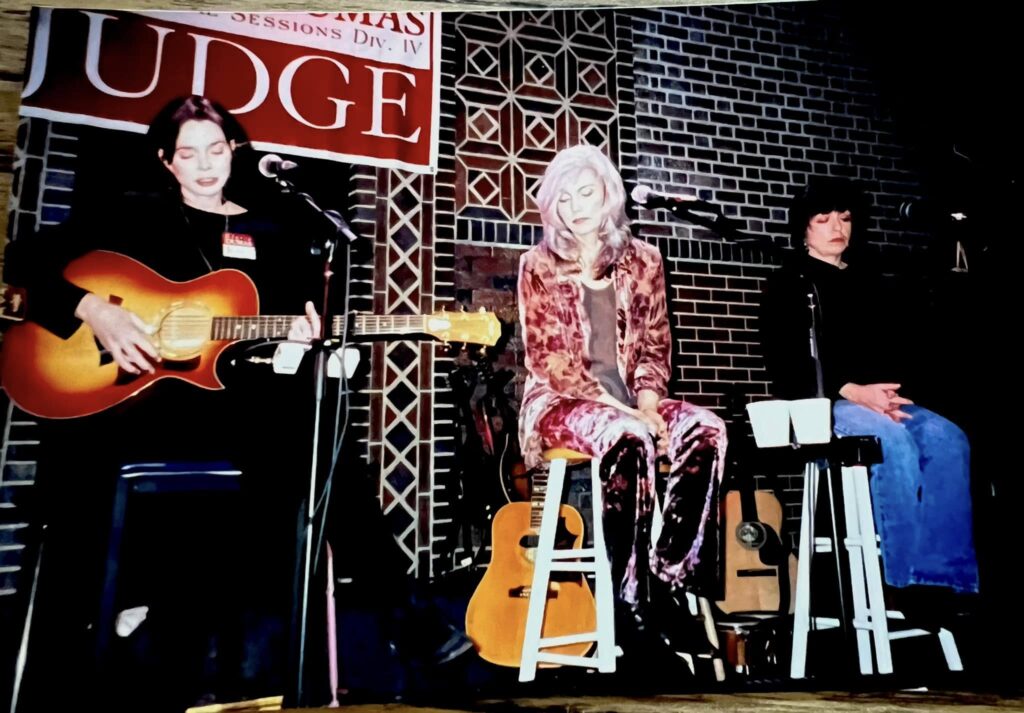
An Anthem for Empathy: The Enduring Plea Against Division
The live performance of “It’s a Hard Life Wherever You Go” by Nanci Griffith and Emmylou Harris remains one of the most emotionally rich collaborations in acoustic country folk music. Built on nothing more than two guitars, two unmistakable voices, and a deep sense of musical understanding, the performance captures the quiet power that both artists carried throughout their careers.
Originally written and recorded by Nanci Griffith, the song reflects on pain, division, humanity, and compassion. In this live rendition, Griffith and Emmylou Harris transform the track into something even more intimate. Their harmonies move gently through every lyric, creating an atmosphere that feels timeless and deeply sincere. There is no need for elaborate production or dramatic staging because the emotional weight comes entirely from the honesty of the performance itself.
Nanci Griffith’s delicate vocal delivery blends beautifully with Emmylou Harris’ warm and expressive tone. Together, they create a balance that many fans of folk and country music have long considered unforgettable. Their musical chemistry feels effortless, and moments like these explain why both singers earned such lasting respect within American roots music.
The performance also highlights the storytelling tradition that defined Griffith’s songwriting career. Her lyrics often focused on ordinary lives, emotional struggles, and human resilience. Emmylou Harris, known for her ability to elevate any collaboration through harmony and emotional depth, brings an additional layer of grace to the song. The result is a version that feels both fragile and powerful at the same time.
Many listeners have described the performance as magical, not because of spectacle, but because of its purity. The simplicity of two artists sitting together with guitars becomes something profoundly moving. Their voices do not compete with one another. Instead, they seem to breathe together through the music, creating a rare sense of unity and warmth.
Another detail that often catches attention is Nanci Griffith’s appearance during the performance, with some noting a resemblance to Debbie Harry. Yet beyond appearances, it is Griffith’s sincerity and quiet emotional strength that leave the strongest impression.
Years after it was recorded, this performance still stands as a reminder that great music does not need excess to leave a lasting impact. Sometimes, two voices and a heartfelt song are more than enough.