
A Traditional Country Ballad Reimagined in the Early California Rock-Folk Movement
A song of longing and emotional distance, where love is weighed against pride, independence, and the quiet ache of what cannot be reclaimed.
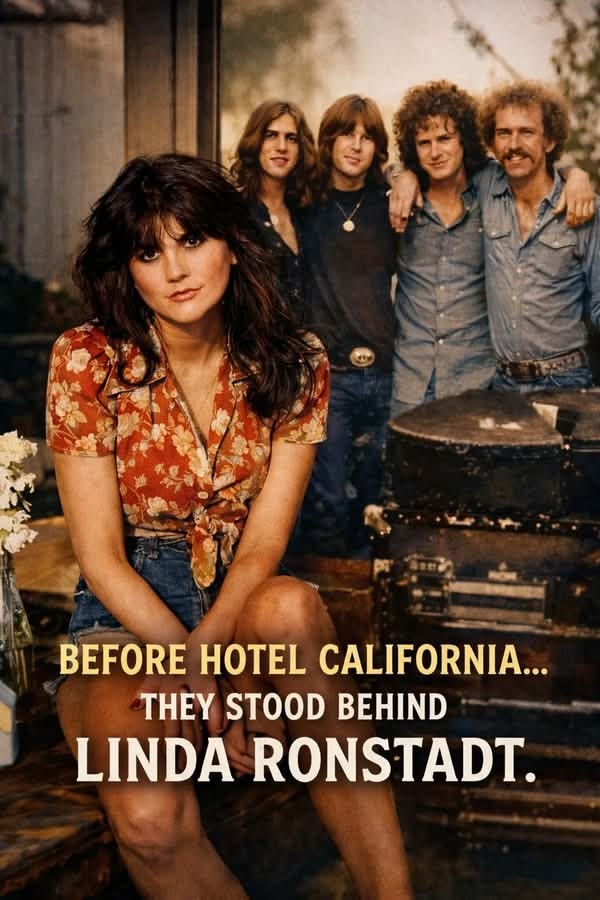
In the evolving musical landscape of the early 1970s, few recordings capture the delicate intersection between country tradition and California rock quite like “Silver Threads & Golden Needles”, performed by Linda Ronstadt alongside members of what would become the Eagles, during a 1974 appearance on Don Kirshner’s Rock Concert (DKRC). Though the song itself predates this moment by nearly two decades, its reinterpretation in this setting gave it a renewed emotional gravity—one that resonates differently when heard through the lens of artists still defining their identities.
Originally written by Jack Rhodes and Dick Reynolds, “Silver Threads & Golden Needles” first found life in the mid-1950s, most notably through early recordings by artists such as Wanda Jackson and later Skeeter Davis, both of whom helped establish it within the country canon. The song speaks in simple but cutting metaphors: silver threads and golden needles represent wealth, appearances, and material security—yet the narrator rejects them in favor of emotional authenticity and self-respect. It is, at its core, a quiet refusal to settle for comfort when love has lost its truth.
When Linda Ronstadt recorded her version for the 1973 album Don’t Cry Now, the song was transformed from a traditional country lament into something far more hybrid in spirit. Ronstadt’s voice—clear, controlled, and emotionally restrained—carried a kind of modern loneliness that felt at home in both country and rock audiences. Released as a single, her rendition reached approximately No. 67 on the Billboard Hot 100 and climbed into the Top 20 of the U.S. Country chart, marking it as a modest but meaningful crossover success. It was not a blockbuster hit, but rather one of those records that quietly embedded itself into the fabric of its era.
The DKRC 1974 performance adds another layer of historical significance. At that time, the musicians who would soon be known as the Eagles—including Glenn Frey and Don Henley—were still deeply connected to Ronstadt’s touring and recording circle. They served as her backing band during this formative period, a collaboration that played a crucial role in shaping the sound that would later define early West Coast rock. Watching or listening to this performance today feels almost like witnessing a crossroads: country instrumentation, soft rock harmonies, and emerging Americana sensibilities all converging in real time.
There is a subtle emotional tension in this version. Linda Ronstadt does not over-sing the lyrics; instead, she allows the restraint of the melody to carry the weight of resignation. Behind her, the harmonies provided by the early Eagles lineup add a soft, almost pastoral texture, giving the song a wider emotional space than earlier recordings. It is no longer just a country breakup song—it becomes a reflection on choice, identity, and the cost of emotional independence.
What makes this performance particularly enduring is not its commercial impact, but its sense of historical proximity to transformation. Within a few years, these musicians would stand on separate but parallel paths—Ronstadt as one of the defining voices of American pop-country, and the Eagles as architects of a new, polished rock sound that would dominate the decade. Yet here, in this 1974 moment, they are still intertwined, still experimenting, still discovering the boundaries of their own voices.
Listening today, “Silver Threads & Golden Needles” feels less like a song about loss and more like a document of artistic becoming. It carries the quiet sadness of letting go—not just of a relationship, but of an earlier, simpler understanding of music itself.