
A Ballad of Rebellion and Freedom
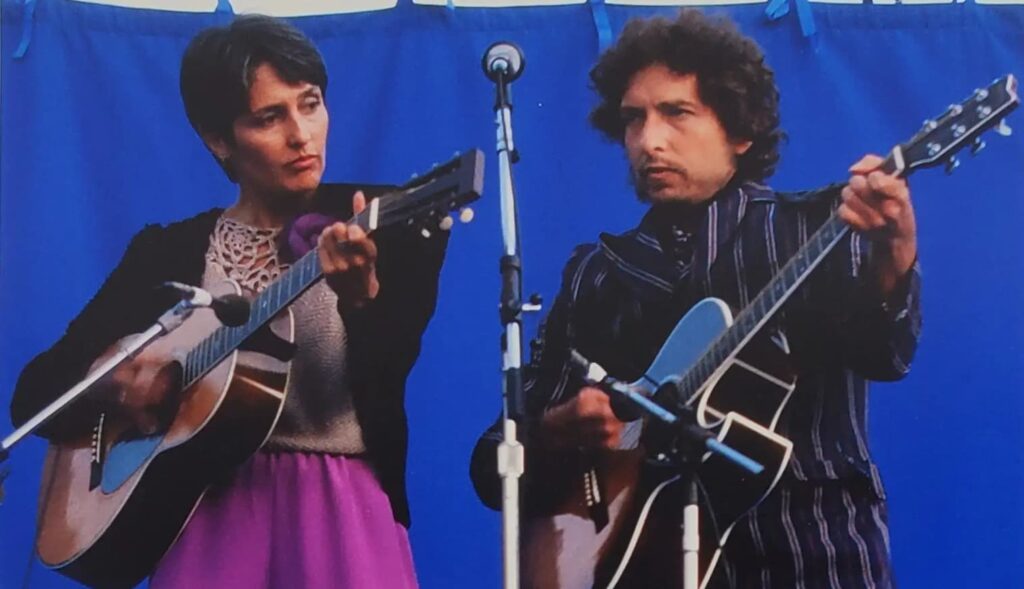
In the annals of American folk music, certain songs emerge as timeless chronicles of the human spirit, capturing tales of defiance, freedom, and the complexities of societal norms. One such enduring ballad is “Railroad Bill,” a song that has traversed generations, finding its place in the repertoires of numerous artists. Among its notable renditions are those by Joan Baez and Bob Dylan, two iconic figures whose interpretations have left an indelible mark on the folk music landscape.
“Railroad Bill” is a traditional American folk song that dates back to the late 19th century. The song narrates the exploits of a notorious outlaw known as Railroad Bill, a figure who has become emblematic of rebellion and resistance against societal constraints. The origins of the song are intertwined with the legend of an African American outlaw, believed to be Morris Slater, who gained infamy in the 1890s for his daring robberies along the Louisville & Nashville Railroad line. Slater’s audacious acts, including the alleged killing of law enforcement officers, elevated him to a folk hero status among some African American communities in the Deep South, symbolizing a defiant stand against oppression.
The song’s lyrics paint a vivid picture of Railroad Bill’s life, capturing his relentless spirit and disdain for authority. Verses such as “Railroad Bill, he never worked and he never will” and “Gonna ride, ride, ride” encapsulate his unyielding pursuit of freedom, living by his own rules without succumbing to societal expectations. This portrayal resonates with themes of autonomy and resistance, reflecting a character who chooses a perilous path over conformity.
Joan Baez, renowned for her crystal-clear soprano and unwavering commitment to social justice, included her rendition of “Railroad Bill” in her 1963 album, ‘Joan Baez in Concert, Part 2’. Released in November 1963, this album showcased Baez’s ability to breathe new life into traditional folk songs, bringing them to contemporary audiences with authenticity and emotional depth. Her interpretation of “Railroad Bill” is characterized by a haunting melody and a poignant delivery that underscores the song’s themes of rebellion and the quest for freedom.
Bob Dylan, a seminal figure in the folk and rock music scenes, offered his rendition of “Railroad Bill” during the recording sessions between 1969 and 1971. This version was later released in ‘The Bootleg Series Vol. 10: Another Self Portrait (1969–1971)’, unveiled on August 27, 2013. Dylan’s interpretation infuses the traditional ballad with his distinctive vocal style and musical arrangement, reflecting his continuous exploration of American folk traditions and their contemporary relevance.
The enduring appeal of “Railroad Bill” lies in its rich narrative and the universal themes it embodies. It serves as a musical testament to the complexities of lawlessness intertwined with the human desire for freedom and autonomy. The song’s evolution over time, with various artists adding their unique interpretations, highlights its flexibility and the timeless nature of its core message.
For many listeners, especially those who have journeyed through the transformative decades of the 20th century, “Railroad Bill” evokes a sense of nostalgia. It harkens back to a time when folk music was a powerful vehicle for storytelling, social commentary, and the preservation of cultural heritage. The song’s narrative invites reflection on the societal challenges of the past and the enduring spirit of those who dared to defy the status quo in pursuit of a life unbounded by societal constraints.
In revisiting “Railroad Bill” through the lenses of Joan Baez and Bob Dylan, we are reminded of the song’s profound impact on the folk music canon and its ability to convey complex themes through simple yet evocative storytelling. Their renditions not only preserve the historical essence of the ballad but also breathe new life into its narrative, ensuring that the legend of Railroad Bill continues to ride through the annals of American music history.