
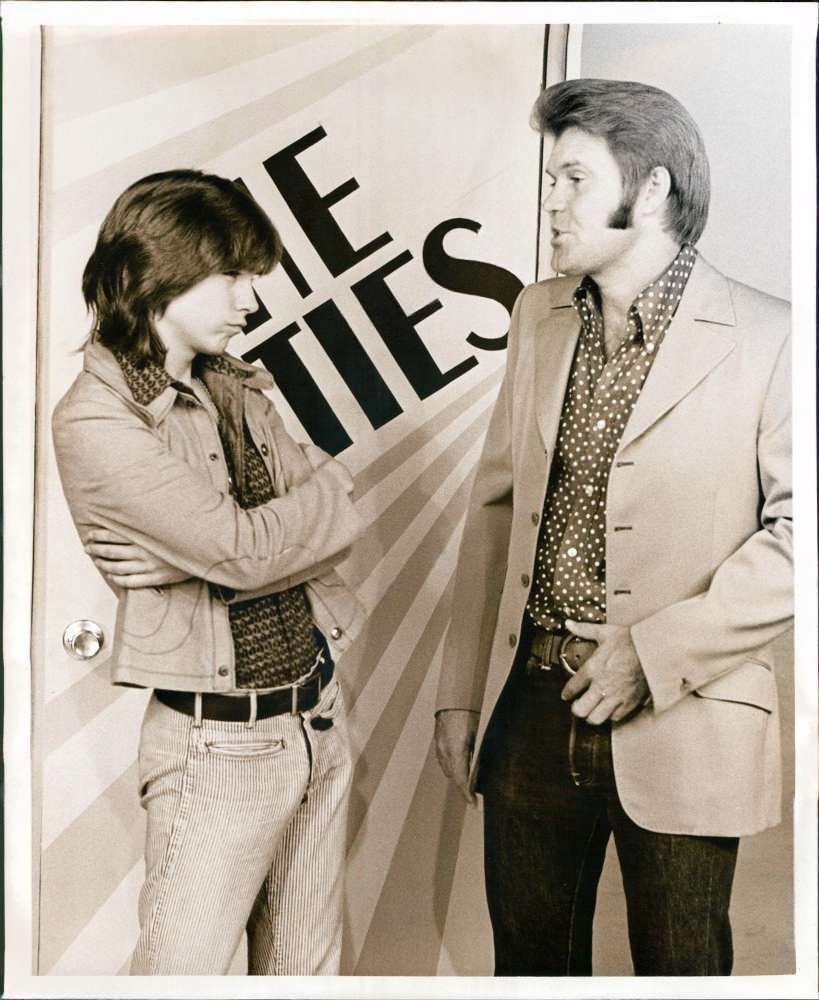
A Timeless Meeting of Two Beloved Voices: David Cassidy and Glen Campbell in a Memorable Medley
Few musical moments capture the spirit of friendship, talent, and pure joy quite like the performance featuring David Cassidy and Glen Campbell in a memorable medley that continues to resonate decades later. The clip brings together two celebrated artists whose careers left a lasting mark on popular music, offering a glimpse of their remarkable chemistry and natural musical connection.
David Cassidy, widely known for his charismatic stage presence and expressive vocals, appears in the performance with the enthusiasm and energy that defined much of his career. His ability to communicate genuine joy through music became one of his most recognizable qualities. Every phrase is delivered with warmth and conviction, reflecting the passion that made him a beloved figure to generations of fans.
Alongside him stands Glen Campbell, one of country and pop music’s most respected performers. Campbell’s versatility is on full display throughout the medley. Long admired for his effortless ability to collaborate with artists from different musical backgrounds, he demonstrates once again why he was regarded as one of the industry’s most adaptable musicians. His smooth vocals blend naturally with Cassidy’s voice, creating a performance that feels both relaxed and polished.
The clip also serves as a reminder that Cassidy’s talents extended beyond singing. His skill as a guitarist complements his vocal performance, showcasing the musical abilities that often received less attention than his fame as a vocalist and television star.
Viewed today, the recording carries an additional emotional weight. Both artists faced the devastating impact of neurodegenerative illness later in life. Glen Campbell publicly battled Alzheimer’s disease before his death in 2017, bringing greater awareness to the condition through his courage and openness. David Cassidy would also reveal that he was suffering from dementia, a disease that ultimately contributed to the decline of his health.
Tragically, both men passed away in 2017. Campbell, born in 1936, died on August 8, while Cassidy, born in 1950, passed away on November 21. Their deaths marked the end of two extraordinary musical journeys and added a note of sadness to a year that saw the loss of many influential artists.
Yet the medley remains far more than a reminder of loss. It stands as a celebration of artistry, friendship, and the enduring power of music. In these moments, Cassidy and Campbell are remembered not for the illnesses that later affected them, but for the talent, generosity, and joy they brought to the stage. Their voices continue to preserve the memories that time can never erase.