
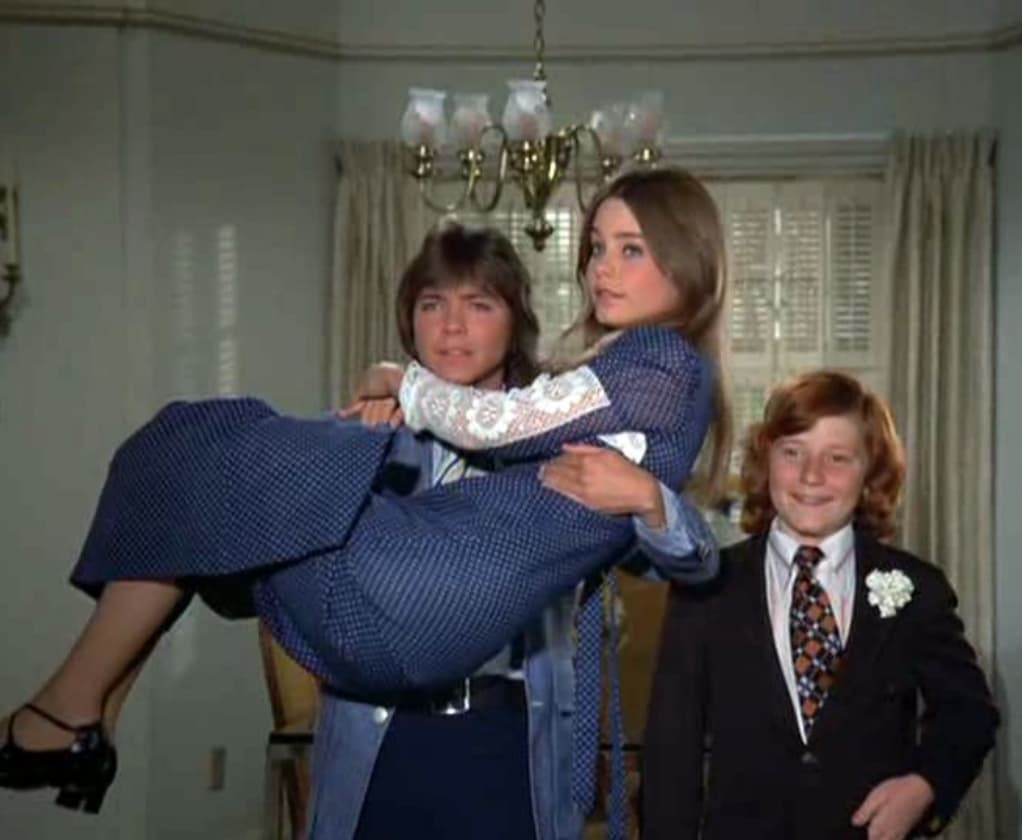
A Broadway dream carried into the pop world — where longing, fantasy, and David Cassidy’s gentle vulnerability met in one unforgettable recording.
When David Cassidy recorded “Bali Ha’i” in the early 1970s, he was stepping into material far older and deeper than the teen-pop image that had made him a worldwide sensation. Originally written by Richard Rodgers and Oscar Hammerstein II for the legendary 1949 musical South Pacific, the song already carried decades of emotional history before Cassidy ever touched it. Yet somehow, in his hands, it became something surprisingly intimate — less theatrical, more personal, almost like a private daydream whispered through a radio speaker late at night.
Released on the album Rock Me Baby in 1972 in several international markets, Cassidy’s interpretation of “Bali Ha’i” did not become one of his major chart-dominating singles in the way “Cherish”, “How Can I Be Sure”, or “Daydreamer” had. It was never designed to compete with the louder glam-rock explosion or the harder-edged singer-songwriter movement that was beginning to dominate the decade. Instead, the recording lived quietly among devoted listeners who recognized something deeper beneath David’s polished television-star image.
And perhaps that is what makes the song endure.
By the early 1970s, David Cassidy had become one of the biggest teen idols in the world through The Partridge Family. Stadium crowds screamed his name. Magazines placed his face on nearly every cover imaginable. Yet behind that extraordinary fame was a young man increasingly exhausted by the machinery surrounding him. Cassidy often spoke later about feeling trapped between the public’s fantasy and his own desire to be taken seriously as a musician. Songs like “Bali Ha’i” revealed that conflict more clearly than many listeners realized at the time.
The original version of the song in South Pacific was sung as a mysterious invitation toward an unreachable paradise — a distant island symbolizing romance, escape, destiny, and perhaps even dangerous temptation. In the musical, Bali Ha’i is not merely a place; it is an emotional mirage. The lyrics suggest that everyone carries some impossible longing deep inside themselves, some unreachable horizon calling from far away.
That theme fit David Cassidy more naturally than one might expect.
Listening carefully to his version today, there is a softness in his voice that feels almost fragile. Unlike the grand theatrical approach associated with earlier recordings, Cassidy strips away much of the dramatic weight and replaces it with tenderness. He sings not like a performer standing beneath stage lights, but like someone quietly searching for peace. The orchestration remains lush and melodic, very much rooted in early-1970s pop production, yet there is also a melancholy drifting beneath the surface.
That emotional undercurrent is important because the early 1970s represented a turning point for Cassidy himself. Although he was adored globally, he was also beginning to push against the limitations placed upon him. He wanted artistic credibility. He wanted audiences to hear more than the carefully manufactured teen idol. Recordings like “Bali Ha’i” hinted at the kind of interpretive singer he might have become had the industry allowed him more freedom earlier in his career.
Commercially, the song was modest compared to his major international hits, and it did not achieve notable chart success in the United States or United Kingdom upon release. But chart positions alone rarely tell the full story of why certain recordings survive emotionally across generations. Some songs are remembered because they dominated the airwaves. Others remain because they capture a feeling impossible to date or replace.
“Bali Ha’i” belongs to the second category.
There is also something deeply nostalgic about hearing a young pop star reinterpret a classic from an earlier musical era. By the 1970s, many listeners who had grown up with South Pacific already associated the song with memories of postwar optimism, romance, and old Hollywood grandeur. Cassidy’s version quietly bridged generations: older listeners recognized the timeless composition, while younger fans discovered the emotional beauty hidden within Rodgers and Hammerstein’s writing.
That bridge between eras gives the recording unusual emotional power today.
Modern audiences sometimes forget how eclectic pop music once was. A television idol could record Broadway material. A folk singer could cross into country. Soft orchestral ballads could coexist beside rock anthems. In that musical landscape, David Cassidy’s “Bali Ha’i” felt less like a commercial calculation and more like an artist reaching toward something personally meaningful.
And decades later, that sincerity still lingers.
There is a haunting quality to revisiting the song now, especially knowing how much of Cassidy’s life would later be marked by personal struggles, changing public tastes, and the difficult burden of early fame. The longing inside “Bali Ha’i” begins to sound almost autobiographical in hindsight — the voice of someone searching for a place where expectations disappear and peace finally arrives.
Perhaps that is why the recording continues to resonate quietly among devoted fans of classic pop and vintage television-era music. It reminds listeners of a time when melodies were elegant, emotions were allowed to breathe slowly, and singers did not always need to shout to be heard.
In the end, David Cassidy did not simply cover “Bali Ha’i.” He humanized it.
And somewhere within that gentle performance remains the sound of a young man briefly escaping the noise surrounding him — sailing toward a distant horizon that always seemed just out of reach.