
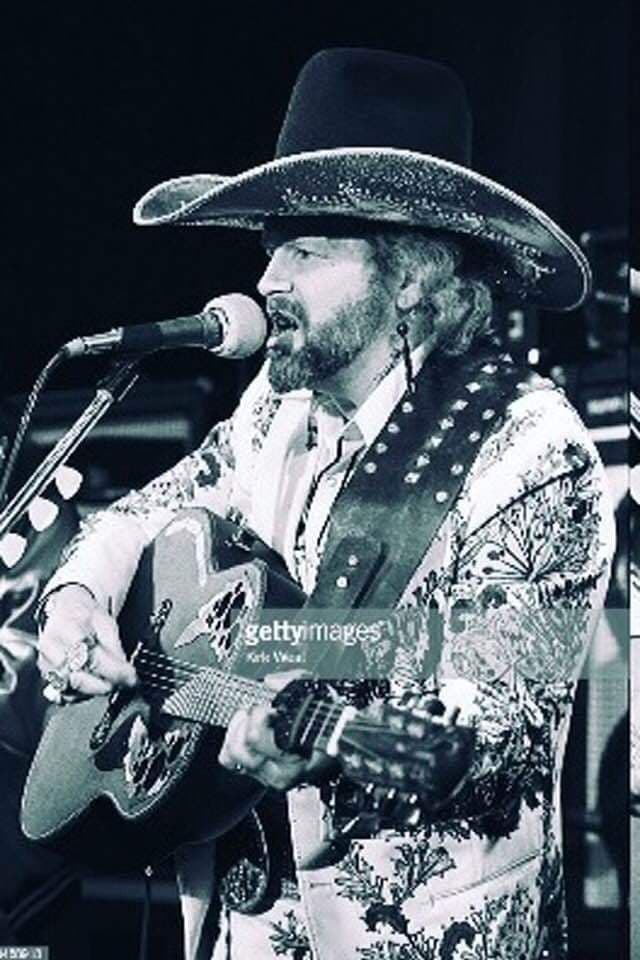
A Lament of Love, Pride, and the Quiet Pain of Letting Go
When “If This Is Just A Game” was released in 1977, it did not storm the charts with the explosive force of a crossover hit, nor did it chase the bright lights of Nashville’s pop-polished country. Instead, it slipped quietly into the hearts of listeners who understood that country music, at its core, is not about spectacle—but about truth. Recorded by the fiercely independent and often controversial David Allan Coe, the song became part of his 1977 album Tattoo, a record that climbed to No. 10 on the Billboard Top Country Albums chart. As a single, “If This Is Just A Game” reached No. 14 on the Billboard Hot Country Singles chart in early 1978—an impressive showing during a fiercely competitive era of country music dominated by giants like Waylon Jennings and Merle Haggard.
Those chart positions, while respectable, only hint at the deeper resonance of the song. Because what Coe offered here was not simply another country heartbreak tune—it was a confession wrapped in steel guitar and restrained vulnerability.
By 1977, David Allan Coe had already built a reputation as one of country music’s most uncompromising voices. Associated with the Outlaw Country movement alongside artists such as Willie Nelson and Waylon Jennings, Coe stood apart even within that rebellious circle. He carried the weight of his turbulent past—prison time, hard living, and an almost mythic reputation—into every lyric he sang. And in “If This Is Just A Game,” that lived-in authenticity is palpable.
The song tells the story of a man who senses emotional distance creeping into a relationship. He pleads, not with anger, but with wounded pride: if love is merely a game, then he wants no part of it. The power of the song lies in its restraint. There is no dramatic orchestration, no grand vocal theatrics. Instead, Coe’s voice carries a weary honesty, as if each word costs him something to say.
Musically, the arrangement reflects the era’s shifting country sound. The mid-1970s saw Nashville experimenting with smoother, more polished production styles—sometimes referred to as the “Countrypolitan” sound. Yet this track retains a traditional backbone: steady rhythm section, tasteful piano, understated pedal steel. It bridges two worlds—the outlaw grit Coe embodied and the commercial sophistication of late-’70s country radio.
The deeper meaning of “If This Is Just A Game” speaks to emotional dignity. The narrator refuses to beg for affection. He draws a quiet line in the sand. There is sorrow in his voice, but also self-respect. That duality—hurt intertwined with pride—defines so many of country music’s most enduring songs. It reminds us of a time when lyrics mattered profoundly, when a three-minute single could reflect the fragile negotiations of love.
Behind the scenes, Coe’s career in 1977 was at a crossroads. While he had achieved chart success with earlier hits like “You Never Even Called Me by My Name,” he was often viewed as an outsider in the Nashville establishment. “If This Is Just A Game” demonstrated his ability to balance commercial appeal with personal authenticity. It showed that beneath the outlaw image was a songwriter capable of tenderness.
The late 1970s were also a transitional period in country music. Traditional honky-tonk influences were beginning to share space with slicker production styles that would soon dominate the Urban Cowboy era. In that landscape, Coe’s song felt grounded—rooted in the emotional storytelling traditions of artists like George Jones, yet contemporary enough to sit comfortably on 1977 radio playlists.
Listening today, decades removed from its release, the song carries an almost cinematic nostalgia. It evokes dimly lit bars, quiet drives on open highways, and the private conversations we rehearse in our minds but rarely speak aloud. The melody lingers like a memory that refuses to fade.
Perhaps that is why “If This Is Just A Game” continues to resonate. It is not about dramatic heartbreak; it is about the slow realization that love requires sincerity. It speaks to moments when pride must stand guard over vulnerability.
In the end, chart numbers tell one part of the story. But the true legacy of David Allan Coe’s “If This Is Just A Game” lies in its emotional candor. It stands as a reminder that country music, at its finest, does not shout—it confides. And sometimes, the quiet confessions endure the longest.