
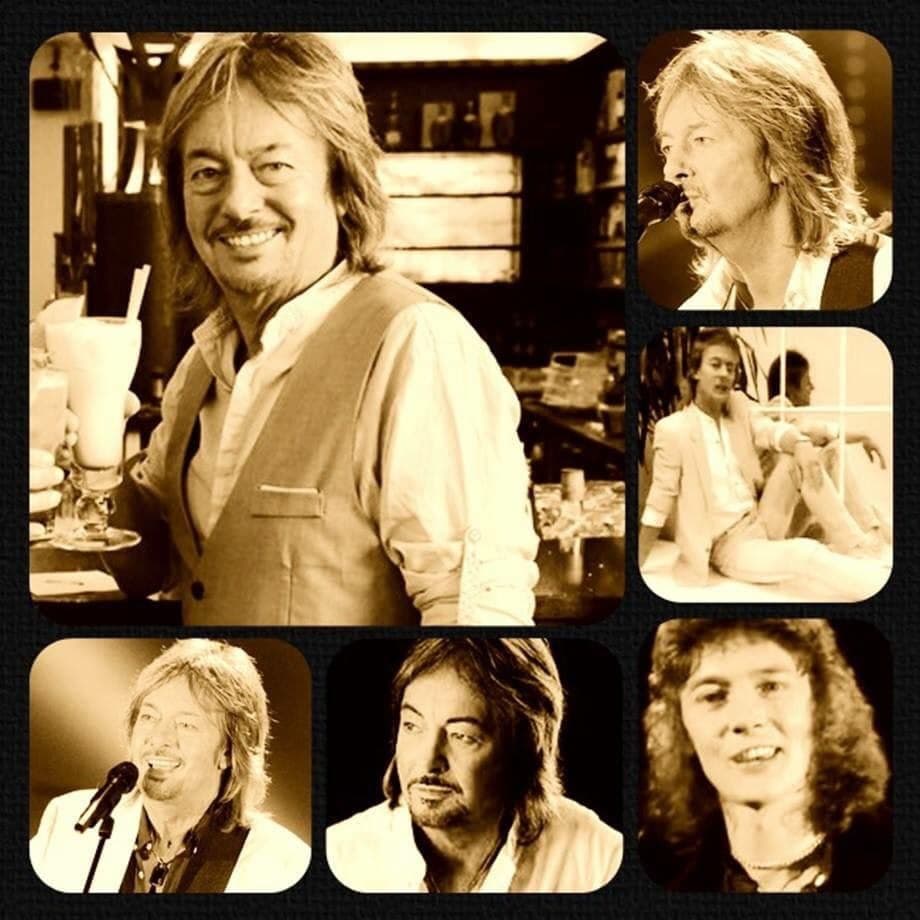
A timeless ballad about an irresistible and passionate love.
There are some songs that don’t just fill a room; they fill a lifetime of memories. For many of us, the 1980s were a decade defined by a certain kind of sound—a polished, heartfelt pop-rock that spoke directly to our emotions. And few voices were as instantly recognizable and capable of stirring such deep feeling as that of Chris Norman. While he was already a household name in Europe as the former frontman of the legendary band Smokie, his solo career took on a life of its own, reaching new heights with the release of his album, Some Hearts Are Diamonds. On this 1986 record, nestled between other beloved tracks, was a song that would become a quiet classic for a generation: “Chain Reaction.”
Unlike his massive hit “Midnight Lady,” which was a chart-topping sensation across much of Europe, “Chain Reaction” was never released as a standalone single. Instead, it was an album cut that found its way into the hearts of listeners through a more personal, word-of-mouth connection. It wasn’t about a fleeting moment of popularity but about a lasting impression. The song’s impact was a slow, steady burn, a subtle presence on mixtapes and radio shows that resonated with its honest emotion and raw, soulful delivery. It’s a testament to the power of a well-crafted song that it could achieve such a strong legacy without the fanfare of a major single release.
The song’s essence is a familiar and potent one: the overwhelming and undeniable force of a new love. The lyrics, co-written by Norman and his long-time collaborator and former Smokie bandmate, Pete Spencer, paint a picture of being completely captivated by someone. The phrase “chain reaction” is a perfect metaphor for the way one look, one touch, can set off an unstoppable series of events, leading to a profound connection. It’s about that moment when all your defenses crumble, and you find yourself swept up in a tide of emotion that’s both exhilarating and a little bit scary. Norman’s signature raspy, earnest voice delivers these sentiments with a kind of weathered vulnerability that makes them all the more believable. It’s a voice that has seen a thing or two, a voice that knows about love and heartbreak, and when it sings, you feel every word.
The production, helmed by the famed German producer Dieter Bohlen, gives the song a crisp, clear sound that was characteristic of the era. Yet, despite the ’80s sheen, the heart of the track remains its powerful lyrical and vocal performance. It’s a song that, for many, serves as a time machine, transporting us back to moments of youthful passion, late-night drives, and the thrilling uncertainty of new romance. It reminds us that some feelings are simply too powerful to resist, and sometimes, the best thing to do is surrender to them and see where they lead. The fact that the song never had a splashy chart position in the traditional sense only adds to its mystique. It’s not a song you were told to love; it’s a song you found, a personal treasure that you kept close. For those who remember it, it’s not just a tune—it’s a chapter from the soundtrack of their lives.