
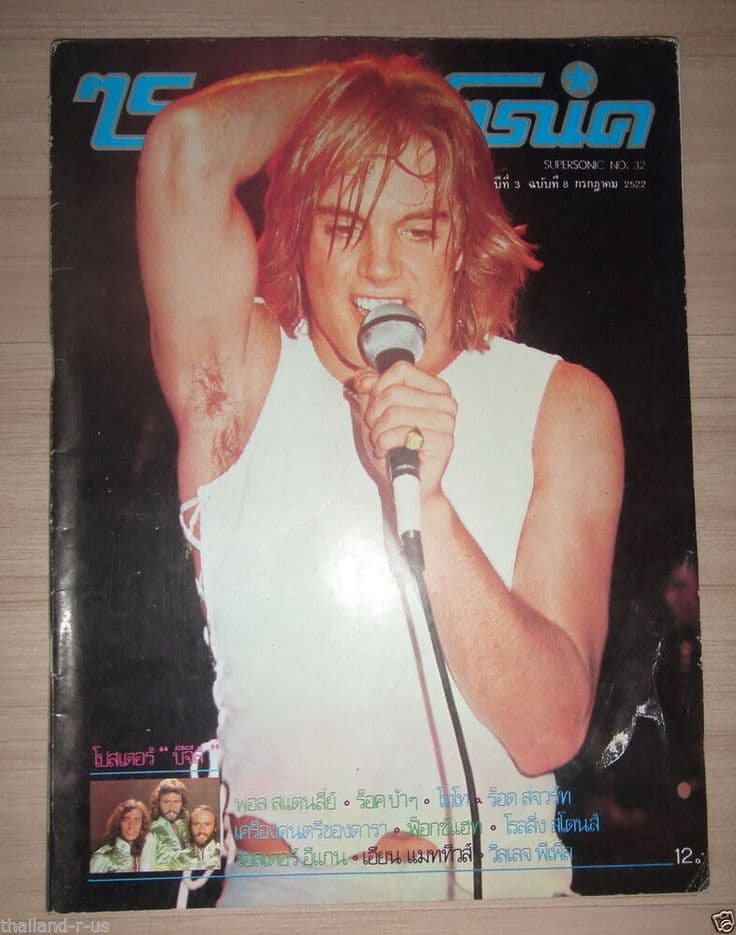
A fleeting night of youth, romance, and quiet longing captured in a gentle pop melody
When Our Night by Shaun Cassidy was released in 1977 as part of his self-titled debut album Shaun Cassidy, it quietly slipped into the fabric of late-1970s pop—less explosive than his chart-topping singles, yet perhaps more intimate, more revealing of the young artist behind the teen idol image. That album itself was a remarkable success, reaching No. 3 on the Billboard 200, propelled by the massive hit “Da Doo Ron Ron,” which climbed to No. 1 on the Billboard Hot 100. While Our Night was not issued as a major single and therefore did not achieve an independent chart position, it remains one of those deeper cuts that reward careful listening—especially for those who value atmosphere over spectacle.
By the late 1970s, Shaun Cassidy, younger brother of David Cassidy, had become a cultural phenomenon in his own right. But unlike the bright, almost exuberant energy of his hit singles, Our Night reveals a more reflective side. It feels less like a performance and more like a confession whispered under dim lights, where time seems to slow and every emotion carries a delicate weight.
The song itself unfolds with a gentle, almost tender arrangement—soft guitars, restrained percussion, and a vocal delivery that leans toward sincerity rather than polish. There is something unmistakably fleeting about it. The “night” in Our Night is not merely a setting; it is a symbol—of youth, of moments that cannot be held onto, of connections that exist intensely but briefly. One senses that the characters in the song understand, even as they live it, that this night will not last. That awareness gives the song its quiet poignancy.
What makes Our Night particularly compelling is how it captures a universal emotional experience without grand gestures. It speaks of closeness, of shared silence, of the unspoken understanding between two people who know that dawn will bring change. In that sense, the song belongs to a lineage of late-70s pop ballads that prioritized mood and intimacy over dramatic crescendos.
Behind the song lies the broader context of Shaun Cassidy’s early career—a time when the music industry often placed young performers into carefully crafted molds. Yet within that framework, songs like Our Night hint at an artist searching for authenticity. It may not have been the centerpiece of the album, but it feels like a personal moment preserved on vinyl.
Listening now, decades later, Our Night carries an added layer of meaning. It becomes not only about that single imagined evening but also about the era itself—a time when pop music still allowed space for softness, for vulnerability, for stories told in half-tones rather than bold declarations. The production, unmistakably rooted in the 1970s, evokes a warmth that modern recordings often lack. It invites the listener not just to hear, but to remember.
There is also a certain innocence in Shaun Cassidy’s delivery—an honesty that cannot be manufactured. It reflects a period before life’s complexities fully settle in, when emotions are felt deeply but expressed simply. That simplicity is not a limitation; it is, in fact, the song’s greatest strength.
In the end, Our Night endures not because it dominated the charts, but because it quietly holds onto something far more fragile: a feeling. It reminds us that not every meaningful song needs to be a hit, and not every important moment announces itself loudly. Some arrive softly, stay briefly, and leave behind a memory that lingers far longer than expected.