
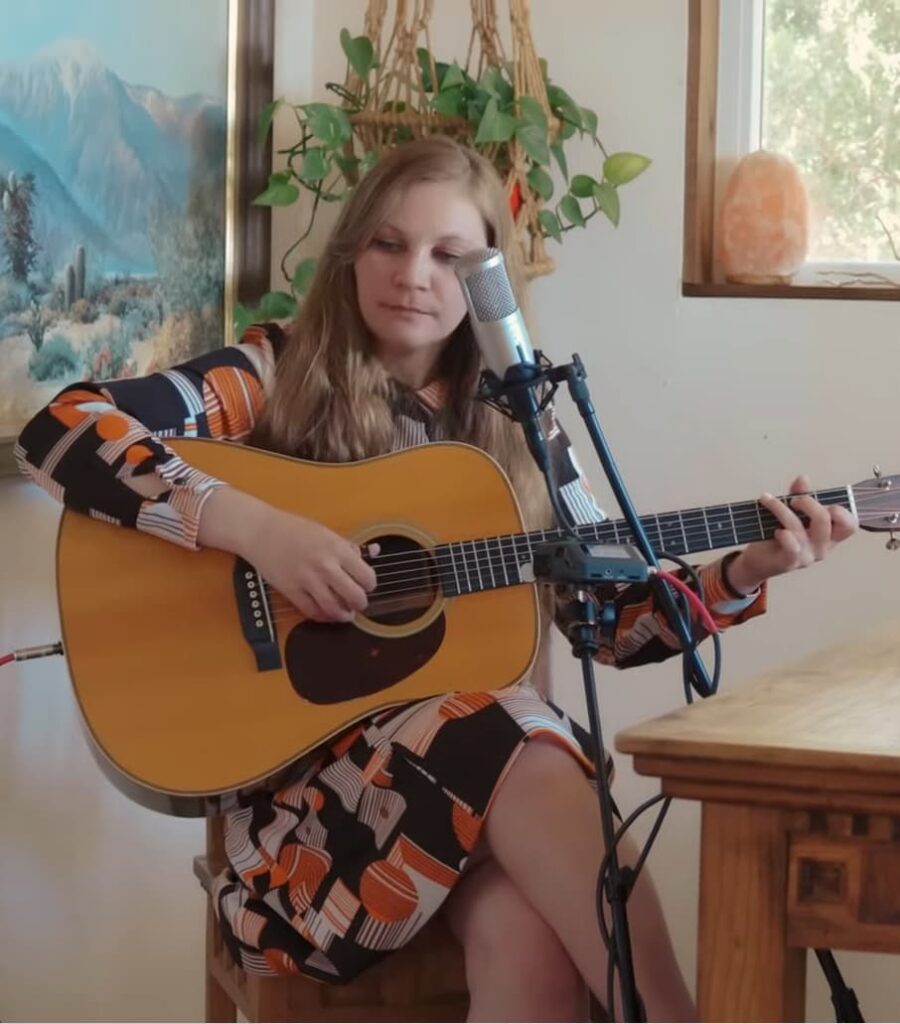
“Clay Pigeons” – A wandering soul’s quiet confession about freedom, regret, and the fragile hope of starting again
Among the many songs that seem to drift through American roots music like a slow-moving river, “Clay Pigeons” stands out as something deeply human—gentle, reflective, and almost painfully honest. Written by the late Texas songwriter Blaze Foley, the song would eventually find new life decades later through a moving interpretation by John Prine, and more recently through heartfelt covers such as the one by Toni Lindgren. Yet no matter who sings it, the quiet spirit of Blaze Foley remains at the center of the song’s fragile beauty.
“Clay Pigeons” was written by Blaze Foley in the late 1980s, during a period when he was living a rough, wandering life around Austin, Texas. Foley, born Michael David Fuller in 1949, was a gifted songwriter whose life never matched the quality of his art. Known for his battered duct-tape coat and unpredictable lifestyle, he lived much of his career on the margins of the music industry. His songs circulated through cassette recordings and word of mouth among musicians long before the wider public discovered them.
Tragically, Foley’s life ended in 1989, when he was shot and killed at the age of 39. At the time, his music had not yet reached a broad audience. Yet within songwriting circles, artists recognized something extraordinary in his work. “Clay Pigeons” would eventually become one of the clearest windows into his restless spirit.
The song itself did not chart when it was first written or performed by Blaze Foley. In fact, it remained largely unknown to mainstream audiences for years. Its wider recognition came later, particularly when John Prine recorded the song for his 2005 album “Fair & Square.” That album performed remarkably well for a roots-oriented release, reaching No. 55 on the Billboard 200 and No. 4 on Billboard’s Top Independent Albums chart. In 2006, the album also earned John Prine the Grammy Award for Best Contemporary Folk Album, bringing renewed attention to the remarkable songwriting of Blaze Foley.
Prine’s version of “Clay Pigeons” is often considered definitive. With his weathered voice and natural storytelling style, he approached the song not as a cover but almost as a conversation with a fellow traveler. One can hear in his delivery the quiet respect of a songwriter recognizing another soul who understood the long road of life.
The story within “Clay Pigeons” unfolds gently. A man wakes up one morning, picks up the phone, calls someone he once loved, and confesses that he’s leaving town. He’s heading south, perhaps to Mexico, perhaps simply away from the weight of the past. The lyrics move like a series of passing thoughts—simple observations about freedom, loneliness, and the strange comfort of drifting.
There is no grand drama here. Instead, the power of the song lies in its calm honesty. Lines about riding buses, drinking coffee, or watching the world pass by feel like fragments of a traveler’s diary. Yet beneath the casual language lies a deeper theme: the longing to outrun regret while knowing that memories always travel with us.
The title itself, “Clay Pigeons,” carries symbolic weight. In shooting sports, clay pigeons are fragile targets thrown into the air only to be shattered. In the context of the song, the phrase suggests the vulnerability of human hopes—dreams launched into the sky, sometimes broken before they can fully take flight.
When John Prine recorded the song, he seemed to understand that symbolism instinctively. His version feels less like performance and more like quiet reflection. It is the voice of a man who has seen the long road behind him and still finds beauty in the journey.
In recent years, interpretations such as the cover by Toni Lindgren continue to show how timeless the song truly is. New voices bring different shades of emotion, but the heart of Blaze Foley’s writing remains untouched: a sense of wandering freedom mixed with gentle sadness.
Songs like “Clay Pigeons” remind us that the greatest folk music rarely shouts. Instead, it speaks softly—about mornings, old phone calls, bus tickets, and the fragile courage it takes to begin again.
And somewhere within those quiet verses, Blaze Foley still walks the highway, guitar in hand, chasing a horizon that always seems just a little farther down the road.