
A Tender Ballad of Longing and Transition in a Changing Era
When “Lady Samantha” first appeared in 1969, it carried with it the fragile poetry of youth and the aching romanticism that defined a turbulent cultural moment. Though many listeners today associate Three Dog Night with their explosive chart-toppers, this early single tells a quieter, more intimate story—one rooted in the songwriting genius of Elton John and lyricist Bernie Taupin.
Released as a single in early 1969, “Lady Samantha” did not achieve major commercial success in the United States and did not break into the Billboard Hot 100. Yet its importance lies not in chart numbers, but in context. At that time, Three Dog Night were still carving out their identity in a crowded musical landscape. Their debut album, Three Dog Night (1969), would soon establish them as one of the most versatile and commercially successful bands of the early 1970s, but “Lady Samantha” belongs to that formative chapter—before the string of Top 10 hits that would define their career.
The song itself was written and originally recorded by Elton John, appearing as the B-side to his debut single “I’ve Been Loving You” in the UK in 1968. It later found a place on his early compilation releases. In those days, Elton was not yet the global superstar he would become; he was a young songwriter trying to find his voice. “Lady Samantha” is steeped in the romantic, slightly theatrical style that would soon blossom into the grand piano epics of the early 1970s.
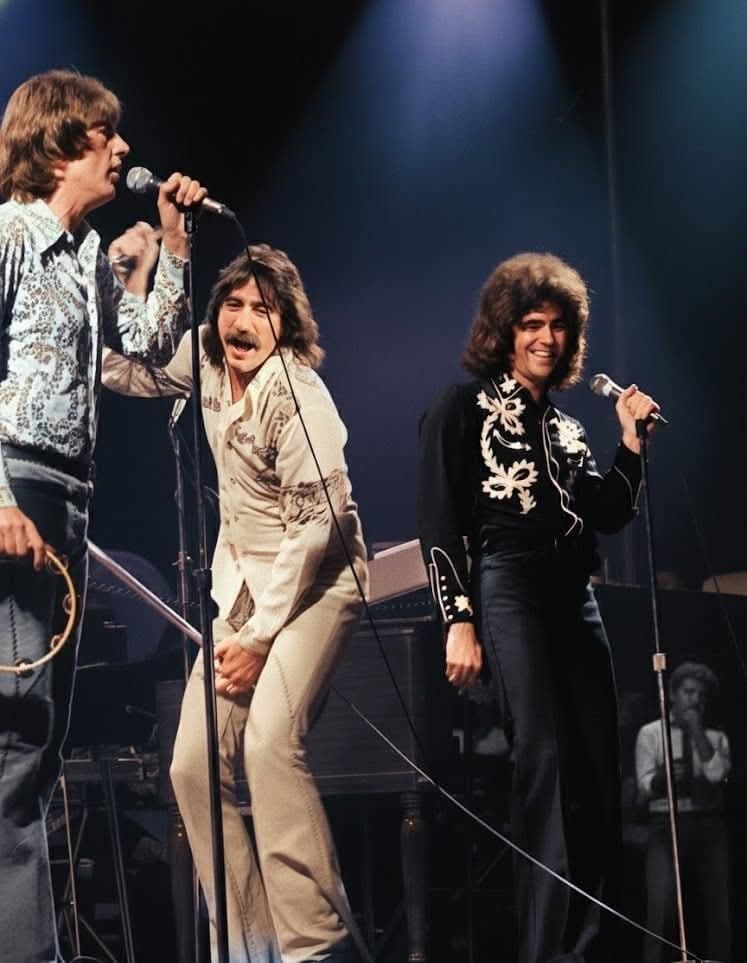
When Three Dog Night chose to record it, they transformed the piece into something warmer and more vocally layered. The band was known for its unique structure—three lead vocalists: Chuck Negron, Danny Hutton, and Cory Wells. This gave them extraordinary flexibility in interpreting material written by others. Unlike bands that relied primarily on self-composed songs, Three Dog Night had an exceptional instinct for selecting strong outside compositions. Their future hits—such as “One,” “Joy to the World,” and “Mama Told Me (Not to Come)”—would confirm this gift.
“Lady Samantha” tells the story of a distant, almost mythical woman—a figure of longing and unattainable grace. The lyrics by Bernie Taupin are poetic, even cryptic, full of imagery rather than straightforward narrative. The name “Samantha” itself feels like a symbol—perhaps of lost love, perhaps of innocence slipping away. The tone is wistful, tender, and slightly melancholic. There is no grand climax, no triumphant resolution. Instead, the song lingers, like a letter never answered.
Musically, it reflects the late-1960s transition from pure pop toward something more introspective. There is orchestration, but it is restrained. The melody unfolds gently, carried by expressive vocals and subtle arrangement. Listening to it now, one can almost feel the air of 1969—a year of upheaval, idealism, and quiet personal reflection. The world was changing rapidly, yet songs like this reminded listeners of private emotions that remained timeless.
For Elton John, “Lady Samantha” represents the fragile beginnings of a career that would soon explode with albums like Elton John (1970) and Tumbleweed Connection (1970). For Three Dog Night, it marks a stepping stone—an early example of their ability to recognize strong songwriting before it became universally celebrated.
What makes “Lady Samantha” endure is not its chart placement but its atmosphere. It speaks to a generation that remembers the uncertainty and hope of the late 1960s. It reminds us of a time when records were discovered slowly—when a single played on the radio could become deeply personal. The song does not demand attention; it invites quiet listening.
In hindsight, “Lady Samantha” feels almost like a whispered promise before the storm of success that awaited both the band and its songwriter. It stands as a testament to the artistry of collaboration—Three Dog Night’s interpretive strength meeting the poetic imagination of Elton John and Bernie Taupin.
And perhaps that is why it still resonates. It is not simply a song from the past; it is a small, luminous fragment of an era—gentle, reflective, and filled with longing.