
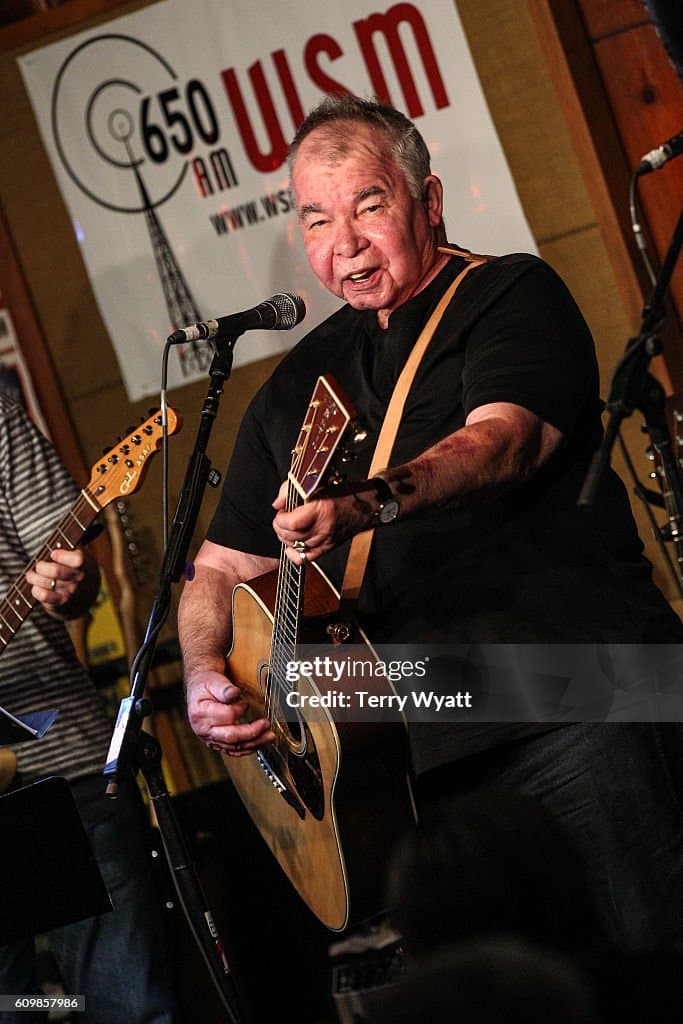
A Bitter Love Letter to a Nation Losing Its Innocence — irony, tenderness, and moral reckoning wrapped in song
When John Prine released “The Great Compromise” in 1972, he was not offering a protest anthem in the conventional sense. Instead, he delivered something far more unsettling and enduring: a sad, sharply observant love story between a citizen and his country, told with wit, restraint, and a quietly devastating sense of loss. Appearing on his second album, Diamonds in the Rough, the song arrived at a moment when America was struggling to recognize itself in the mirror.
From a chart perspective, it is important to be precise. “The Great Compromise” was not released as a hit single and did not enter the singles charts. The album Diamonds in the Rough itself reached No. 66 on the Billboard 200 in 1972—a modest showing that belied the depth of its influence. Like much of John Prine’s work, the song’s power was never measured in chart positions, but in how deeply it lodged itself in the conscience of listeners who were paying attention.
At its core, “The Great Compromise” is built around one of Prine’s most striking metaphors. America appears as a woman—often interpreted as a version of Lady Liberty—once loved, trusted, and believed in. The narrator speaks not with rage, but with heartbreak. He remembers believing the promises, standing by the ideals, and offering loyalty without conditions. What he receives in return is not violence, but something more corrosive: betrayal through indifference, hypocrisy, and moral exhaustion.
The song emerged from the shadow of the Vietnam War, the erosion of public trust, and the slow unraveling of postwar optimism. Yet John Prine never names events, politicians, or slogans. That restraint is crucial. By avoiding specifics, he allows the song to live beyond its era. The compromises he sings about are not only political; they are ethical, emotional, and deeply personal. The tragedy is not that ideals were challenged, but that they were quietly negotiated away.
Musically, “The Great Compromise” is deceptively gentle. The arrangement is sparse, rooted in acoustic folk, with a melody that almost invites you to relax. That calm surface makes the lyrics hit harder. Prine understood that outrage shouted often fades, but disappointment spoken softly lingers. His voice—plain, conversational, and unadorned—sounds less like a performer and more like someone sitting across the table, choosing his words carefully because they matter.
What makes the song especially resonant for mature listeners is its emotional maturity. There is no call for revolution, no fantasy of returning to some perfect past. Instead, there is acceptance mixed with grief. The narrator recognizes that the relationship has changed forever. The “compromise” is not just a political settlement; it is the moment when innocence gives way to realism, when faith becomes conditional, and when love survives only as memory.
Within Diamonds in the Rough, the song stands as one of John Prine’s most intellectually daring compositions. The album itself was intentionally raw, recorded quickly and without polish, reflecting Prine’s desire to strip away artifice. That aesthetic choice suits “The Great Compromise” perfectly. Nothing here is dressed up. The truth is allowed to sound uncomfortable.
Over time, the song has grown in stature. It is frequently cited as one of Prine’s most incisive political pieces, though he himself resisted that label. In typical Prine fashion, he once suggested that he was simply writing about how things felt. That humility is part of why the song endures. It does not lecture. It confides.
Today, “The Great Compromise” feels less like a relic of the early 1970s and more like a recurring chapter in a long national story. Its sadness is not dated; its questions remain unresolved. And perhaps that is its greatest achievement. John Prine captured the moment when belief falters but conscience remains—a fragile, human space that many recognize, even if they struggle to name it.
In the end, the song leaves us not with answers, but with a feeling: the quiet ache of loving something enough to notice when it has changed. And that, in Prine’s world, is where the most honest songs are born.