
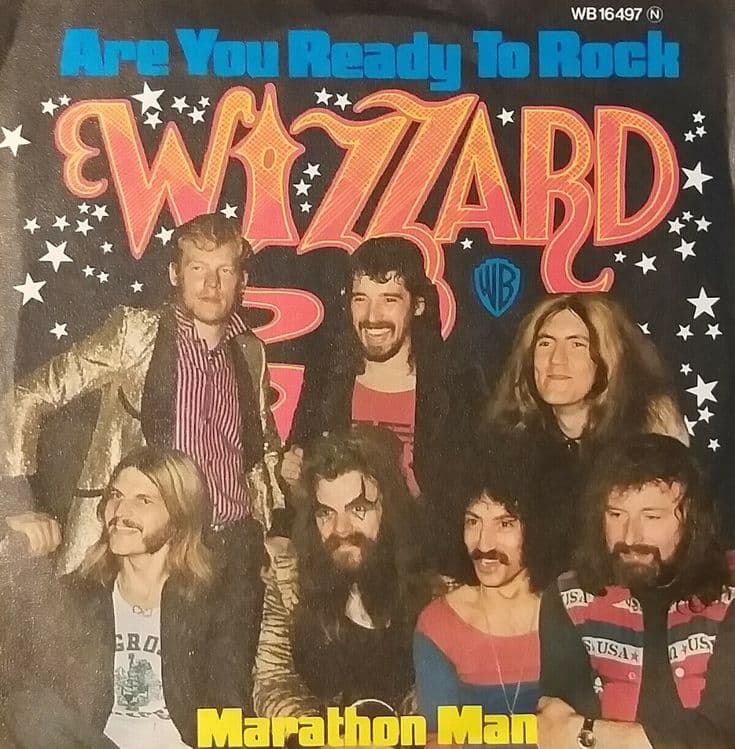
See My Baby Jive — a burst of joy and youthful swagger that captured a fleeting, glittering moment in British pop history
When “See My Baby Jive” burst onto the airwaves in 1973, it sounded like pure fun — loud, cheeky, infectious — yet beneath its playful surface lay something far more meaningful. Performed by Wizzard, the flamboyant band led by Roy Wood, the song arrived at exactly the right moment, when British pop music was ready to laugh, dance, and remember how exhilarating rock ’n’ roll could be.
Released in May 1973, “See My Baby Jive” raced straight to No. 1 on the UK Singles Chart, where it stayed for four consecutive weeks. It was Wizzard’s first chart-topping single, and it marked the beginning of an extraordinary run: the band would go on to score three consecutive UK No. 1 hits, an achievement few groups of the era could claim. This success was not accidental — it was the result of Roy Wood’s deep musical instincts and his fearless embrace of spectacle.
By the time this song was released, Roy Wood was already a respected figure in British music, having co-founded The Move and later Electric Light Orchestra. But with Wizzard, he chose a different path. Instead of orchestral ambition or progressive seriousness, he reached back to the raw excitement of early rock ’n’ roll, blending it with the glitter, humor, and theatrical excess of the glam era. “See My Baby Jive” was his declaration of freedom — a song that refused to take itself too seriously while being meticulously crafted underneath.
Musically, the track is deceptively simple. Built around a stomping rhythm, handclaps, and a swaggering vocal delivery, it echoes the spirit of 1950s rock filtered through 1970s exuberance. The rough edges are intentional. Wood’s voice sounds like it’s shouting from a crowded dance floor, half-singing, half-laughing, carried forward by sheer enthusiasm. It feels spontaneous, but every note is carefully designed to feel loose and joyful.
Lyrically, “See My Baby Jive” doesn’t aim for poetic depth — and that is precisely its strength. The song celebrates movement, confidence, and the irresistible pull of watching someone you adore come alive through music. It captures the thrill of youth, the feeling of standing at the edge of the dance floor and knowing the night belongs to you. There is no heartbreak here, no introspection — only the pure pleasure of being young, loud, and unapologetically present.
For many listeners, especially those who lived through that era, the song is inseparable from memory. It recalls a time when music shows were colorful, when singles were events, and when pop music felt like a shared celebration rather than a background noise. Hearing it today can instantly transport the listener back to crowded living rooms, crackling radios, and the excitement of seeing a favorite band climb to the top of the charts.
Yet beyond nostalgia, “See My Baby Jive” represents something deeper about Roy Wood’s artistry. It reminds us that sophistication in music doesn’t always come from complexity. Sometimes it comes from knowing exactly how to make people feel good — how to tap into collective joy without irony or distance. In an age when pop music often leans toward polish and restraint, this song stands as a reminder of how thrilling unfiltered enthusiasm can be.
In the long arc of British pop history, Wizzard may be remembered most vividly for their Christmas anthem, but “See My Baby Jive” was the spark that lit the fire. It announced a band unafraid of fun, led by a musician confident enough to trust his instincts and his love for rock ’n’ roll’s roots.
More than fifty years on, the song still dances. And as it plays, it gently reminds us of a time when music didn’t ask us to analyze or explain — it simply invited us to move, smile, and remember who we were when the world felt lighter, louder, and full of possibility.