
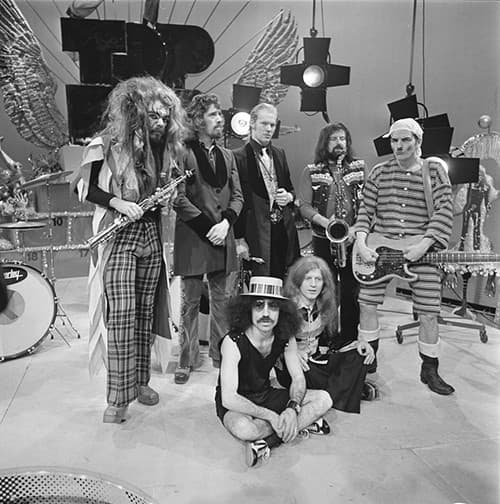
I Wish It Could Be Christmas Everyday — a joyful wish frozen in time, echoing the warmth of childhood and shared winters
Few songs capture the spirit of Christmas with such unrestrained joy and lasting emotional power as “I Wish It Could Be Christmas Everyday” by Wizzard. Released in December 1973, the song entered the UK Singles Chart and climbed to No. 4, a remarkable achievement in a season crowded with festive releases. Although it was famously held off the top spot by Slade’s “Merry Xmas Everybody,” history has been kind to Wizzard’s song, allowing it to grow far beyond its original chart position into one of the most beloved Christmas anthems in British music history.
From its opening bells to its wall of sound finale, the song feels like stepping into a snow globe of memory. Behind this exuberance stands Roy Wood, the creative force behind Wizzard, already well known for his work with The Move and as a founding member of Electric Light Orchestra. With “I Wish It Could Be Christmas Everyday,” Wood set out to create not just a seasonal hit, but a Christmas song that felt timeless — one that could summon wonder year after year, long after fashions and trends had faded.
The story behind the song is as charming as the music itself. Roy Wood was deeply inspired by Phil Spector’s grand, echo-laden production style, and he aimed to recreate that sense of festive excess — sleigh bells, choirs, brass, and layered vocals all colliding in joyful chaos. The children’s choir featured on the record was reportedly drawn from a local school, adding an authentic innocence that no studio trick could replicate. Their voices don’t just decorate the song; they define it, grounding the production in the sound of youthful excitement and belief.
Lyrically, the song is deceptively simple. “I wish it could be Christmas everyday” is not a clever line, nor does it try to be. Its power lies in its honesty. It speaks to a feeling almost everyone understands — the desire to hold on to moments of warmth, togetherness, and magic before time carries them away. Christmas, in this song, is not about dates or calendars. It is about a state of mind: a brief season when the world feels softer, when memories are made quietly and kept forever.
For listeners who first heard the song in the early 1970s, it often arrives now with layers of meaning that weren’t there before. What once felt like pure celebration has become tinged with nostalgia. The bells now ring alongside memories of family gatherings, flickering lights, familiar voices, and winter evenings that seemed endless at the time. The song doesn’t ignore the passing of years — it gently acknowledges it by wishing, however impossibly, that the feeling could last.
One of the reasons “I Wish It Could Be Christmas Everyday” has endured is that it refuses cynicism. It doesn’t wink at the listener or apologize for its cheer. It commits fully to joy, and in doing so, gives permission to remember freely. Each December, when the song returns to radio playlists and public spaces, it feels less like a repeat and more like a reunion — a reminder that some emotions remain untouched by time.
Over the decades, the song has repeatedly re-entered the UK charts during the Christmas season, sometimes climbing higher than it ever did in 1973. This slow, steady resurrection speaks volumes. It is not nostalgia alone that keeps it alive, but sincerity. In a world that often grows louder and faster, Wizzard’s Christmas wish remains refreshingly simple.
“I Wish It Could Be Christmas Everyday” endures because it understands something profound: that the true magic of Christmas lives not in presents or decorations, but in shared moments and remembered warmth. And each time the song plays, it invites us — quietly, kindly — to step back into that warmth once more, even if only for three perfect minutes.