
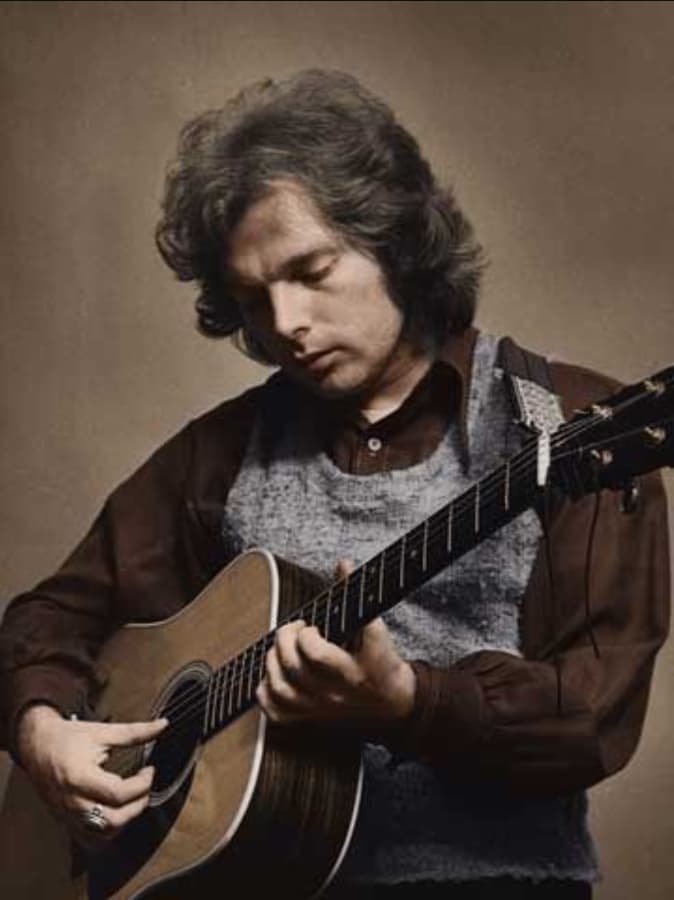
Brown Eyed Girl — a sunlit memory of youth, freedom, and a moment forever caught between laughter and goodbye
Few songs in popular music feel as instantly familiar, as warmly ingrained in collective memory, as “Brown Eyed Girl” by Van Morrison. From its opening acoustic strum and buoyant rhythm to that irresistible, carefree “sha-la-la” refrain, the song seems to arrive already wrapped in nostalgia — as if it had always existed, waiting patiently to be rediscovered each time it plays.
Released in 1967 and later included on the album Blowin’ Your Mind!, “Brown Eyed Girl” quickly became Van Morrison’s breakthrough as a solo artist. Upon its release, the song climbed to No. 10 on the Billboard Hot 100 in the United States and reached No. 8 on the UK Singles Chart, a remarkable achievement for an artist who, until then, was still stepping out from the shadow of his earlier band, Them. Commercial success aside, its true legacy would prove far deeper and more enduring than any chart position.
The story behind the song is layered, much like memory itself. Written during a period of creative transition, “Brown Eyed Girl” was originally titled “Brown-Skinned Girl”, with lyrics that were more overtly sensual. As the song moved toward recording and release, the tone softened, the imagery became gentler, and what emerged was something far more universal — a recollection of young love seen through the haze of time. Morrison himself would later express complicated feelings about the song, often distancing himself from it, perhaps because its enormous popularity froze one moment of his artistry in amber while he continued to evolve elsewhere.
Yet the song refuses to age.
At its heart, “Brown Eyed Girl” is not simply a celebration of romance; it is a meditation on memory. Lines like “Going down the old mine with a transistor radio” and “Laughing and a-running, hey hey” feel like fragments pulled directly from the past — not carefully arranged, but remembered as they come, vivid and fleeting. The girl herself becomes less a person and more a symbol: of youth, of summer, of a time before responsibilities crowded the edges of life.
Van Morrison’s vocal delivery plays a crucial role in this effect. His voice carries joy, but also a subtle ache. Even in the song’s most exuberant moments, there is a sense that the happiness being recalled is already gone. This tension — between celebration and loss — gives the song its emotional depth. It’s not about being young; it’s about remembering what it felt like to be young, and realizing you can never fully return there.
Musically, the track blends folk, pop, and rhythm-and-blues with effortless grace. The bright acoustic guitar, steady percussion, and simple chord progression leave space for Morrison’s phrasing to shine. Nothing feels excessive. Everything serves the story. The famous “sha-la-la” refrain, often mistaken for pure cheerfulness, works almost like a chant — a way of holding onto joy that words alone can no longer capture.
Over time, “Brown Eyed Girl” has become inseparable from moments of personal reflection. It plays at reunions, on long drives, at gatherings where stories are retold and laughter arrives hand in hand with quiet pauses. For listeners who have lived long enough to see summers pass and faces change, the song resonates as a reminder that some feelings never truly leave us — they simply learn how to live quietly inside.
In the vast and profound catalog of Van Morrison, filled with spiritual searching and poetic complexity, “Brown Eyed Girl” stands apart in its simplicity. It does not ask deep philosophical questions. It does not seek transcendence. Instead, it offers something just as powerful: a shared memory. A brief flash of sunlight on water. A voice calling from the past.