
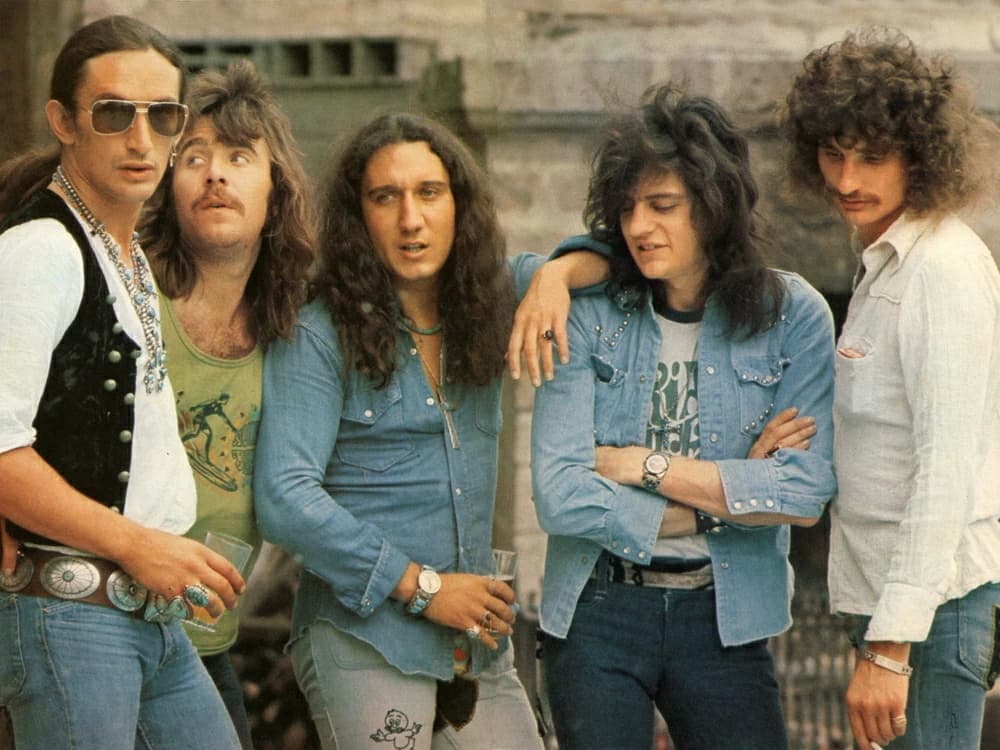
A Roaring Anthem of Youthful Abandon and the Pursuit of Unfettered Freedom: Uriah Heep’s “Easy Livin'”
Ah, “Easy Livin'”. Just the title itself conjures up images of a time when life felt boundless, the open road beckoned, and the sheer joy of existence pulsed through our veins. Released in the spring of 1972, this electrifying track from Uriah Heep’s iconic album, “Demons and Wizards”, wasn’t just a song; it was an anthem. It resonated deeply with a generation hungry for liberation, a soundtrack to youthful rebellion and the yearning for a life lived on one’s own terms. Climbing the charts with the relentless energy it exuded, “Easy Livin'” swiftly became a staple on radio airwaves and a roaring centerpiece in Uriah Heep’s formidable live performances. While it didn’t necessarily conquer the very top spots, its impact was undeniable, embedding itself firmly in the popular consciousness and solidifying “Demons and Wizards” as a cornerstone of early 70s rock.
The genesis of this powerful track lies in a moment of pure, unadulterated rock and roll energy. Legend has it that keyboard wizard and principal songwriter Ken Hensley penned the lyrics in a mere fifteen minutes backstage before a concert. This spontaneity shines through in the song’s raw and direct delivery. It speaks of casting aside societal constraints, of breaking free from the mundane and embracing a life filled with excitement and simple pleasures. The lyrics, though concise, paint a vivid picture of a restless spirit seeking thrills and companionship on a journey unburdened by responsibility. Phrases like “rollin’ down the highway,” “doin’ it my way,” and “lookin’ for some good times” encapsulate this desire for autonomy and the pursuit of immediate gratification that often characterizes youth.
But “Easy Livin'” is more than just a celebration of carefree living. Beneath the surface of its driving rhythm and Mick Box’s signature wah-infused guitar riffs, there’s a subtle undercurrent of defiance. It’s a declaration of independence from the expectations of the older generation, a bold assertion of the right to forge one’s own path. In a world often perceived as rigid and conformist, Uriah Heep offered a powerful alternative, a sonic escape hatch into a realm of boundless possibility. The sheer energy of the song, from Lee Kerslake’s thunderous drumming to David Byron’s soaring vocals, embodies this spirit of rebellion, urging listeners to break free and embrace the exhilarating uncertainty of the open road.
The impact of “Easy Livin'” extended far beyond its chart performance. It became a defining song for Uriah Heep, a band that masterfully blended hard rock intensity with progressive rock sensibilities. The track’s infectious energy and memorable chorus made it a perennial crowd-pleaser, a song that could ignite any arena into a frenzy. Its influence can be heard in countless rock anthems that followed, a testament to its enduring power and its ability to capture a universal yearning for freedom and excitement. Even today, decades later, the opening chords of “Easy Livin'” can transport us back to a time of youthful exuberance, reminding us of the thrill of breaking free and the simple joy of living life on our own terms. It’s a musical time capsule, preserving the spirit of a generation that dared to dream of an easier, more liberated existence.