
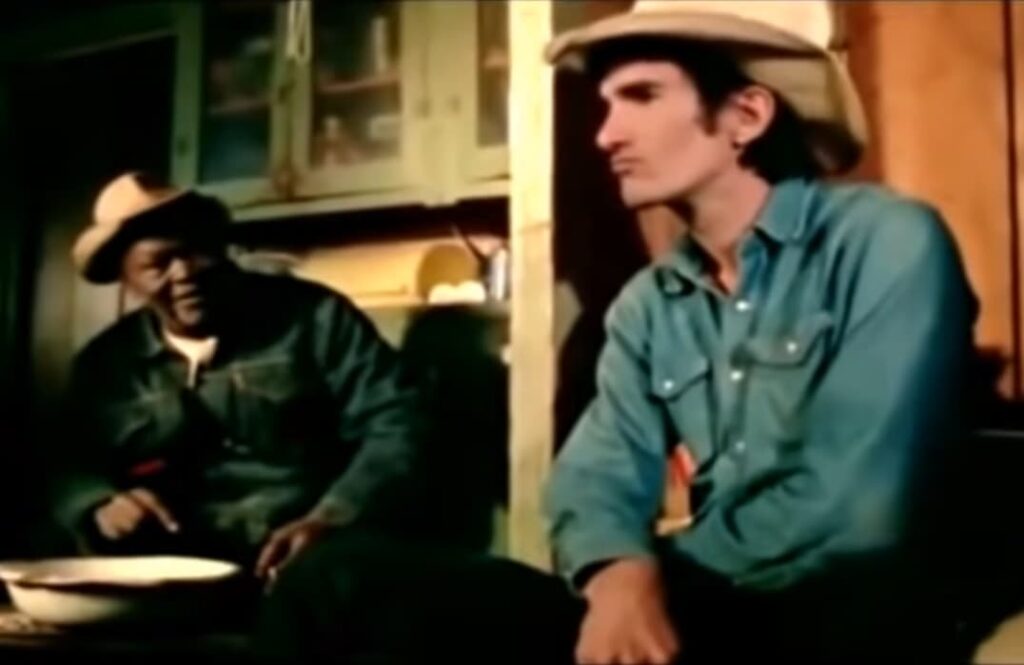
A Timeless Moment of American Songwriting in Heartworn Highways
Few filmed performances capture the raw essence of American songwriting as powerfully as Townes Van Zandt’s rendition of Waitin’ Around to Die in the documentary Heartworn Highways. Recorded in 1975 and later released as part of James Szalapski’s influential film in 1981, the performance remains one of the most compelling visual records of Van Zandt’s artistry and the spirit of the outlaw country movement.
Set in an intimate gathering rather than a concert hall, the scene presents Van Zandt in his natural element. There are no elaborate stage productions, no commercial distractions, and no attempt to soften the stark emotional weight of the song. Instead, the camera quietly observes as one of America’s most respected songwriters delivers a composition that has long been regarded as a masterpiece of narrative songwriting.
Waitin’ Around to Die tells a story of hardship, loneliness, and resignation with remarkable honesty. Van Zandt’s writing avoids sentimentality, relying instead on simple yet devastating imagery. His understated vocal delivery allows the lyrics to take center stage, creating an atmosphere that feels both personal and universal.
The performance has also helped reinforce Van Zandt’s reputation among fellow songwriters. His influence extends far beyond commercial success, reaching generations of artists who have admired the depth and authenticity of his work. It is often cited as evidence of why many musicians and critics place him among the greatest songwriters in American music history.
One particularly memorable aspect of the footage is the emotional response within the room. The song’s stark realism and quiet beauty create a powerful connection, reflecting the profound impact that Van Zandt’s writing could have on those present. Rather than relying on dramatic gestures, the performance draws its strength from truthfulness and vulnerability.
The clip also serves as a reminder of the musical landscape of the mid 1970s. While disco dominated much of the mainstream music industry at the time, artists such as Townes Van Zandt were creating deeply personal works outside the commercial spotlight. Their music may not have occupied the center of popular culture, yet it left an enduring artistic legacy that continues to resonate decades later.
More than fifty years after it was recorded, this performance remains a remarkable document of a songwriter at work. It captures not only the talent of Townes Van Zandt but also the enduring power of honest storytelling, proving that truly great songs can transcend trends, eras, and changing musical fashions.