
A quiet confession of a restless soul—“The Cowboy In Me” as a portrait of longing, freedom, and the cost of never standing still
Released in 2001 as the third single from the album Set This Circus Down, “The Cowboy In Me” by Tim McGraw stands as one of the most introspective and enduring pieces in his catalog. Written by Jeffrey Steele, Al Anderson, and Craig Wiseman, the song climbed to No. 1 on the Billboard Hot Country Songs chart in late 2001, affirming not only its commercial success but also its deep emotional resonance with listeners who recognized themselves in its quiet confession.
At first listen, the melody is gentle, almost unassuming—built on soft acoustic textures and a restrained rhythm that allows the lyrics to breathe. But beneath that calm surface lies a powerful meditation on identity. The “cowboy” in the song is not merely a figure of the American West; rather, he becomes a symbol of the wandering spirit—the part of a man that resists being tied down, even when love and stability beckon.
“The Cowboy In Me” tells the story of a man who is fully aware of his own contradictions. He is capable of love, yet equally capable of leaving. He understands the value of commitment, yet feels the pull of the open road. In many ways, it is less a narrative and more a confession—spoken quietly, almost with regret. That duality is what gives the song its enduring power. It does not judge; it simply reveals.
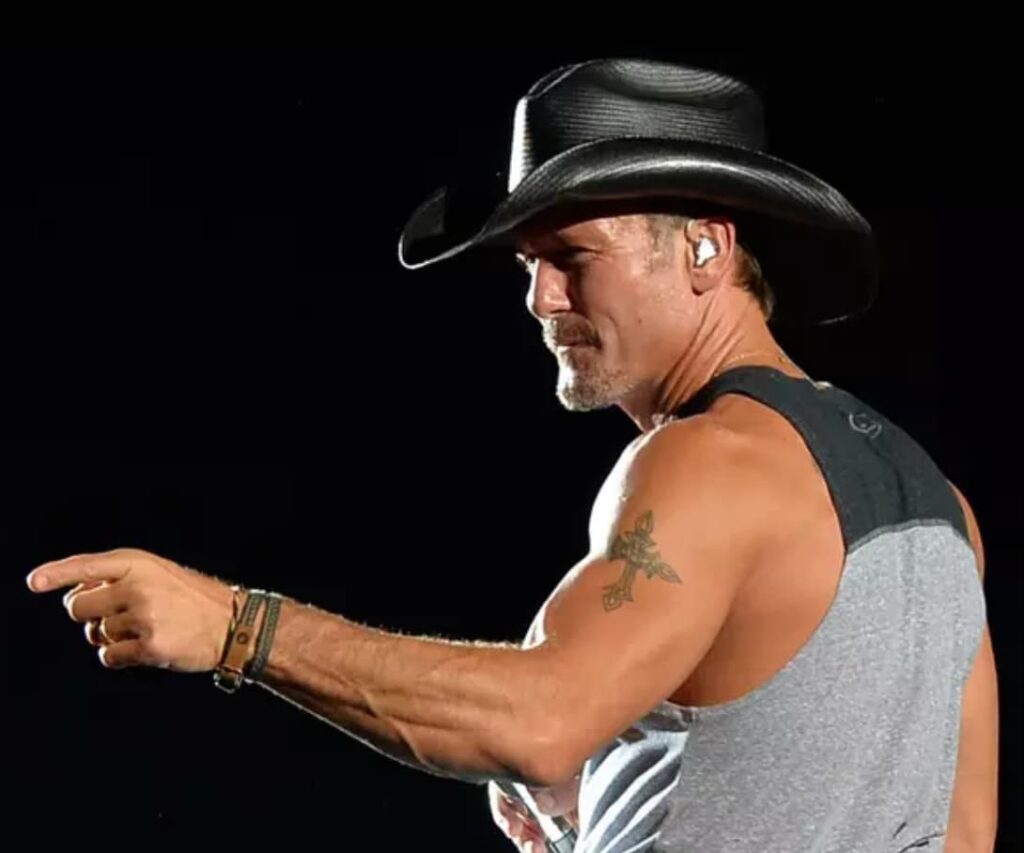
For Tim McGraw, this song marked a moment of artistic maturity. By 2001, he was already a major force in country music, but Set This Circus Down showed a deeper willingness to explore vulnerability. The album itself was a commercial triumph, debuting at No. 1 on the Billboard 200, and “The Cowboy In Me” became one of its emotional cornerstones. It was also a highlight of his live performances during that era—often delivered with a stillness that contrasted sharply with the energy of his more upbeat hits. In concert, the song would hush entire arenas, drawing listeners into its reflective space.
The meaning of the song extends beyond the individual. It speaks to a generation that grew up balancing responsibility with an unspoken desire for freedom. There is something timeless in that tension—the push and pull between staying and leaving, between building a life and chasing something undefined. The “cowboy” becomes a metaphor not just for men of a certain era, but for anyone who has ever felt divided between two paths.
What makes “The Cowboy In Me” particularly memorable is its honesty. There is no attempt to romanticize the wandering spirit. If anything, the song acknowledges the quiet damage it can cause—the relationships strained, the promises broken, the loneliness that follows. Yet it also recognizes that this restless nature is not easily changed. It is, as the song suggests, something ingrained, something deeply human.
Over time, the song has aged gracefully. It does not rely on trends or production flourishes that tie it to a specific moment. Instead, it leans on storytelling and emotion—qualities that remain relevant regardless of era. For many listeners, it has become a companion piece to their own reflections, a song that seems to grow in meaning as the years pass.
In the broader landscape of country music, “The Cowboy In Me” stands as a reminder of what the genre does best: telling simple truths with profound depth. It is not loud, nor is it flashy. But it lingers—like a memory that refuses to fade, or a road that always seems to call, no matter how far one has traveled.