
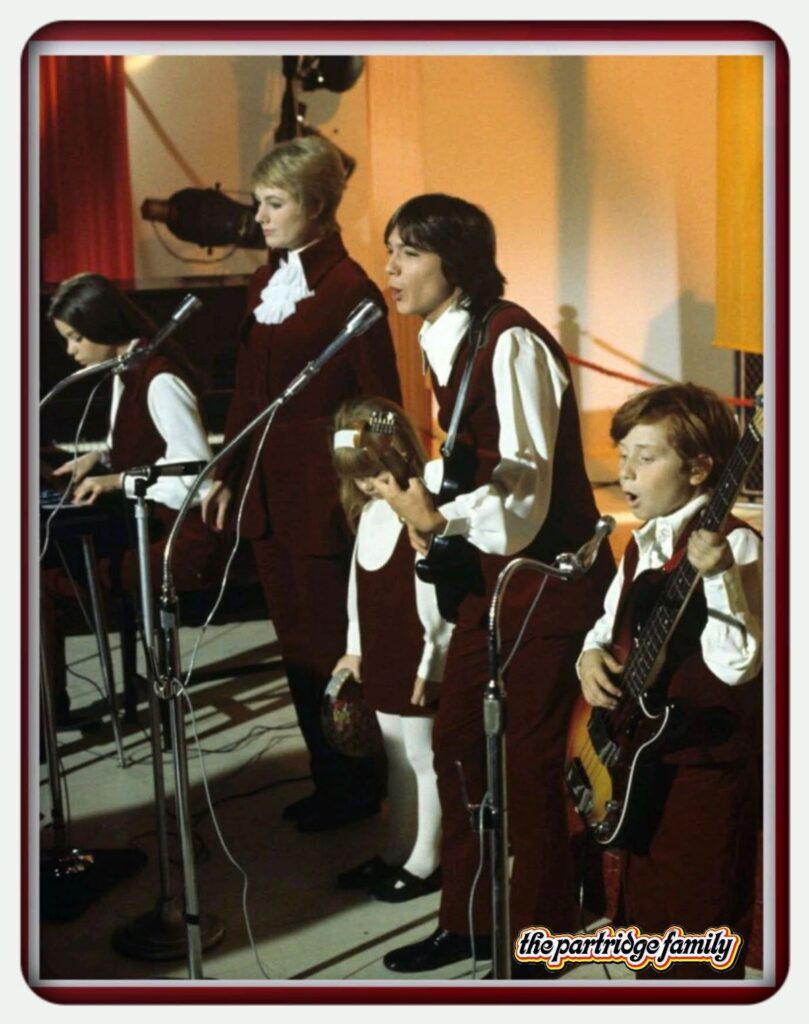
A Timeless Echo of Innocent Affection
Ah, where does one even begin to delve into the shimmering, innocent soundscapes of the early 1970s without stumbling upon the indelible footprint left by The Partridge Family? For many of us who lived through those simpler times, their music wasn’t just background noise; it was the very soundtrack to our burgeoning adolescences, a comforting presence emanating from our television screens and transistor radios. And among their charming catalog, nestled as the B-side to their colossal debut hit, “I Think I Love You,” was a tune that whispered sweet reassurance: “Somebody Wants To Love You.”
Released in October 1970 by Bell Records, “I Think I Love You” was a phenomenon, and as its flip side, “Somebody Wants To Love You” reaped the benefits of its A-side’s meteoric rise. While “I Think I Love You” famously soared to Number 1 on the US charts on October 31, 1970, holding that coveted spot for three weeks and selling over five million copies worldwide, “Somebody Wants To Love You” wasn’t a standalone chart-topper. Instead, it rode the coattails of its wildly successful companion, becoming a familiar melody in countless homes across America. It’s a testament to the sheer pervasive power of The Partridge Family that even their B-sides became household tunes, ingrained in the collective memory of a generation. In the UK, the single featuring both songs reached Number 18 on February 27, 1971, spending ten weeks on the charts.
Written by the prolific trio of Mike Appel, Jim Cretecos, and The Partridge Family‘s primary music producer, Wes Farrell, “Somebody Wants To Love You” is a tender ballad, a gentle hand extended in a world that can often feel isolating. At its core, the song is a simple, yet profound, message of hope and belonging. It speaks directly to anyone feeling lonely, overlooked, or unloved, reminding them that there is someone, somewhere, who cares. It’s a sentiment as old as time, yet presented with the characteristic warmth and sincerity that defined The Partridge Family‘s musical identity.
The story behind it isn’t one of dramatic artistic struggle or personal turmoil; rather, it’s intrinsically linked to the very genesis of The Partridge Family as a cultural phenomenon. Born from the success of The Monkees, the television show The Partridge Family premiered in September 1970, presenting the wholesome adventures of a musical family led by single mother Shirley Partridge, portrayed by the incomparable Shirley Jones, and her eldest son, Keith, played by the heartthrob David Cassidy. While Shirley Jones and David Cassidy lent their voices to the records, the actual instrumental backing and much of the background vocals were provided by seasoned studio musicians, often referred to as The Wrecking Crew. This wasn’t about raw, gritty rock and roll; it was about crafting perfectly polished pop confections designed to complement the family-friendly television show.
“Somebody Wants To Love You” perfectly encapsulated the show’s innocent charm. It evoked images of quiet contemplation, perhaps a young person gazing out a window on a rainy day, or finding solace in a moment of reflection. The lyrics paint a picture of understanding and empathy, suggesting that even in moments of despair, a ray of affection exists. Lines like “Lonely little runaway, with teardrops in your eyes” hinted at a deeper vulnerability, a gentle acknowledgment of the pain that even the most seemingly cheerful of us can carry. It wasn’t a bombastic declaration of love, but a quiet, comforting assurance – a musical hug, if you will.
For those of us who grew up with The Partridge Family, this song, even as a B-side, resonated deeply. It was a reminder that even when things felt uncertain, when the world seemed a little too big and confusing, there was a fundamental truth: Somebody Wants To Love You. It tapped into that universal human longing for connection, for acceptance, and for the simple warmth of being cherished. In an era when youth culture was rapidly changing, becoming more rebellious and complex, The Partridge Family offered a safe harbor, a melodic reminder of enduring values and the power of simple affection. It evokes a simpler time, a warmth that still glows softly in the embers of our memories, reminding us of the enduring power of a kind word and the timeless need to be loved.