
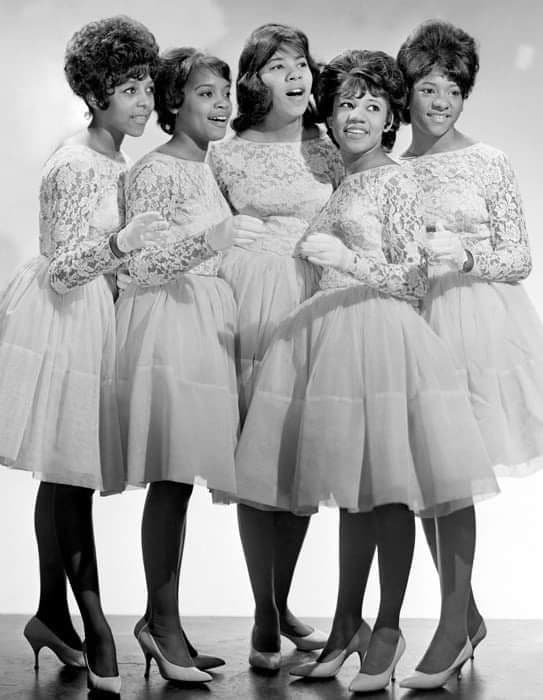
Da Doo Ron Ron — the sparkling heartbeat of young love, forever echoing through the early ’60s
There’s a kind of magic that only early ’60s pop can conjure — a magic made of innocence, immediacy, and the irresistible thump of a rhythm that feels like first love arriving at your doorstep. Few songs capture that feeling as brilliantly as “Da Doo Ron Ron” by The Crystals. Released in April 1963 under producer Phil Spector’s famed “Wall of Sound,” the song surged to No. 3 on the US Billboard Hot 100 and reached No. 5 in the UK, instantly becoming one of the crown jewels of the girl-group era.
From the very first beat, “Da Doo Ron Ron” feels like a snapshot of youth preserved in sound — all bright tambourines, pounding drums, and a melody that dances rather than walks. But behind that energetic shine lies a story rooted in a pivotal moment for The Crystals. At the time, the group had been navigating shifting lineups and studio politics, and this track marked the debut of Dolores “LaLa” Brooks as their lead singer. Her youthful, crystalline voice gave the song the spark it needed — a spark that listeners still feel decades later.
The unusual title, with its playful nonsense phrase, wasn’t an accident. Songwriters Jeff Barry and Ellie Greenwich crafted that line as a placeholder while writing the tune — a rhythmic filler meant to be replaced later. But when they heard how perfectly it pulsed with the energy of the music, they left it untouched. Sometimes the heart understands what the mind tries to edit away. The phrase “Da Doo Ron Ron” became a joyful heartbeat — the punctuation to a girl’s breathless confession of meeting a boy and falling head-first into love.
What gives the song its staying power isn’t just its catchy hook; it’s the emotional truth woven into its simplicity. The lyrics paint a story we all once lived:
“I met him on a Monday, and my heart stood still…”
It’s just one line, but in those few words, a whole world unfolds — the thrill of surprise, the flutter of excitement, that moment when life suddenly feels different because of one person standing at the corner of a street.
For listeners today, especially those who lived through the era, the song is more than a hit record — it is a time capsule. It brings back the glow of transistor radios tucked under pillows, the sound of high-school gym dances with their polished floors and nervous smiles, the feeling of walking home in the evening light with a secret that made the whole world shimmer. “Da Doo Ron Ron” is youth distilled, sealed, and preserved.
It also represents the height of the girl-group sound, a genre that gave young women a new musical voice — not in grand statements, but in the small truths of everyday emotion. The Crystals were at the forefront of this movement, and this track remains one of their definitive moments. Through Spector’s layered production, LaLa Brooks’ radiant vocal, and the timeless sparkle of the arrangement, the song captures the essence of early-’60s optimism — bright, bold, and innocent.
And perhaps that is why it continues to resonate. In a world that grows more complicated with each passing decade, “Da Doo Ron Ron” reminds us of the pure joy of being young and unguarded. It carries us back to a time when a chance meeting could make our hearts race, when love felt simple, and when music gave us the courage to dream.
All these years later, the beat still hits, the chorus still lifts, and that unforgettable phrase still dances in our minds. Some songs grow old. This one stays young forever.