
A Descent into the Anxious Mind: Talking Heads’ “Psycho Killer” Explored
For those of us who were navigating the sonic tapestry of the era, the arrival of Talking Heads and their enigmatic frontman, David Byrne, was like a jolt of electricity. Their sound was unlike anything else on the radio, a fascinating blend of art-school intellect and raw, nervous energy. And at the forefront of their initial impact was the undeniably captivating and somewhat unsettling track, “Psycho Killer.”
Released in December 1977 as their debut single, preceding their groundbreaking album Talking Heads: 77, “Psycho Killer” quickly carved a unique niche for itself in the charts. While it didn’t skyrocket to the very top, it achieved a respectable position, climbing to number 92 on the Billboard Hot 100 in the United States. More significantly, it resonated deeply with a burgeoning audience that craved something beyond the conventional rock and pop of the time. In the UK, it fared even better, reaching number 12 on the singles chart, signaling the band’s early international appeal. This chart performance, while perhaps modest by today’s standards, was a powerful indicator of the song’s immediate and distinctive impact. It announced the arrival of a band that was unafraid to explore the darker corners of the human psyche through a decidedly unconventional musical lens.
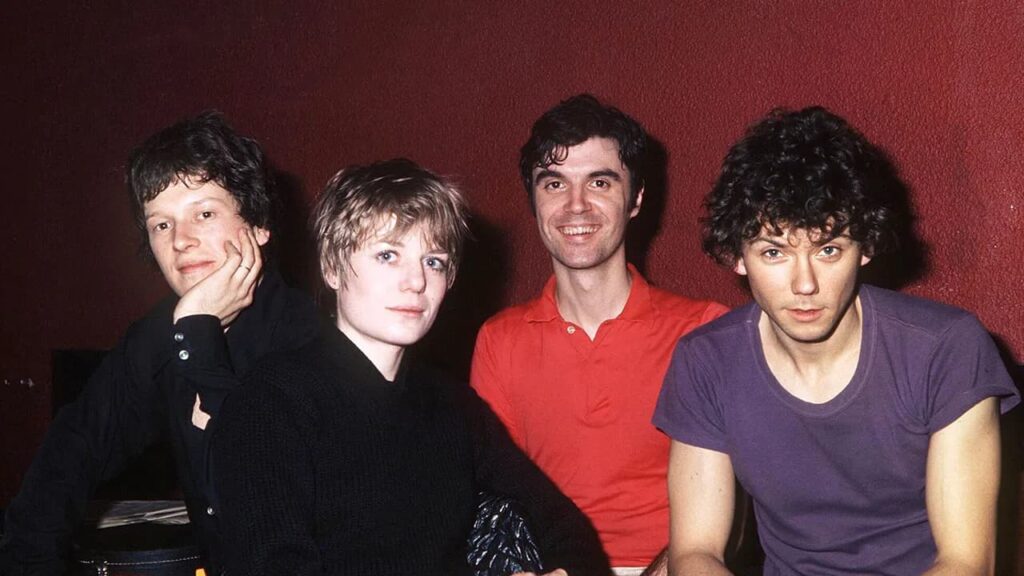
The genesis of “Psycho Killer” is quite intriguing, offering a glimpse into the creative mind of David Byrne. The song actually predates the formation of Talking Heads, with Byrne having performed an early version of it solo in the mid-1970s. This initial iteration was reportedly more overtly theatrical and less musically complex. As the band coalesced with Chris Frantz, Tina Weymouth, and later Jerry Harrison, the song evolved, gaining its signature angular guitar riffs, the driving bassline, and the increasingly frantic vocal delivery that made it so instantly recognizable.
The lyrics of “Psycho Killer” are a masterclass in creating unease and ambiguity. Sung from the perspective of someone who is clearly disturbed, the words offer fragmented thoughts and unsettling pronouncements. The famous French interlude, “Qu’est-ce que c’est?” (What is that?) and “Fa fa fa fa fa fa fa fa fa fa, better run run run run run run away,” adds an extra layer of mystification and a touch of the absurd, which became a hallmark of Talking Heads’ early work.
The meaning of “Psycho Killer” has been interpreted in various ways over the years. Some see it as a straightforward portrayal of a burgeoning serial killer, offering a chilling glimpse into a fractured mind. Others view it as a more metaphorical exploration of inner turmoil, anxiety, and the potential for violence that lurks beneath the surface of seemingly normal individuals. Byrne himself has often been deliberately vague about the song’s specific meaning, allowing listeners to draw their own conclusions and adding to its enduring mystique. This ambiguity is precisely what made the song so compelling; it tapped into a sense of underlying tension that resonated with the anxieties of the era.
Beyond its lyrical content, the musical arrangement of “Psycho Killer” is equally crucial to its impact. The minimalist yet insistent instrumentation, the nervous energy of Byrne’s vocals, and the sudden shifts in tempo and dynamics all contribute to the song’s unsettling atmosphere. It wasn’t the soaring guitars or bombastic drums of typical rock anthems; instead, it was a carefully constructed soundscape of tension and release, mirroring the fractured state of mind depicted in the lyrics.
Thinking back to the late 70s, “Psycho Killer” felt like a breath of fresh, albeit slightly unsettling, air. It stood out amidst the disco craze and the tail end of stadium rock, offering something intellectually stimulating and sonically adventurous. It was a song that made you think, made you move in a slightly jerky, unconventional way, and most importantly, it announced the arrival of a band that would go on to shape the sound of the coming decade. Talking Heads, with “Psycho Killer” as their initial calling card, were pioneers of a new wave of music that embraced art, intellect, and a healthy dose of the unexpected. The song remains a testament to their unique vision and its impact continues to be felt by generations of music lovers who appreciate a little bit of delightful darkness in their sonic landscape. It’s a track that takes us back to a time of musical experimentation and the thrill of discovering something truly original.