
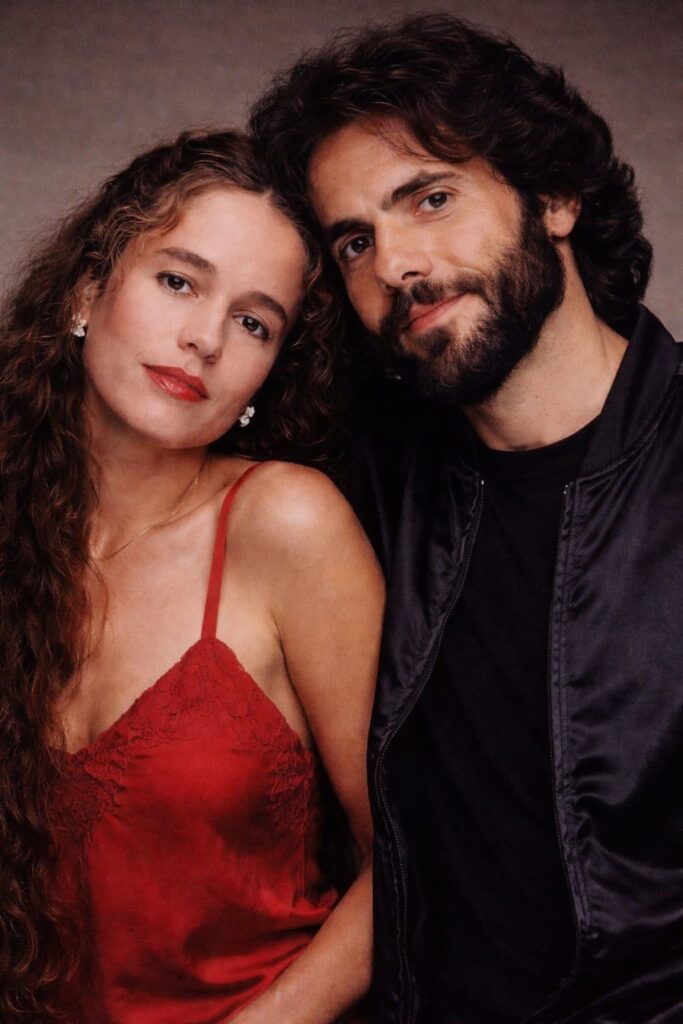
A wistful reflection on love lost and the quiet ache of “the one that got away”
When “The One That Got Away” was recorded by Steve Goodman and later given a luminous interpretation by Nicolette Larson, it carried with it the unmistakable hallmark of Goodman’s songwriting: gentle, observant, and quietly devastating. Though not a major chart-topping single in the conventional sense, the song belongs to a lineage of deeply respected American songwriting that thrived in the 1970s—an era when storytelling mattered as much as melody. Goodman, best known for “City of New Orleans”, never chased commercial glory as aggressively as his contemporaries, yet his work resonated profoundly within the folk and country circles. Larson’s version, emerging during her rise in the late 1970s and early 1980s, found modest airplay, especially on adult contemporary and country radio, though it did not secure a high position on the Billboard Hot 100. Its true success lies not in numbers, but in endurance.
The song itself is built on a deceptively simple premise: the memory of a love that slipped through one’s fingers. But in Goodman’s hands, that premise becomes something richer—less about regret, and more about the quiet understanding that some moments are not meant to be held onto. There is no bitterness here, no dramatic heartbreak. Instead, there is a kind of emotional maturity, a recognition that life unfolds in ways we cannot always shape. That restraint, that refusal to overstate, is precisely what gives the song its lasting power.
Steve Goodman wrote songs the way a seasoned observer recalls life—not with exaggeration, but with detail and honesty. By the time he wrote “The One That Got Away,” he had already established himself as a songwriter’s songwriter, admired by peers like John Prine and Kris Kristofferson. Behind the scenes, Goodman was battling leukemia, a fact that lends an added layer of poignancy to his work. He understood, perhaps more deeply than most, the fragility of time and the importance of capturing fleeting emotions. This awareness seeps into the song’s DNA, making it feel less like a lament and more like a quiet confession.
When Nicolette Larson brought her voice to the piece, she added a different shade of emotion—softer, more reflective, tinged with a country warmth that made the story feel even more intimate. Known for her hit “Lotta Love” (which reached No. 8 on the Billboard Hot 100 in 1978), Larson had a gift for interpreting songs in a way that made them feel personal without losing their universal appeal. Her rendition of “The One That Got Away” doesn’t overpower Goodman’s original intent; instead, it gently illuminates it, like a memory recalled in the golden light of late afternoon.
What makes this song endure is its refusal to offer resolution. There is no reunion, no dramatic closure—only the lingering presence of what once was. In a musical landscape often dominated by grand gestures and sweeping declarations, this restraint feels almost radical. The song suggests that not every story needs an ending; some simply remain suspended in memory, revisited in quiet moments when the past feels close enough to touch.
For those who have lived long enough to understand that life is as much about what we lose as what we gain, “The One That Got Away” resonates on a deeply personal level. It is not a song that demands attention; rather, it invites reflection. It asks the listener to sit with their own memories, to acknowledge the roads not taken, and perhaps to find a strange comfort in them.
In the end, the song stands as a testament to Steve Goodman’s understated brilliance and Nicolette Larson’s interpretive grace. It may never have dominated the charts, but it has secured something far more enduring—a quiet place in the hearts of those who understand that sometimes, the most meaningful stories are the ones left unfinished.