
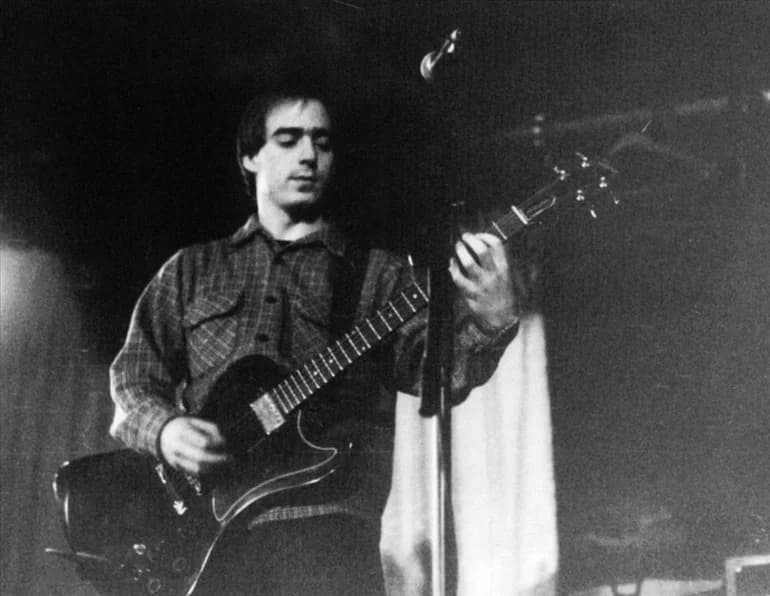
A farewell that sounded less like an ending… and more like a soul drifting into the night, carrying every wound it never learned to heal.
There are songs that comfort us gently. And then there are songs that seem to stare directly into the quiet corners of human loneliness. “Farewell Transmission” by Songs: Ohia belongs to the second kind — a song so raw, weathered, and spiritually exhausted that it almost feels discovered rather than recorded.
Released in 2003 on the album Magnolia Electric Co., the song stands today as one of the defining works of Jason Molina, one of the most deeply respected and emotionally devastating songwriters of the American underground folk and indie scene. Though the album was officially released under the name Songs: Ohia, many listeners consider it the true birth of Molina’s later band, Magnolia Electric Co. In many ways, the record itself feels like a crossroads: the end of one identity, the beginning of another, and perhaps unknowingly, the beginning of the long goodbye that would eventually surround Molina’s life and legacy.
Unlike mainstream hits of its era, “Farewell Transmission” never climbed the Billboard charts. It was never designed for radio dominance or commercial glory. Yet over the years, the song achieved something far rarer: permanence. It became one of those songs passed quietly from listener to listener, often during difficult nights, lonely drives, or periods when words from ordinary music no longer seemed enough.
The recording sessions for Magnolia Electric Co. were famously guided by legendary producer Steve Albini, known for capturing performances with brutal honesty rather than polished perfection. That decision mattered enormously. The song breathes like a living thing. You can hear the room around the instruments. You can feel the weight in Molina’s voice — cracked, tired, but fiercely human. Nothing feels artificial. Every note sounds earned.
And then there is that opening line:
“The whole place is dark…”
Few song beginnings in modern Americana music create atmosphere so quickly. From the very first seconds, Molina places the listener inside emotional darkness — not dramatic darkness, not cinematic sadness, but the kind of quiet emptiness that arrives after too many disappointments have settled into the bones.
Musically, the song blends elements of folk, country-rock, and heartland Americana. Echoes of Neil Young & Crazy Horse can be heard in its ragged electric guitars and slow-burning intensity, while the emotional honesty recalls older country traditions where suffering was never hidden behind clever production. The rhythm rolls forward like an endless highway at night, hypnotic and heavy, as if the song itself is trying to keep moving simply because stopping would hurt too much.
But what makes “Farewell Transmission” unforgettable is not merely sadness. It is endurance.
Jason Molina never wrote like someone trying to impress listeners with poetic tricks. His writing carried the plainspoken ache of old folk songs — direct, haunted, and startlingly sincere. Throughout the song, images of darkness, storms, roads, and broken communication appear again and again. The “transmission” in the title feels symbolic: a final message sent out into the void, uncertain whether anyone will hear it.
And perhaps that is why the song has only grown more powerful after Molina’s death in 2013 at the age of 39. His struggles with alcoholism and isolation have inevitably changed how listeners hear his work. Today, many hear “Farewell Transmission” almost as an accidental self-eulogy — though reducing it solely to tragedy would be unfair. The song is bigger than biography. It speaks to exhaustion itself. To carrying grief for so long that it becomes part of your identity.
What is remarkable is how communal the song feels despite its loneliness. The layered backing vocals — especially during the repeated refrain — create the sensation of weary souls singing together in the dark. It transforms private pain into something shared. Not solved. Not healed. Simply shared.
That distinction matters.
Many songs promise redemption. “Farewell Transmission” does not. Instead, it offers recognition. It says: yes, the night is long. Yes, people break. Yes, some roads never really lead home. But there is still dignity in continuing to sing through the static.
Over two decades later, the song remains one of the crown jewels of alternative Americana — beloved by musicians, critics, and devoted listeners who often describe discovering Jason Molina’s music as a deeply personal event rather than ordinary fandom. Artists across indie folk and country circles continue to cite Magnolia Electric Co. as a landmark album because it preserved something increasingly rare in modern music: emotional truth without performance.
Listening to “Farewell Transmission” today feels like opening an old letter stained by time. The world around it may have changed, but the emotions inside remain painfully intact. And perhaps that is the quiet miracle of Jason Molina’s music — it never demanded attention loudly. It simply waited patiently for hearts that understood weariness.
When those hearts finally found it, the song stayed with them forever.