
A Quiet Prayer for Lost Innocence and a World We Can Never Return To
When Roger Waters chose to reinterpret “Paradise”, a composition originally written and recorded by John Prine, he was not merely covering a song—he was revisiting a deeply American lament through the eyes of a global storyteller. The original “Paradise” first appeared on Prine’s self-titled debut album John Prine in 1971, a record that would later be regarded as one of the most important singer-songwriter debuts of its era. Though never a major chart hit in the traditional sense, the song became one of Prine’s most beloved and enduring works, passed from generation to generation through live performances and heartfelt reinterpretations.
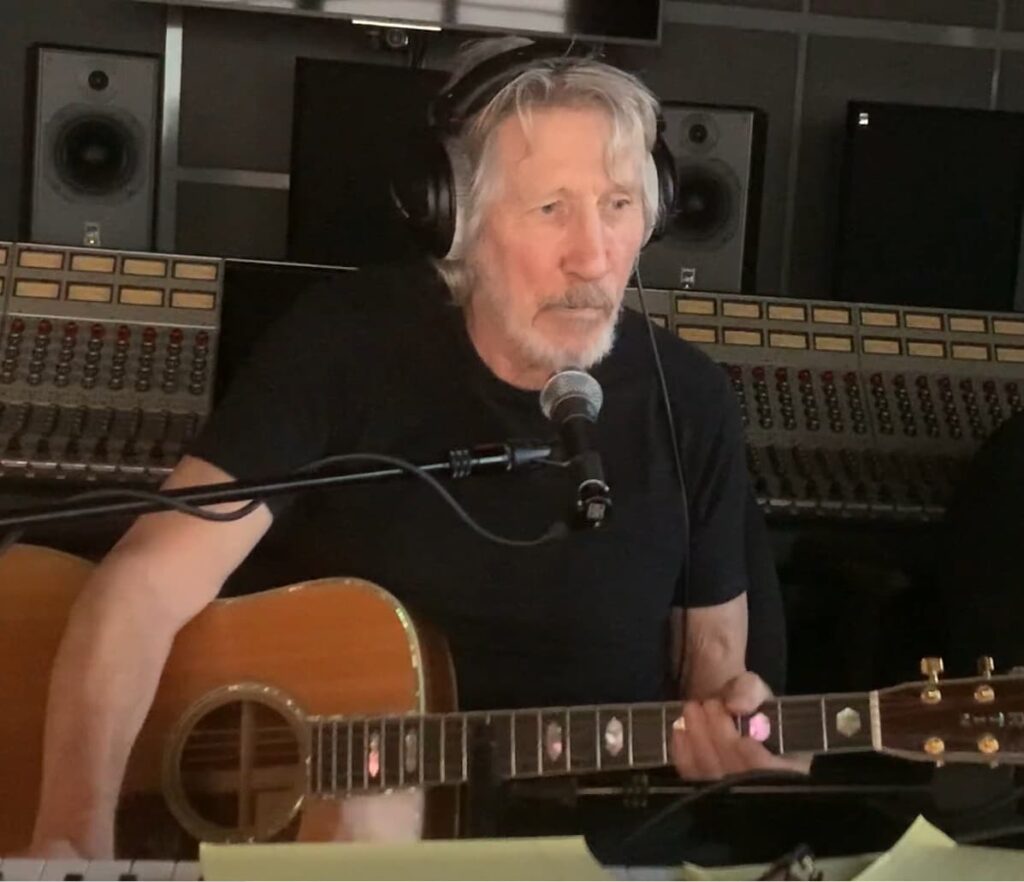
Roger Waters’ version of “Paradise” was released in 2020 as part of a tribute project honoring Prine following his passing in April of that year. Unlike the polished studio productions that often define tribute albums, Waters approached the song with stark simplicity—his voice weathered, reflective, and unmistakably sincere. The recording did not aim for chart dominance; instead, it found its place among listeners who value emotional truth over commercial success. While it did not chart prominently, its significance lies in its timing and its intent: a farewell from one legendary songwriter to another.
The story behind “Paradise” is rooted in real history. Prine wrote the song about the small town of Paradise, Kentucky, where his parents had lived. The town was effectively destroyed by strip mining conducted by the Peabody Coal Company, an act that left both environmental and emotional scars. Through simple yet piercing lyrics, Prine captured the loss of a place, a way of life, and the quiet dignity of working-class communities. Lines like “They hauled away the coal from the land that God made” carry a weight that transcends geography—they speak to a universal sense of displacement and regret.
When Roger Waters, best known for his work with Pink Floyd, steps into this narrative, the song takes on an additional layer of meaning. Waters has long been a chronicler of societal decay, political disillusionment, and human fragility. In his interpretation of “Paradise,” those themes merge seamlessly with Prine’s storytelling. The performance feels less like a cover and more like a continuation—a dialogue between two artists who, though separated by style and background, share a deep concern for humanity and memory.
There is something profoundly moving about hearing Waters’ aged voice carry the refrain, “And daddy, won’t you take me back to Muhlenberg County…” It is no longer just the voice of a son recalling childhood—it becomes the voice of time itself, asking if we can ever return to what has been lost. The arrangement is minimal, almost fragile, allowing every word to linger. In this restraint lies its power. It invites the listener not to be impressed, but to remember.
What makes this rendition especially meaningful is the quiet bond it reveals between artists. John Prine, who passed away due to complications from COVID-19 in April 2020, left behind a body of work defined by empathy, wit, and unvarnished truth. Roger Waters’ tribute is not grand or theatrical—it is intimate, almost private, as if meant for a small room rather than a vast audience. And yet, that intimacy resonates widely, especially with those who understand the passage of time not as a concept, but as a lived experience.
In the end, “Paradise”—whether sung by Prine or Waters—remains a song about more than a place. It is about memory, loss, and the quiet hope that somewhere, somehow, what we loved still exists in some form. And perhaps that is why it continues to endure, long after the charts have forgotten it.