
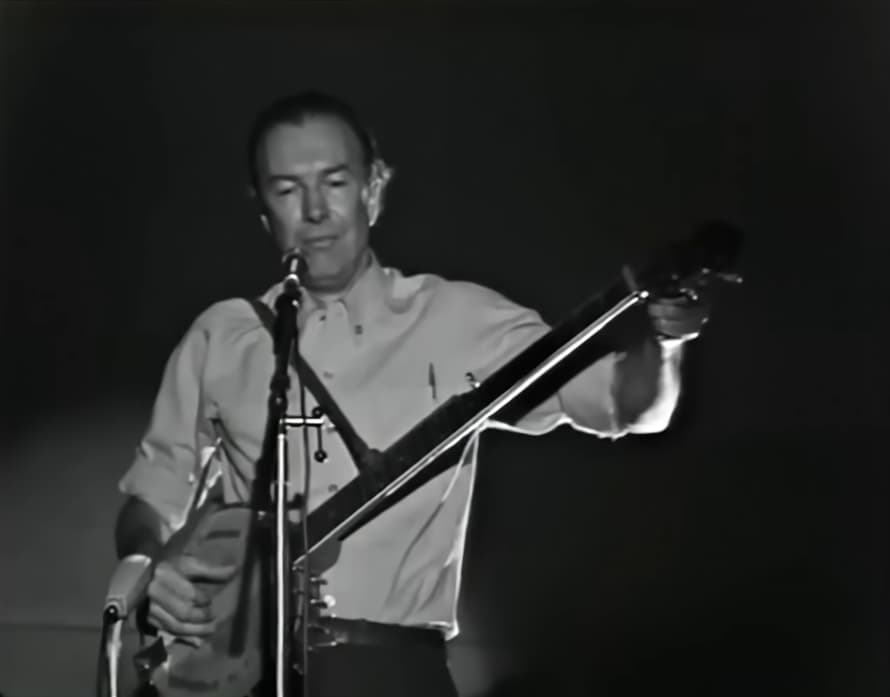
Pete Seeger’s 1968 Performance of Where Have All The Flowers Gone Remains a Timeless Plea for Peace
Pete Seeger’s live performance of Where Have All The Flowers Gone in Sweden in 1968 continues to stand as one of the most moving musical statements against war ever captured on film. Decades after it was recorded, the performance still carries the same quiet power that made both the song and its singer enduring symbols of peace, compassion, and humanity.
Born on May 3, 1919, Pete Seeger devoted his life not only to music but also to social justice, civil rights, environmental causes, and the pursuit of peace. Throughout a career that spanned more than seven decades, he believed that simple songs could inspire meaningful change. His passing on January 27, 2014, at the age of 94 marked the end of an extraordinary life, but his voice and ideals continue to resonate across generations.
Originally written by Pete Seeger in the 1950s and later expanded into the version known around the world, Where Have All The Flowers Gone became one of the defining antiwar songs of the twentieth century. Its repeating verses ask timeless questions about the endless cycle of war, loss, and remembrance. Rather than offering political slogans, the song invites quiet reflection, making its message as relevant today as it was during the turbulent years of the Cold War and the Vietnam era.
The 1968 Swedish performance captures Seeger at his most sincere. With little more than his voice and his banjo, he delivers the song with remarkable honesty and restraint. There is no need for elaborate production or dramatic gestures. The emotional weight comes entirely from the lyrics and the conviction behind every line.
Many who remember Pete Seeger describe him not only as a gifted musician but also as a poet, a lifelong pacifist, and a man whose integrity matched his art. His unwavering opposition to war and violence earned deep admiration from those who believed music could be a force for justice. Some have even expressed that his lifelong commitment to peace made him worthy of the highest international recognition for humanitarian efforts.
The emotions inspired by this performance remain deeply personal. For many, the song is among the saddest ever written because of its simplicity and profound truth. It reminds listeners of lives lost in conflicts and of the hope that one day humanity might choose compassion over destruction. Others find comfort in Seeger’s example, believing that his courage, kindness, and determination continue to offer hope during difficult times.
Nearly six decades after this unforgettable performance, Where Have All The Flowers Gone remains far more than a folk classic. It is a lasting reminder that music can speak gently while carrying extraordinary moral strength. Pete Seeger’s legacy lives on through songs that continue to encourage peace, justice, and the enduring belief that even the simplest melody can help shape a better world.