
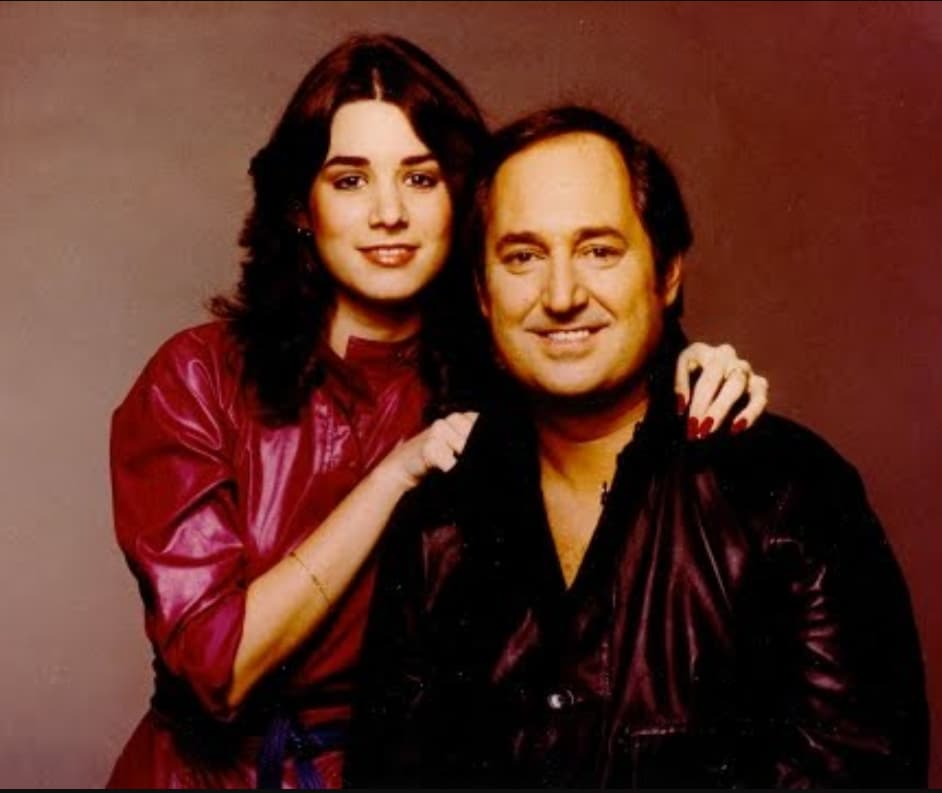
A Tender Reunion Between Father and Daughter — A Song of Gratitude, Grace, and Gentle Devotion
When “You’re So Good for Me” was released in 1980, it carried with it far more than a simple pop melody. It was a moment of artistic rebirth for Neil Sedaka, and a deeply personal collaboration with his daughter, Dara Sedaka. Issued as a single from the album In the Pocket (1980), the song became part of Sedaka’s remarkable late-career resurgence that had begun in the mid-1970s. While it did not reach the towering chart heights of his earlier classics, it nonetheless found a respectable place on the Adult Contemporary charts in North America, resonating particularly with listeners who had grown up with Sedaka’s voice in the early 1960s.
To fully understand the emotional weight of this duet, one must look back at the arc of Neil Sedaka’s career. In the late 1950s and early 1960s, he was one of the defining voices of the Brill Building era, delivering enduring hits such as “Calendar Girl” (No. 4 on the Billboard Hot 100, 1961) and “Breaking Up Is Hard to Do” (No. 1, 1962). Yet by the late 1960s, the British Invasion had reshaped the musical landscape, and Sedaka’s chart presence in America waned. Many assumed his time in the spotlight had passed.
But Sedaka’s story is one of persistence and renewal. In the mid-1970s, with the support of Elton John, who signed him to Rocket Records, Sedaka returned to prominence. Albums like Sedaka’s Back (1975) and the international smash “Laughter in the Rain” (No. 1 on the Billboard Hot 100 in 1975) reestablished him as a sophisticated pop craftsman capable of evolving with the times. By the time In the Pocket arrived in 1980, Sedaka was no longer merely a nostalgic figure—he was a seasoned songwriter reflecting on life with maturity and warmth.
It is within this context that “You’re So Good for Me” takes on its deeper meaning. The song is gentle, melodically tender, and lyrically direct. It speaks of appreciation—not the youthful infatuation of early pop romance, but a steadier, more reflective gratitude. The pairing with Dara Sedaka adds a layer of intimacy impossible to manufacture. This is not just a duet; it is a father sharing a musical conversation with his daughter.
Dara, who had pursued her own musical path—including work as a songwriter in Japan—brings a soft clarity to the performance. Her voice complements her father’s familiar tenor in a way that feels organic rather than staged. One hears not competition, but affection. The harmonies are restrained, warm, and unforced. There is a subtle poignancy in listening to a man who once sang about teenage love now trading lines with the next generation.
Musically, the arrangement reflects late-1970s Adult Contemporary sensibilities: polished production, gentle keyboard textures, and a rhythm section that supports rather than dominates. Unlike the exuberant bounce of Sedaka’s early hits, this song moves at a reflective pace. It invites listening rather than dancing. The orchestration is tasteful, never overwhelming the sentiment at the song’s core.
Lyrically, the message is simple yet deeply resonant: gratitude for someone who steadies, comforts, and strengthens one’s life. There is an emotional maturity here that feels earned. Sedaka had experienced the volatility of fame, the quiet years away from the charts, and the humility of rebuilding. When he sings about someone being “so good for me,” it carries the weight of experience. It feels less like romantic hyperbole and more like lived understanding.
In retrospect, “You’re So Good for Me” may not be counted among the towering commercial triumphs of Neil Sedaka’s catalog, yet it occupies a special place for those who value the emotional continuity of an artist’s life. It stands as a gentle testament to family, endurance, and gratitude—qualities that deepen in significance over time.
Listening to it today, one cannot help but sense the quiet pride of a father, the respect of a daughter, and the enduring grace of a songwriter who never stopped believing in melody. In a career defined by reinvention, this song feels like something even rarer: a moment of stillness, sincerity, and heartfelt connection.