
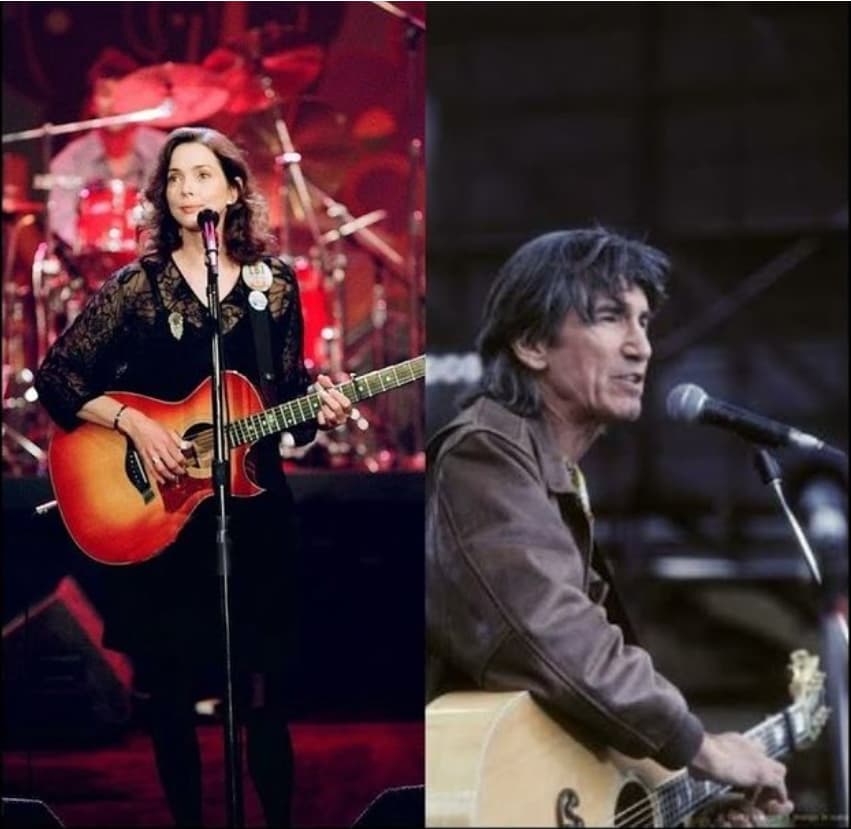
The Mythic Ballad of Two Outlaws, a Medley of Betrayal and the Road-Weary Soul
Few songs cast a shadow as long and as mournful over the American folk and country landscape as “Pancho and Lefty.” Originally written and recorded by the late, great poet-troubadour Townes Van Zandt for his 1972 album, The Late Great Townes Van Zandt, the track gained its wider, mythic resonance through a series of famous covers. However, the rendition we recall with a particularly deep nostalgia, full of respect for the song’s lineage, is the duet between Nanci Griffith and the master himself, Townes Van Zandt, recorded for Griffith’s 1993 tribute album, Other Voices, Other Rooms. This album served as a bridge between generations, a warm invitation for a new audience to discover the foundational songwriters who shaped Griffith’s own tender-yet-firm voice.
The album Other Voices, Other Rooms was a commercial and critical success, peaking at Number 54 on the Billboard Pop Albums chart and, perhaps more tellingly, earning a Grammy Award for Best Contemporary Folk Album in 1994. While the Griffith/Van Zandt recording of “Pancho and Lefty” was not released as a charting single, its presence on the Grammy-winning album underscores its immense cultural importance. It was an acknowledgment, not of pop success, but of enduring artistry, uniting the gentle, refined sensibilities of Nanci Griffith with the raw, uncompromising genius of Townes Van Zandt.
The story behind this iconic ballad is as rich and layered as a good piece of folklore. Townes Van Zandt reportedly wrote the entire song in about three hours in a cheap hotel outside of Denton, Texas, back in 1972. It is a cinematic, devastating narrative about Pancho, the charismatic Mexican bandit whose life is cut short, and Lefty, his enigmatic friend who is allowed to return to the cold reality of American life in exchange for what the lyrics strongly imply was a betrayal. It’s a classic two-figure myth: the reckless romantic who dies free and the pragmatic survivor left to live with his quiet, internal guilt. Van Zandt himself claimed the song “came through” him, a divine dictation, and once mused that perhaps it was about two policemen who pulled him over and were nicknamed “Pancho and Lefty,” but the deeper meaning—a powerful meditation on fate, friendship, betrayal, and the ephemeral nature of freedom—is what truly endures. “Living on the road, my friend, was supposed to keep you free and clean / Now you wear your skin like iron, your breath’s as hard as kerosene,” is a line that perfectly encapsulates the weary realization that life on the run only substitutes one kind of confinement for another.
For older readers, the memory of Nanci Griffith introducing Townes Van Zandt on her album feels like a moment of beautiful, necessary respect—a beloved folk voice paying homage to a near-mythic elder statesman of songwriting who often toiled in obscurity. Their rendition, quiet and respectful, strips away the bigger production often heard in the colossal 1983 chart-topping Country version by Willie Nelson and Merle Haggard, refocusing the listener on the sheer poetry of the words and the mournful ring of the acoustic guitar. It’s a version that feels more like a wake, a shared moment of reflection on Pancho’s tragic freedom and Lefty’s burdensome survival, reminding us that in the end, we all ride the open road toward our final, inevitable destination.