
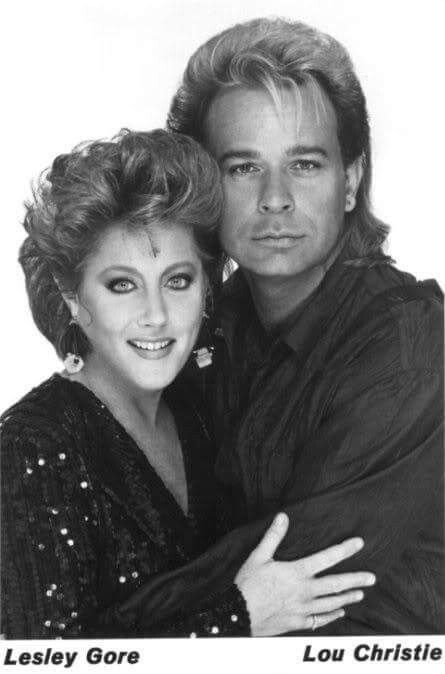
Lou Christie’s “Lightnin’ Strikes”: A Flash of Teenage Passion and Forbidden Love
Ah, gather ’round, my friends, and let’s cast our minds back to a time when pop music was a glorious, often flamboyant, confection, and a certain Pennsylvania crooner with a voice that could scale the heavens ruled the airwaves. We’re talking, of course, about Lou Christie, and that electrifying smash hit of his, “Lightnin’ Strikes”. Released in December 1965 on the MGM label, this unforgettable tune truly hit with the force of its namesake, rocketing to the coveted #1 spot on the Billboard Hot 100 in February 1966, precisely on Lou Christie’s 23rd birthday. It also struck gold in Canada, landing at #1 on the RPM Top Singles chart, and even made a respectable showing across the pond, peaking at #11 in the UK. This wasn’t just a fleeting moment of glory; the song was certified Gold by the RIAA, selling over a million copies and etching itself into the fabric of 1960s pop.
Now, to truly appreciate “Lightnin’ Strikes,” we must understand the intriguing mind behind it. Lou Christie, born Lugee Alfredo Giovanni Sacco, was no ordinary teen idol. He was a songwriter, often collaborating with the enigmatic Twyla Herbert, a classically trained pianist and self-described mystic who was decades his senior. Their partnership was certainly unconventional, and it imbued Christie’s music with a unique, almost theatrical quality, a blend of pop sweetness and a hint of the peculiar. This distinctive flavor is particularly evident in “Lightnin’ Strikes,” a song that, beneath its undeniably catchy melody and Christie’s signature falsetto, carries a surprisingly complex, even unsettling, narrative.
At first listen, the track pulses with youthful exuberance, those soaring high notes evoking the thrill of first love and undeniable attraction. The prominent piano, the driving beat, and the distinctive backing vocals by The Delicates (Bernadette Carroll, Peggy Santiglia, and Denise Ferri) all contribute to an effervescent sound that was instantly recognizable and irresistible. Producer Charles Calello, who had worked with The Four Seasons, clearly aimed for a robust, almost Wall of Sound-esque production, and he succeeded admirably. It’s the kind of song that makes you want to get up and dance, or at least tap your foot along, conjuring images of sock hops and soda fountains.
Yet, lean a little closer to the lyrics, and a different story begins to unfold, one that might give pause to those who only remember the song for its infectious chorus. The song, written from a male perspective, portrays a man who claims devotion to his beloved, promising a future together, perhaps even a wedding. But then comes the twist, delivered with a brazenness that was quite remarkable for its time: “When I see lips beggin’ to be kissed / I can’t stop! / I can’t stop myself!” It’s a confession of an almost compulsive infidelity, a “nature taking over” his “one-track mind.” The narrator expects his girl to “live by my rules” while he succumbs to these irresistible urges, seemingly without regret.
This duality is what makes “Lightnin’ Strikes” so fascinating and, for some, a little discomforting. Is Christie portraying a charming rogue, a helpless victim of circumstance, or something more calculating? The abrupt shifts in his vocal delivery, particularly the way his voice can morph from a smooth croon to a strained, almost desperate falsetto during these confessional moments, add layers of interpretation. It hints at a hidden wildness, a storm brewing beneath the calm surface, perfectly mirroring the “lightnin'” of the title. Some critics have even suggested a satirical or ironic intent, given the exaggerated sweetness of the backing vocals and the sheer audacity of the narrator’s demands.
For those of us who grew up with this song, it evokes a powerful sense of nostalgia, transporting us back to an era of innocence and burgeoning self-awareness. It reminds us of a time when pop songs, even seemingly simple ones, could hold a mirror up to the complexities of human nature, albeit often in a veiled or subtly subversive way. Lou Christie’s distinct voice and his flair for the dramatic made “Lightnin’ Strikes” more than just a hit; it became a piece of the soundtrack to our youth, a vibrant memory that, much like lightning itself, struck suddenly and left an indelible mark. It’s a reminder that even in the most seemingly straightforward pop songs, there can be depths to explore, stories to unravel, and reflections on the human condition that resonate across the decades.