
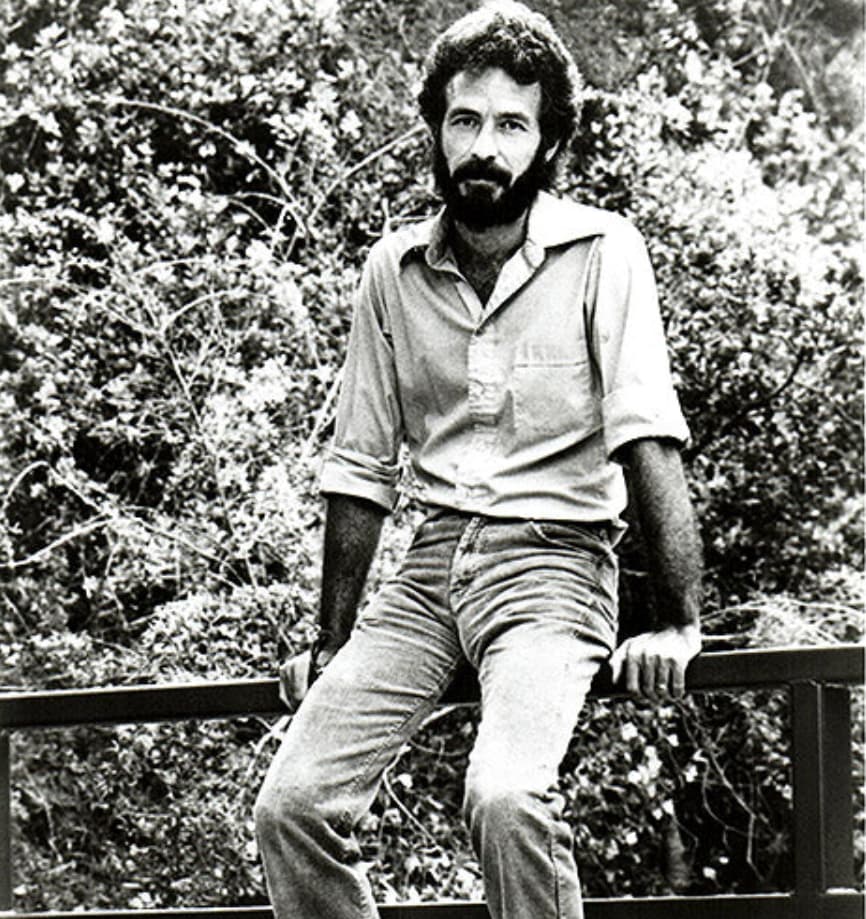
“Step by Step” – A Quiet Meditation on Grace, Curiosity, and the Road Not Taken
In the course of a life lived with a gentle defiance and a searching heart, “Step by Step” stands as one of Jesse Winchester’s most quietly profound meditations — a song that, like a weathered photograph, invites us to linger in memory and listen as much with the mind as with the ears. Though it never stormed the mainstream charts in the way some of his other songs did, its presence has rippled outward in unexpected ways, touching both devoted music lovers and broader audiences far beyond its 1976 birth on Winchester’s evocative album Let the Rough Side Drag.
The song was released on January 1, 1976, nestled among the eclectic tapestry of Let the Rough Side Drag, itself a compelling snapshot of Jesse’s artistic voice in the mid‑1970s — a voice that blended country, folk, blues, and a poetic lyricism that resisted easy categorization. While the album did reach the lower tiers of the U.S. charts, and a few singles from it garnered attention, “Step by Step” was never marketed as a hit single in the conventional sense and so does not have a notable chart peak of its own. But its meaning, small yet enduring, would grow with every listener who played it, pondered it, and returned to it years later.
If you pause on the first lines of “Step by Step,” you’ll hear something familiar — a melody that feels almost like an old spiritual you must have once heard on a Sunday morning, only to realize it isn’t that old tune but something new, a creative re‑imagining. Winchester begins with the image of “all the happy Saints go marching in,” an echo of the traditional spiritual, but he immediately turns that image inside out with a question — what happens when those saints falter?
Rather than tenderly celebrating ascension and victory, Jesse’s lyric finds wonder in uncertainty. “Cause Jacob’s golden ladder gets slippery at the top,” he sings, conjuring a picture that mixes sacred metaphor with earthy, human apprehension. And then, poignantly, he offers the heart of the song — a simple, almost childlike query that cuts straight to the bone: “Cause I need to know before I go, how come the Devil smiles?”
In that questioning, the song becomes more than a piece of music — it becomes a companion for the reflective listener. There’s a touch of humor here and a touch of rueful human longing, but above all there is a steady, searching spirit that refuses to ignore life’s contradictions. Some days we feel ourselves marching confidently; other days we find our footing uncertain, pausing to ask why the shadows seem so inviting even as we strive toward the light. It’s this tension — between the sacred and the profane, wisdom and innocent wonder — that makes “Step by Step” deeply distinctive in Winchester’s catalog.
For many listeners, particularly those who came to the song years after its original release, “Step by Step” gained a sort of second life when it was used as background music in the final montage of the first season of The Wire in 2002 — a naming that few could have predicted when the song first came out. In that context, its reflective, almost cosmic unease seemed to speak perfectly to the series’ themes of perseverance, moral ambiguity, and the quiet weight of everyday lives.
There is also something in the song’s live instrumentation — a faint bluesy groove, a gentle push of rhythm, a vivid yet unpretentious vocal — that summons the feel of a crowded barroom, a Sunday drive through the backroads, or a solitary walk home after dusk. It’s music rooted in the flesh and blood of lived experience, reminiscent of the times when you’d catch a familiar tune on the radio and it would lift you back to a specific moment in life you thought you’d forgotten.
And so, even without landing high on the pop charts, “Step by Step” feels like a quiet friend to anyone who has ever paused on the path, uncertain yet curious, choosing not haste but reflection. It is a song that doesn’t just speak — it listens. It asks as much as it answers, and in that gentle, unassuming way, it becomes something much more timeless than a fleeting hit ever could be.