
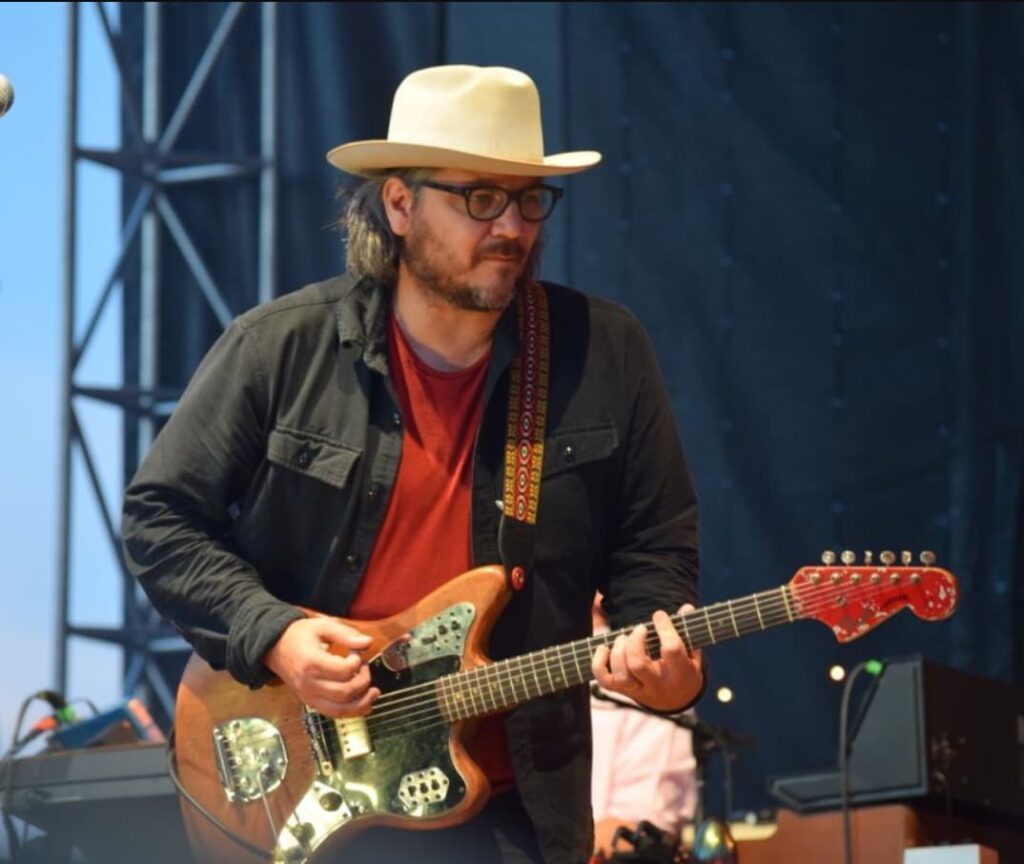
A tender farewell wrapped in humor and humanity—“Please Don’t Bury Me” becomes a quiet bridge between generations, where Jeff Tweedy honors the wit and wisdom of John Prine
When Jeff Tweedy revisits “Please Don’t Bury Me”, a song originally penned and recorded by John Prine for his 1973 album Sweet Revenge, he is not merely covering a classic—he is entering into a quiet conversation with one of America’s most beloved storytellers. The original version of the song, while not a major charting single at the time of its release, became a deeply cherished piece within Prine’s catalog, resonating strongly with audiences who valued lyrical honesty over commercial polish. Though it did not break into the upper tiers of the Billboard charts, its cultural significance has only grown over time, especially within the folk and Americana communities.
At first listen, “Please Don’t Bury Me” might appear playful, even whimsical. Its narrator, facing mortality, requests that his body parts be donated—his eyes to someone who needs sight, his heart to someone worthy, his ears to someone who can finally listen. There is humor in these lines, unmistakably so. But beneath that gentle wit lies something deeper: a quiet reckoning with life’s impermanence and a yearning to leave something meaningful behind. This duality—humor wrapped around existential reflection—is precisely what defined John Prine’s songwriting genius.
When Jeff Tweedy, best known as the voice and creative force behind Wilco, approaches the song, he does so with reverence rather than reinvention. Tweedy has long acknowledged Prine as a formative influence, a guiding light in understanding how simplicity can carry profound emotional weight. His version of “Please Don’t Bury Me” feels less like a performance and more like a continuation—a passing of the torch between kindred spirits who understand the quiet power of understated songwriting.
The story behind the song’s creation is quintessential John Prine. Written during a period when Prine was solidifying his identity as a songwriter unafraid to confront heavy themes with a light touch, the track reflects his own philosophy about life and death. Rather than approaching mortality with fear or solemnity, Prine chose to meet it with curiosity, humor, and generosity. It is said that he often viewed songwriting as a way to “laugh through the tears,” and nowhere is that more evident than here.
In Jeff Tweedy’s interpretation, recorded decades after the song’s initial release and in the shadow of Prine’s passing in 2020, there is an added layer of poignancy. One cannot help but hear it as a tribute—not just to the song, but to the man himself. Tweedy’s voice, weathered and intimate, carries the lyrics with a sense of lived experience, as though he is gently reminding us that these words are no longer hypothetical. They belong to a legacy now.
What makes “Please Don’t Bury Me” endure is its universal message. It speaks to the idea that even in death, there is a desire to give, to connect, to remain part of the human story. It avoids grand declarations and instead offers something quieter, more personal—a reflection on how ordinary lives can still leave extraordinary echoes.
Listening today, especially through Jeff Tweedy’s lens, the song feels like an old friend returning with familiar wisdom. It invites reflection, not with urgency, but with calm acceptance. And perhaps that is its greatest gift: a reminder that life, in all its fleeting beauty, is best met with kindness, humor, and an open heart.
In the end, both John Prine and Jeff Tweedy remind us that songs like this are not bound by time or charts. They live on in memory, in quiet evenings, in moments of reflection—whispering truths that only grow clearer with the passing years.