
A Playful Glimpse of Love and Self-Reflection in a Bygone Era
When we speak of “Old Brown Shoe”, we inevitably return to the golden spring of 1969—a season when the air still carried the scent of change, yet the spirit of classic songwriting remained intact. Written by George Harrison and recorded by The Beatles, the song was released on May 30, 1969 in the United Kingdom as the B-side to “The Ballad of John and Yoko.” In the United States, it appeared on June 4, 1969. While technically a B-side, it rode the success of its A-side companion to impressive chart positions. “The Ballad of John and Yoko” reached No. 1 on the UK Singles Chart and No. 8 on the Billboard Hot 100 in America, meaning “Old Brown Shoe” was widely heard and deeply embedded in that moment of Beatles history.
The song later found a broader audience through compilation albums such as Hey Jude (1970, U.S.) and eventually Past Masters (1988), ensuring its legacy beyond its original single release. But to understand “Old Brown Shoe,” one must appreciate the atmosphere surrounding The Beatles at that time. In early 1969, tensions within the band were no secret. The Let It Be sessions had revealed fractures, and personal paths were beginning to diverge. Yet amid uncertainty, Harrison quietly stepped forward as a songwriter of remarkable depth and individuality.
George Harrison, long overshadowed by the towering partnership of Lennon and McCartney, was coming into his own. He had just written “Something” and would soon deliver “Here Comes the Sun” for Abbey Road (1969). In that creative surge, “Old Brown Shoe” stands as a witty, rhythmically driven, almost mischievous declaration of devotion. Harrison reportedly wrote it for his wife, Pattie Boyd. The lyrics, full of clever wordplay and paradox—“I want a love that’s right, right is only half of what’s wrong”—reflect not just romance but introspection. They carry the subtle humor and philosophical nuance that became Harrison’s hallmark.
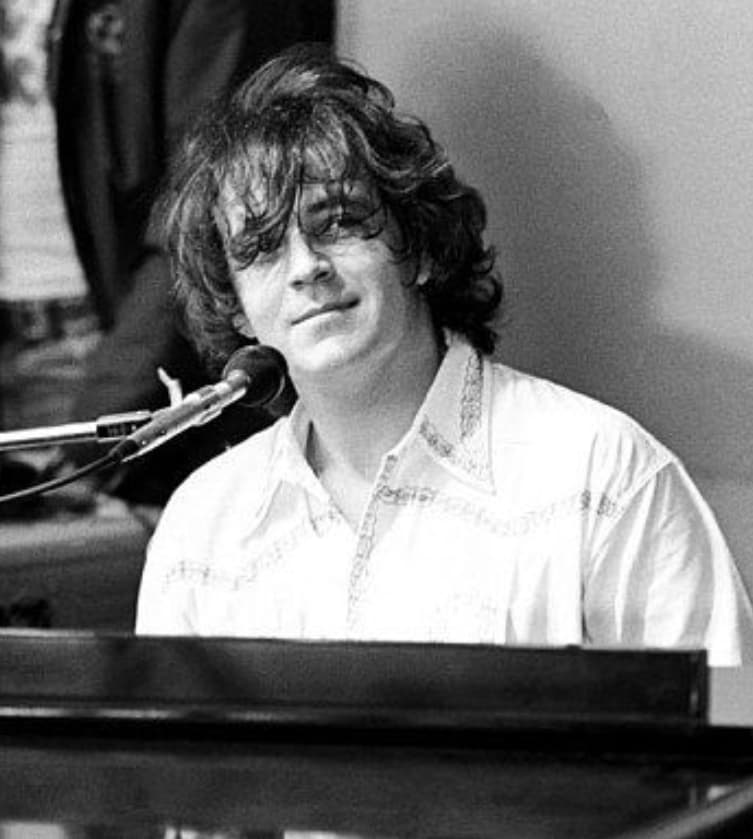
Musically, the track has an urgency that belies its B-side status. The piano—played by Harrison himself—drives the rhythm with a propulsive, almost barrelhouse energy. The bass line, often mistakenly attributed to Paul McCartney but widely believed to have been performed by Harrison, is agile and melodic, weaving through the song with confident flair. The guitar work is sharp and assertive, hinting at the harder edge Harrison would later explore on All Things Must Pass (1970).
The title itself—“Old Brown Shoe”—is delightfully enigmatic. Harrison once suggested it was simply a playful phrase, perhaps symbolizing comfort and familiarity in love. There’s a sense of grounding in the imagery: a worn shoe that fits just right, reliable and unpretentious. In a period when The Beatles’ world felt increasingly unstable, such imagery carried quiet resonance. The song celebrates loyalty and personal truth, even as the larger band narrative edged toward dissolution.
Listening now, decades removed from its release, the track evokes a different kind of nostalgia. It captures The Beatles not in their psychedelic experimentation nor in their early Merseybeat innocence, but in a transitional phase—mature, reflective, and subtly defiant. There is something profoundly moving about hearing Harrison assert himself during this chapter. One senses the determination of an artist no longer content to stand in the background.
In retrospect, “Old Brown Shoe” may not have dominated headlines the way “Something” or “Here Comes the Sun” did, yet its charm lies precisely in its understated brilliance. It is a reminder that even in the shadows of legendary partnerships, individuality finds its voice. The song feels like a wink from Harrison—a knowing smile in the midst of creative tension.
For those who remember 1969 not just as a date in history but as a living memory, this track carries a particular warmth. It belongs to that fleeting moment before the final curtain fell on The Beatles, when possibility still shimmered and each new release felt like an event. In its playful rhythm and thoughtful lyricism, “Old Brown Shoe” stands as both a love letter and a quiet declaration of artistic independence—an old brown shoe that, even after all these years, still fits perfectly.