
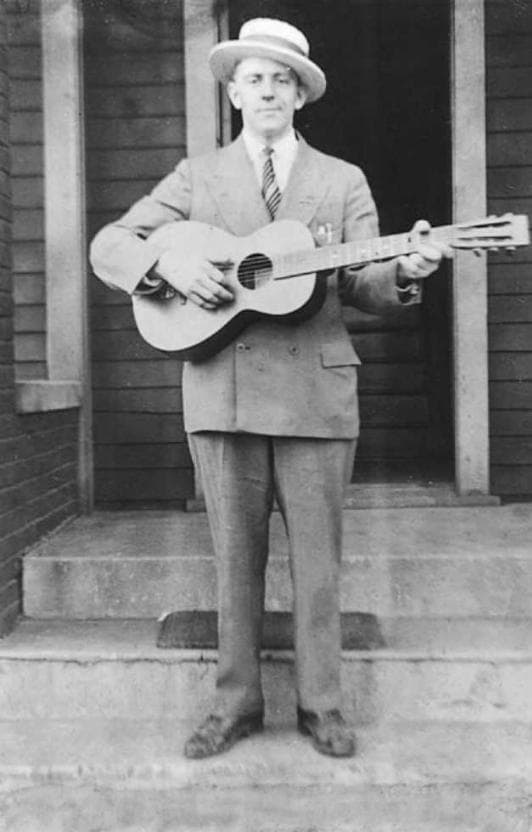
A Drifter’s Lament: The Timeless Echo of Heartbreak and Wandering
Ah, Emry Arthur‘s “I’m a Man of Constant Sorrow.” Just hearing those words, one can almost feel the dust of a forgotten road beneath their feet and the chill of a lonely night in their bones. This isn’t just a song; it’s a profound, melancholic sigh from the heart of American folk music, a lament that has resonated through generations, whispering tales of hardship and an enduring search for solace. While pinpointing a precise “chart position” in the modern sense for a song released in 1928 feels a bit anachronistic – the Billboard charts as we know them were still decades away – Arthur‘s recording for the Vocalion label was a significant touchstone in the burgeoning country and folk scene of its era. These early recordings weren’t about topping a weekly countdown; they were about capturing the raw essence of a people’s experience and distributing it as widely as possible through phonographs in homes across America. It was a time when music traveled by word of mouth and the scratchy fidelity of shellac, yet its impact was no less profound.
The story behind “I’m a Man of Constant Sorrow” is as winding and elusive as the very journey it describes. Its origins are steeped in the oral tradition of Appalachia, a place where songs were not so much written as they were born and evolved over time, passed from one singer to the next, each adding their own subtle nuances and verses. Many scholars trace its earliest known publication to Dick Burnett, a blind fiddler from Kentucky, who copyrighted a version titled “Farewell Song” in 1913. However, the exact lineage is tangled, with various claims and adaptations contributing to its enduring mystery. Emry Arthur‘s 1928 recording, with its stark, unadorned delivery and mournful banjo, offered one of the earliest widely accessible interpretations, cementing its place in the American musical lexicon. It wasn’t a commercial powerhouse in the way we understand hits today, but it laid a crucial cornerstone for the future of folk and country music.
At its core, “I’m a Man of Constant Sorrow” is a profound meditation on rootlessness, grief, and the relentless march of time. The lyrics paint a vivid picture of a man perpetually adrift, haunted by past sorrows and seemingly destined for a life of wandering. “For six long years I’ve been in trouble / No pleasure on earth I see” – these lines immediately establish a sense of profound despair, a weariness that permeates every verse. It speaks to the universal human experience of facing adversity, of carrying burdens that feel insurmountable. For older listeners, it might evoke memories of tougher times, of economic downturns, or personal losses that felt like a constant shadow. It’s a song that acknowledges the pain of existence but also subtly hints at the resilience required to simply keep moving forward, even if that movement is just from one lonesome valley to the next.
The song’s enduring power lies not just in its poignant lyrics but also in its adaptability. It’s a testament to its raw emotional resonance that it has been reinterpreted countless times, transcending genres and generations. From the bluegrass stylings of The Stanley Brothers (whose version arguably brought it to a wider audience in the mid-20th century) to the unexpected resurgence in the 2000 film O Brother, Where Art Thou? performed by The Soggy Bottom Boys (featuring the voice of Dan Tyminski), each rendition adds a new layer to its rich tapestry. For many older readers, the mention of O Brother, Where Art Thou? might instantly bring a smile, recalling the film’s unexpected cultural impact and its role in reintroducing a treasure trove of classic American folk and bluegrass music to a new generation. It’s a testament to the song’s timeless quality that it could be plucked from the archives of early 20th-century recordings and find such profound relevance in a modern cinematic context.
Ultimately, Emry Arthur‘s “I’m a Man of Constant Sorrow” isn’t just a relic of a bygone era; it’s a living, breathing testament to the enduring power of music to articulate the most profound human emotions. It’s a reminder that sorrow, in its various forms, is a universal companion, but also that within the lament, there’s a quiet dignity, a stubborn will to keep on, even when the path ahead seems endlessly long and fraught with pain. It speaks to a shared human experience that transcends the decades, reaching across the years to touch our hearts with its melancholic beauty and its unwavering honesty. For those of us who have lived a few years, it’s a melody that feels like coming home to a familiar, albeit bittersweet, comfort.