
Three Voices, One Timeless Tradition: Dolly Parton, Emmylou Harris, and Linda Ronstadt Revive a Country Music Landmark
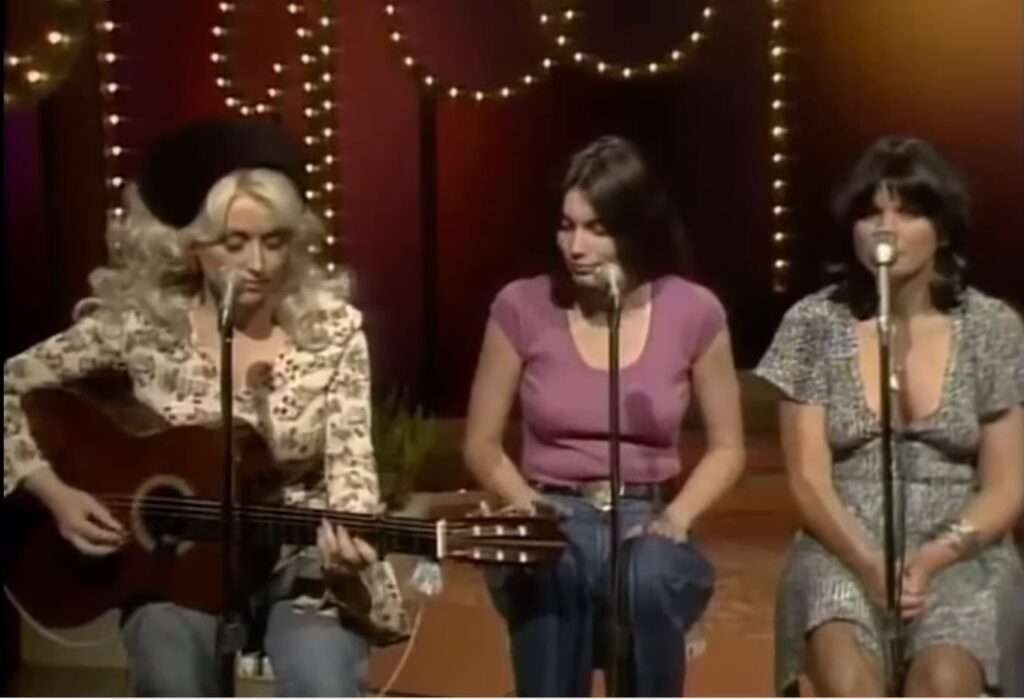
In 1976, a remarkable musical moment unfolded on The Dolly Show when Dolly Parton joined forces with Emmylou Harris and Linda Ronstadt to perform the Carter Family classic “Bury Me Under The Weeping Willow.” More than just a television performance, the collaboration served as a heartfelt tribute to one of the most important songs in the history of American country music.
“Bury Me Under The Weeping Willow” holds a special place in music history. It was the first song recorded by the Carter Family during the famous Bristol Sessions of 1927, an event widely regarded as the birth of commercial country music. By revisiting the song nearly five decades later, Parton, Harris, and Ronstadt connected contemporary audiences with the roots of a genre that would grow into a defining force in American culture.
The performance showcased the unique chemistry between three of the most respected voices in country and folk music. Their harmonies blended effortlessly, creating a sound that was both delicate and powerful. Each singer brought her own distinctive style while remaining faithful to the spirit of the original recording. The result was a rendition that honored tradition while highlighting the extraordinary artistry of the performers.
A memorable aspect of the performance was Dolly Parton’s guitar work. Known primarily for her songwriting and vocal talent, Parton demonstrated impressive musicianship by playing in the traditional Carter style, a technique closely associated with the pioneering family group. Her skillful picking added authenticity and depth to the arrangement, reinforcing the historical significance of the song.
The atmosphere of the performance carried a sense of warmth, admiration, and mutual respect. Small unscripted moments between the artists revealed a natural camaraderie that enhanced the authenticity of the presentation. Rather than detracting from the performance, these moments underscored the human connection at the heart of great music.
Over the years, the appearance has come to be remembered as one of the finest examples of traditional country music performed by three legendary artists at the height of their powers. Many have expressed admiration for the trio’s vocal blend and have lamented that a studio version was never officially recorded for an album release.
Nearly fifty years later, this 1976 performance remains a powerful reminder of country music’s enduring roots and of the timeless beauty that emerges when exceptional artists come together to celebrate a shared musical heritage.