
The Artilleryman and the Fighting Machine — when rock music met literature, and imagination found a terrifyingly human voice
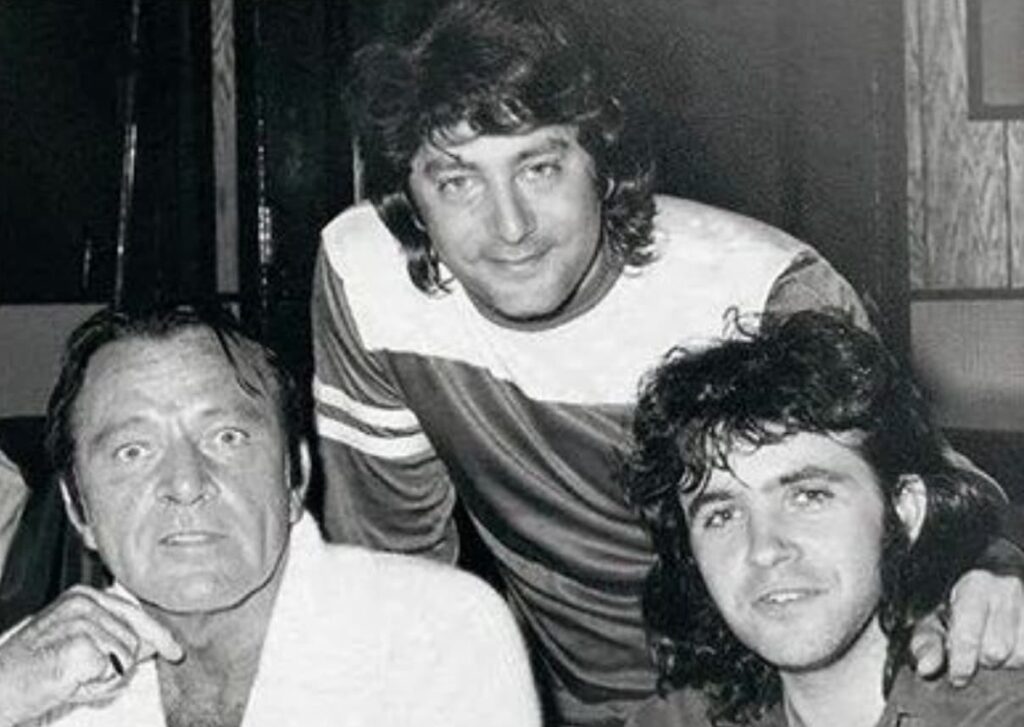
When “The Artilleryman and the Fighting Machine” unfolds, it feels less like a song and more like a dramatic memory etched in sound. Performed by David Essex and narrated by the unmistakable voice of Richard Burton, the piece comes from Jeff Wayne’s Musical Version of The War of the Worlds, released in 1978 — an album that reshaped how storytelling could live inside popular music. This was not merely a concept album; it was a cultural event, one that reached No.1 on the UK Albums Chart and remained there for weeks, becoming one of the most successful British albums of its era.
At the heart of that success lies the album’s daring fusion: progressive rock, classical orchestration, and literary drama drawn directly from H. G. Wells’ 1898 novel. “The Artilleryman and the Fighting Machine” appears early in the narrative, serving as a crucial moment of tension and awakening. It introduces the horror of the Martian invasion not through spectacle alone, but through human fear — confusion, disbelief, and sudden terror witnessed at ground level.
David Essex, cast as the Artilleryman, brings a raw, youthful urgency to the role. At the time, Essex was already a major figure in British popular culture, known for blending pop, rock, and theatrical sensitivity. His voice here is not heroic in the traditional sense; it is shaken, alert, deeply human. The Artilleryman is not a conqueror — he is a witness, someone caught in the wrong place at the wrong moment, trying desperately to make sense of the impossible.
Opposite him stands Richard Burton, whose narration remains one of the most iconic elements of the entire album. Burton’s voice — rich, grave, and authoritative — lends the story a sense of historical weight. When he describes the Martian fighting machine rising from the pit, towering and mechanical, it feels as though history itself is speaking. His delivery turns science fiction into something disturbingly real, grounding fantasy in a tone that feels almost documentary.
Musically, the track is a masterclass in atmosphere. Jeff Wayne’s composition moves with cinematic precision: the ominous march of the fighting machine, the rising tension in the strings, the sudden bursts of sound that mimic chaos and panic. It does not rely on melody alone; it relies on space, silence, and escalation. The music does what words cannot — it lets the listener feel the ground tremble.
The meaning of the piece extends far beyond its narrative role. On one level, it is about invasion and survival. On another, it reflects a deeper anxiety — the fear of technology outpacing humanity, of forces beyond our control reshaping the world overnight. Released in the late 1970s, a time marked by Cold War tension and rapid technological change, the story resonated strongly. The Martians were no longer just aliens; they were symbols of overwhelming power, of sudden disruption, of civilizations forced to confront their own fragility.
For listeners encountering this music years later, the emotional impact remains remarkably intact. There is a sense of awe in how boldly it was conceived, and a quiet admiration for the seriousness with which it treats its audience. “The Artilleryman and the Fighting Machine” does not talk down to the listener. It invites them to listen closely, to imagine vividly, to engage fully.
What makes this track endure is its sincerity. It does not chase radio-friendly hooks or easy comfort. Instead, it commits fully to its world — trusting that the listener will follow. And many did, returning to the album again and again, often remembering exactly where they were the first time they heard Burton’s voice describe the impossible.
In the long history of rock music, few moments feel as ambitious, or as haunting, as this. David Essex and Richard Burton did not simply perform a song; they brought a story to life. And decades later, as the fighting machine still rises from the speakers, it reminds us of the power of music to awaken fear, wonder, and memory — all at once.
Video
https://www.youtube.com/watch?v=mgG_G_am_iw&list=RDmgG_G_am_iw&start_radio=1