
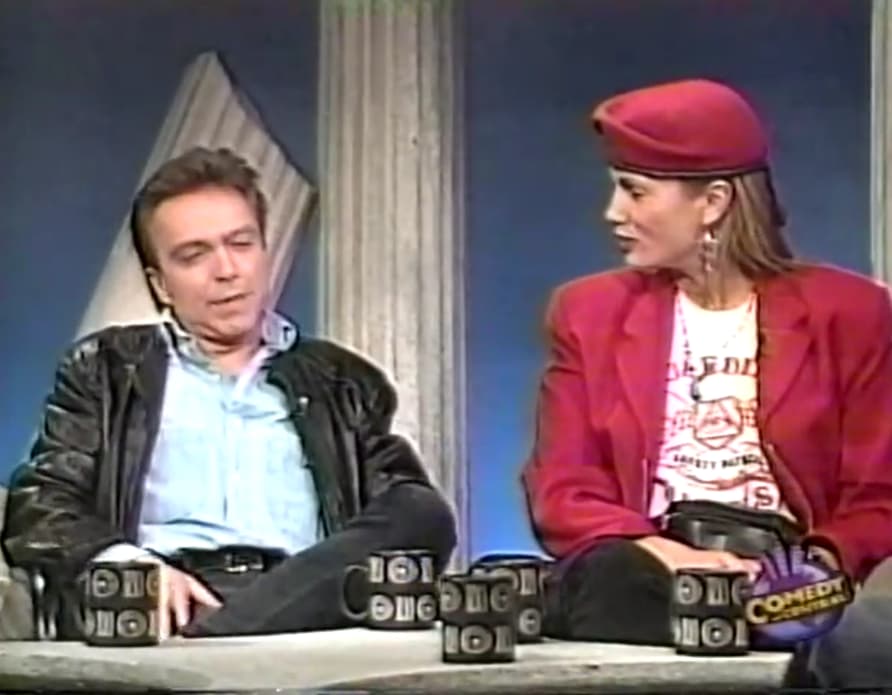
David Cassidy on Politically Incorrect: A Revealing Snapshot of a Different Television Era
A recently resurfaced clip from HBO’s Politically Incorrect with Bill Maher offers a fascinating glimpse into the tone and cultural debates of American television in the early 1990s. The episode features David Cassidy, who at the time was appearing on Broadway in the musical Blood Brothers while also preparing the release of his autobiography, Come On Get Happy, which chronicled his years as Keith Partridge on the television series The Partridge Family.
The discussion begins amid a heated panel conversation about date rape, alcohol, consent, and gender expectations. Viewed through a modern lens, the segment reflects an era when controversial social issues were often debated in formats that blended comedy, opinion, and provocation. Several panelists exchange sharply contrasting views, with humor frequently intersecting with serious subject matter in ways that would likely be considered uncomfortable or inappropriate by contemporary television standards.
Although Cassidy is not the dominant voice during the early portion of the discussion, his presence becomes more significant later in the program when the topic shifts to tabloid journalism and the influence of publications such as the National Enquirer. It is here that he speaks most passionately and personally.
Drawing on experiences involving both himself and members of his family, Cassidy challenges the reliability of sensationalized reporting. He recounts instances in which stories published about him were, in his view, inaccurate or grossly exaggerated. More importantly, he argues that tabloid culture appeals to what he describes as the lowest common denominator and expresses hope that audiences are ultimately more interested in meaningful stories than in scandal and gossip.
Throughout the exchange, Cassidy repeatedly emphasizes the human cost of sensational reporting. He suggests that even when public figures become the focus of media attention, the emotional impact extends beyond the individual to friends, relatives, and loved ones. His remarks stand out for their sincerity, offering a noticeably reflective counterpoint to the comedic and often confrontational tone of the panel.
The segment also highlights a recurring tension in media culture: the balance between public curiosity and personal dignity. While other participants debate the accuracy and entertainment value of tabloids, Cassidy consistently returns to the broader question of how such coverage affects real people.
More than three decades later, the clip serves as a time capsule from a very different media landscape. It captures an era when controversial topics were discussed with a level of informality that now feels distant, while also preserving a thoughtful moment from David Cassidy, whose comments on truth, privacy, and responsibility remain relevant long after the broadcast first aired.