
A hymn of quiet resilience and unbreakable sisterhood in the face of doubt and distance
When “The Eye” by Brandi Carlile was released in 2015 as part of the album The Firewatcher’s Daughter, it did not storm the pop charts with explosive commercial numbers—nor was it meant to. The album debuted at No. 11 on the Billboard 200, and reached No. 1 on Billboard’s Folk Albums chart, marking a pivotal moment in Carlile’s career. It was later nominated for the Grammy Award for Best Americana Album at the 58th Annual Grammy Awards. In the landscape of mid-2010s music—dominated by electronic pop and hip-hop—this spare, harmony-driven folk meditation felt almost defiant in its simplicity.
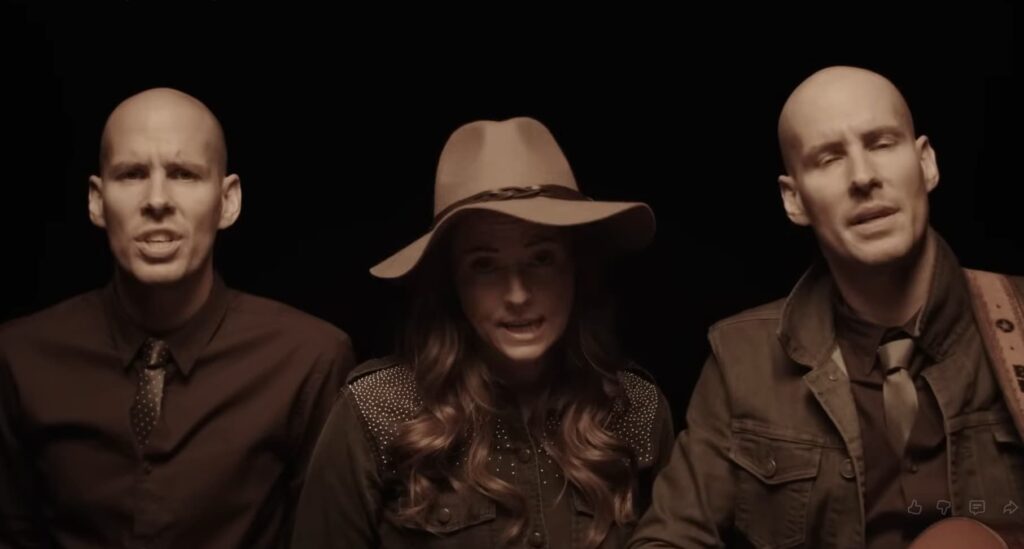
From its very first notes, “The Eye” announces itself not with instrumentation, but with human voices—three women standing together in close harmony. There is no drum, no guitar to cushion the listener. Just breath, tone, and truth. Carlile is joined by longtime collaborators and twin brothers Phil Hanseroth and Tim Hanseroth—their harmonies forming a delicate architecture of sound that recalls the purity of traditional Appalachian singing and the intimate vocal blend of groups like The Carter Family. It is a brave choice in modern recording: to leave the song exposed, trusting that melody and message are enough.
The story behind the song is deeply personal. Carlile has spoken about writing “The Eye” during a period of strain in her closest relationships—particularly with the Hanseroth brothers, who have been not only her bandmates but creative partners for decades. The song addresses the quiet fear that comes when bonds—once assumed permanent—begin to feel fragile. “You can dance in a hurricane / But only if you’re standing in the eye,” she sings, offering a metaphor that is at once poetic and practical. The “eye” of the storm is not denial, nor escape. It is the still center formed by trust, forgiveness, and shared history.
Lyrically, the song is a meditation on endurance. It does not romanticize conflict; rather, it acknowledges it plainly. There is an adult understanding here—one that recognizes that love, friendship, and loyalty are not static conditions but living things that must survive weather. The harmonies themselves reinforce the message. No single voice dominates. Instead, they lean into each other, creating a sonic symbol of interdependence. If one line faltered, the structure would collapse.
What makes “The Eye” so affecting is its restraint. In an era when so much music relies on production spectacle, Carlile chose stillness. The arrangement gradually introduces subtle acoustic instrumentation, but it never overwhelms the vocal core. The result feels almost sacred, like standing inside a small wooden church while the wind howls outside. The song does not shout its wisdom; it speaks it quietly, confident that those who need it will recognize themselves in its reflection.
There is also a timelessness here. Though written in 2015, “The Eye” feels connected to an older American songwriting tradition—one where narrative clarity and moral reflection matter more than hooks engineered for radio rotation. It carries the DNA of folk revivalists like Joan Baez and the introspective craftsmanship of Joni Mitchell, yet it remains distinctly Carlile’s own voice—earthy, grounded, unwavering.
For many listeners, the song became a touchstone during moments of personal upheaval: family tensions, long marriages weathering change, friendships tested by distance or misunderstanding. Its meaning deepens with time. The older one grows, the more one understands that storms are inevitable. What matters is whether there is a center strong enough to stand in.
In retrospect, “The Eye” represents a crucial chapter in Brandi Carlile’s artistic evolution. Before the broader mainstream recognition that would come with By the Way, I Forgive You and later Grammy triumphs, this song showed her commitment to emotional honesty over commercial compromise. It reminded audiences that harmony—both musical and human—is not automatic. It is chosen, rebuilt, and sometimes painfully reaffirmed.
And perhaps that is why the song lingers. Not because it reached a certain chart position, but because it reached something quieter and more enduring: the understanding that in the fiercest winds of life, survival depends not on fighting the storm, but on standing together at its calm center.