
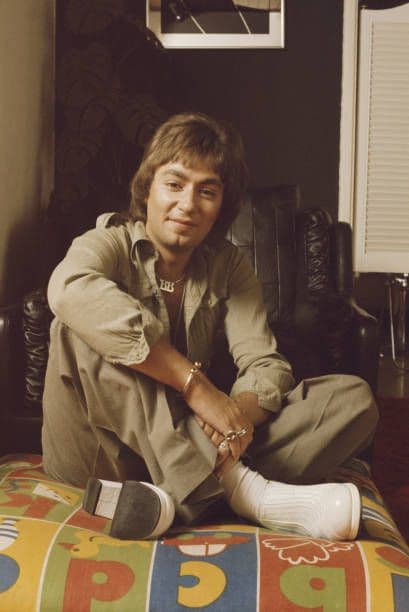
The anthem of youthful abandon and carefree Saturday nights
The year was 1973. A time when the world was in a state of flux, yet a certain innocence still clung to the air. It was in this moment that an unassuming English singer, Barry Blue, burst onto the scene and delivered a track that would become an enduring symbol of that era’s youthful spirit. “(Dancin’) On A Saturday Night,” a song co-written by Blue and the equally talented Lynsey de Paul, was more than just a pop tune; it was a siren call to a generation yearning to escape the week’s drudgery and lose themselves in the rhythm of the weekend.
The song’s release was a resounding success, capturing the collective imagination of a nation ready to dance. It soared to No. 2 on the UK Singles Chart, a testament to its infectious energy and relatable theme. The magic of “(Dancin’) On A Saturday Night” lies in its simplicity. It’s a straightforward narrative about a boy and his “blue jean baby” getting ready to hit the town. The lyrics paint a vivid picture of a world where the only concern is the dance floor, and the only soundtrack is the one blaring from a jukebox. It’s a snapshot of a more innocent time, a world without the endless distractions of the digital age, where connection was found in the shared experience of music and movement.
The track’s appeal was universal, extending far beyond the UK to chart positions in Australia, Austria, Germany, and Ireland. The song’s glam rock sound, with its driving beat and soaring chorus, made it a perfect fit for a period defined by flamboyant fashion and audacious performances. Yet, beneath the glitter and the swagger, there’s a genuine heart. The song captures that universal feeling of anticipation that builds as Friday fades and Saturday looms, and the simple joy of being with someone you care about, letting the music take over. The lyrics, “Helter skelter, maybe I can help her, dance, dance, dance the night away,” offer a glimpse of a knight-in-shining-armor narrative, a desire to pull someone out of their “confused, disorderly haste” and into the blissful chaos of the dance floor. It’s a sweet, romantic notion that feels as relevant today as it did half a century ago.
Looking back, Barry Blue was more than just a singer; he was a prolific songwriter and producer who went on to work with some of the biggest names in music. But for many, he will forever be the voice of that one perfect Saturday night, encapsulated in a three-minute pop masterpiece. The song’s legacy is a testament to its power—it’s a track that has become a line dance classic and has even found its way into films like The Long Good Friday. It’s a tune that doesn’t just ask you to dance; it invites you to step back in time, to remember the feeling of a packed dance floor, the glow of a jukebox, and the simple, uncomplicated joy of a Saturday night.