
That Irresistible Urge to Play All Night: The Heart of Bluegrass Joy
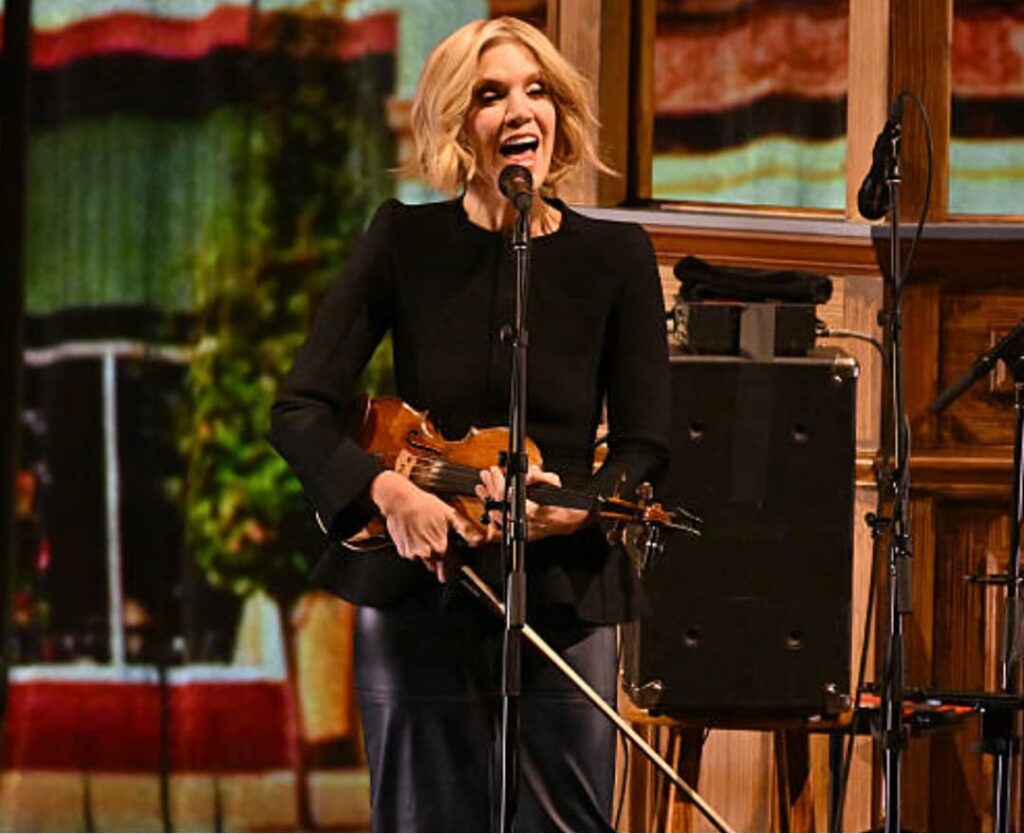
There are certain tunes that, when they drift out of a speaker or, better yet, off the stage in a smoke-filled, sawdust-on-the-floor dance hall, instantly transport you back to a simpler time—a time when music was an absolute necessity, a balm for the soul, and a spontaneous community happening. Alison Krauss’s rendition of “Sawing On The Strings” is one such song, a vibrant, up-tempo celebration of the pure, unadulterated joy of fiddling. It’s less a complicated narrative and more an ode to the Bluegrass spirit itself, capturing the infectious energy of a talented fiddler, known as Fiddlin’ Will, who simply “liked to do best / Was sawing on the strings.”
This recording by Alison Krauss, featuring a constellation of bluegrass legends, was included on her 2007 compilation album, A Hundred Miles or More: A Collection. As a compilation track, it didn’t register on the weekly Billboard Hot 100 or Country Singles charts like some of her major hits, but its inclusion cemented its status as an essential, high-energy piece in her repertoire. The album itself, which gathered her favorite tracks and previously unreleased material, was a commercial success, highlighting the enduring appeal of Krauss’s work.
The real story behind “Sawing On The Strings” reaches much further back than 2007. The tune was penned by the late, great Lewis Compton over fifty years ago while he was working a second shift in a sand shaker room at a DuPont factory. Think about that—a classic piece of American folk music being conceived amidst the grime and industry of the post-war South. It speaks volumes about the irrepressible creative urge that defines this genre. Compton’s song gained instant, grassroots fame when he played it on the radio in Roanoke, Virginia, in 1953. The reaction was immediate, with listeners flocking to the station, including none other than the architects of Bluegrass itself, Lester Flatt and Earl Scruggs. While Flatt and Scruggs never officially recorded it, they frequently performed the crowd-pleasing number live, etching it into the folk memory of the genre.
Krauss’s version, featuring the impeccable musicianship of Union Station and friends like Sam Bush and Tony Rice on some live arrangements, is a masterclass in modern Bluegrass reverence. Her clear, almost impossibly sweet voice tells the simple story of Fiddlin’ Will, a character who embodies the heart of mountain music. Will isn’t playing for fame or fortune; he plays because he must. The meaning of the song is pure: it’s about the primal, communal, and almost frantic energy that takes hold when the fiddle bow meets the strings in a flurry of notes. It’s the call to dance, the release of the week’s worry, and the recognition of true, authentic talent.
For those of us who grew up with the sounds of porch pickers and Saturday night jamborees, “Sawing On The Strings” is a visceral, nostalgic callback. It’s the sound of the world slowing down to the rhythm of a fast-paced reel, where the only thing that matters is the rosin dust flying off the bow. Alison Krauss—a prodigy who started her career playing the fiddle herself—delivers this old-time treasure with a loving respect that only a genuine devotee of the music could muster. It’s a testament to the enduring power of a simple, well-told, and incredibly well-played song.