
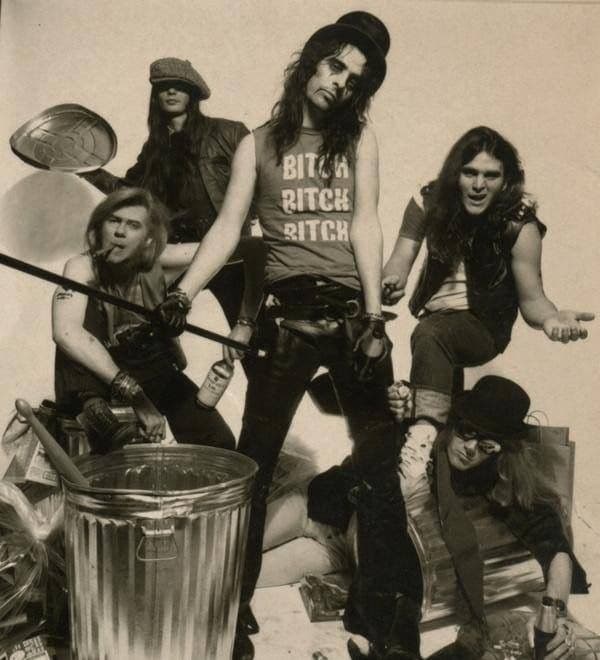
School’s Out — a rebellious shout of freedom that still echoes through every restless summer
When “School’s Out” by Alice Cooper exploded onto the airwaves in 1972, it was more than a rock song — it was a declaration. A raw, sneering, brilliantly simple anthem that captured a universal feeling in just three words. Few songs in rock history have so perfectly bottled a moment, an attitude, and a generation’s restless energy the way “School’s Out” did. From its opening classroom bell to its final chaotic fade-out, it sounded like freedom itself being kicked open.
Released as the title track from the album School’s Out in June 1972, the song made an immediate impact. It reached No. 7 on the Billboard Hot 100 in the United States and soared all the way to No. 1 on the UK Singles Chart, becoming Alice Cooper’s first and only UK chart-topper. These weren’t just impressive numbers — they were proof that something provocative, theatrical, and unapologetically loud had crossed over into the mainstream without losing its bite.
Behind the song lies a story that perfectly matches its spirit. Alice Cooper — both the man and the band at that time — had already built a reputation for shock, satire, and stage theatrics. Guillotines, snakes, smeared makeup, and mock executions were all part of the show. But “School’s Out” wasn’t about horror imagery or shock value. It was about rebellion in its purest, most relatable form: the joy of escape.
The genius of the song lies in its simplicity. Everyone, regardless of age or background, understands the feeling of release when obligation finally ends. Cooper once described the track as “the ultimate holiday record” — not just about leaving school, but about breaking free from any system that tells you when to sit down, shut up, and behave. Lines like “No more pencils, no more books” sound almost childish on the surface, yet they tap into something deeper: the lifelong desire to throw off constraints and claim a little chaos for yourself.
Musically, “School’s Out” is deceptively clever. The main riff is blunt and unforgettable, built to be shouted rather than sung. There’s even a subtle quotation of “Rule, Britannia!” woven into the song — a sly nod to authority, tradition, and the joy of turning them upside down. The production feels loose, almost dangerous, as if the band might lose control at any moment. That sense of barely contained disorder is exactly what makes the song feel alive.
The album School’s Out cemented Alice Cooper as more than a shock act. It proved he was a sharp observer of youth culture and social pressure, able to turn collective frustration into a three-minute explosion of sound. At a time when the early idealism of the 1960s had faded and the realities of the 1970s were setting in, the song offered a kind of reckless relief — a reminder that joy could still be loud, messy, and defiant.
For listeners encountering the song years later, its power hasn’t faded. The school bell at the beginning still triggers a smile. The chant still invites a shout. But there’s also a layer of nostalgia now — memories of summers that felt endless, of rules temporarily forgotten, of a world that seemed wider the moment responsibility loosened its grip. Even those long removed from classrooms recognize the deeper truth: we are always looking for our next “school’s out” moment.
“School’s Out” endures because it doesn’t belong to a single age. It belongs to anyone who has ever counted down the hours, stared out a window, or dreamed of escape. In that sense, Alice Cooper didn’t just write a hit single — he wrote a ritual. One that still rings out, year after year, like a bell announcing freedom.