
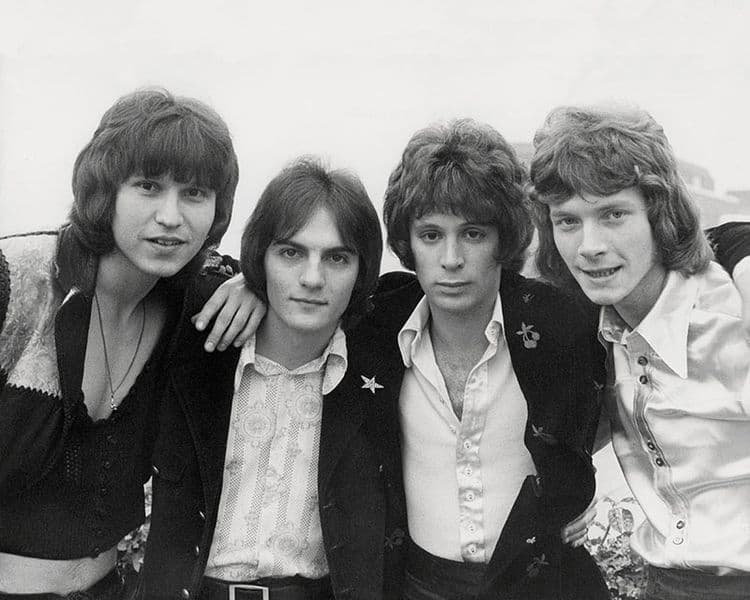
A teenage anthem wrapped in power-pop innocence — yet beneath the bright guitars of “Go All The Way” lived one of the most misunderstood love songs of the early 1970s.
When The Raspberries released “Go All The Way” in July 1972, it sounded like youth itself had been pressed into vinyl. The song exploded from transistor radios with chiming guitars, soaring harmonies, and a chorus so immediate that it seemed impossible to resist. Yet behind its irresistible melody was a record that stirred controversy, confused parents, thrilled teenagers, and quietly helped shape the future of American power pop.
The single became the breakthrough hit for The Raspberries, climbing to No. 5 on the Billboard Hot 100 in the United States and reaching the Top 10 in several other countries. At a time when rock music was drifting into heavier sounds and grand experimentation, this Cleveland band chose melody, emotion, and vulnerability instead. Their music carried echoes of the British Invasion, especially bands like The Beatles and The Who, but there was also something deeply American in the longing and urgency of their sound.
At the center of it all stood Eric Carmen, the band’s principal songwriter and lead vocalist. Long before he would later find solo success with songs like “All By Myself” and “Hungry Eyes,” Carmen was crafting emotionally charged pop songs filled with romantic tension and bittersweet innocence. And perhaps no song captured that tension better than “Go All The Way.”
What made the song unforgettable was the contrast between its sparkling arrangement and its suggestive lyrics. To many listeners in 1972, the line “Please, please, go all the way” sounded shockingly direct for Top 40 radio. Several stations either banned the record outright or edited parts of it. Some broadcasters feared it was too sexual for mainstream audiences. Ironically, Carmen himself later explained that the song was not intended as a celebration of casual desire, but rather as a reflection of confusion, longing, emotional vulnerability, and the complicated emotions surrounding intimacy among young people.
That misunderstanding became part of the song’s legend.
Musically, the record was revolutionary in quieter ways. The opening acoustic guitar immediately gives way to crashing drums and layered harmonies that feel almost cinematic. The chorus arrives like a tidal wave — huge, emotional, urgent. It was one of those rare records where every element seemed perfectly balanced: the innocence of pop, the force of rock, and the emotional ache of adolescence.
In hindsight, “Go All The Way” helped establish the blueprint for what later became known as power pop — a genre built on melodic hooks, emotional honesty, ringing guitars, and vocal harmonies. Bands such as Cheap Trick, Big Star, and later even artists from the 1990s alternative scene would carry pieces of that DNA forward. But in 1972, nobody was calling it power pop yet. To listeners then, it was simply a thrilling song that felt alive.
The album “Raspberries,” from which the single came, also reflected the band’s musical ambition. While the group often appeared polished and youthful in promotional photos, their records contained surprising emotional depth. There was loneliness hidden beneath the harmonies, uncertainty beneath the confidence. That duality may explain why the song still resonates decades later. It reminds listeners of a time when emotions felt enormous, confusing, and impossible to hide.
And perhaps that is why the song survives.
Many hit singles from the early 1970s remain trapped inside their era, remembered only as nostalgic background music. But “Go All The Way” still feels emotionally immediate. The opening chords still create anticipation. The harmonies still rush forward with almost desperate sincerity. Even listeners hearing it today for the first time can sense something authentic underneath the polished production.
There is also something poignant about how youthful the record sounds now. Time has transformed what once seemed controversial into something almost innocent. The song no longer shocks — instead, it evokes memory. It recalls a period when pop songs carried both excitement and emotional risk, when radio singles could feel intensely personal, and when a three-minute record could perfectly capture the restless emotions of growing up.
For many music historians, The Raspberries remain one of the great “what if” bands of American rock. Internal tensions and industry pressures eventually shortened the group’s lifespan, despite their immense talent. Yet their influence quietly spread across generations of musicians who admired their craftsmanship and emotional directness.
And still, decades later, when Eric Carmen sings that pleading chorus, the record does something magical: it transports the listener back to a world of summer nights, AM radio, first love, uncertainty, and the overwhelming feeling that music somehow understood emotions better than words ever could.
That is why “Go All The Way” endures — not merely as a hit song, but as a beautifully preserved emotional snapshot of youth itself.