
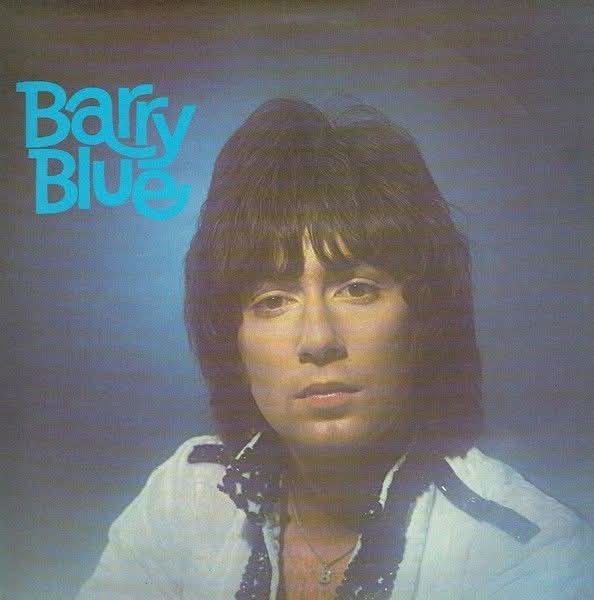
A tender portrait of youthful longing, “School Love” captures the fragile moment where innocence meets desire, lingering like a faded photograph of first affection.
When Barry Blue released “School Love” in 1973, it arrived at a time when British pop was shifting between the glitter of glam rock and the sentimental pull of melodic storytelling. Though often overshadowed by his bigger commercial hit “Dancin’ (On a Saturday Night)”, this particular song revealed a quieter, more reflective side of his artistry. While “School Love” did not achieve the same high chart peak—failing to break into the upper tier of the UK Singles Chart—it nonetheless found a devoted audience, especially among listeners drawn to its sincerity and emotional clarity rather than chart dominance.
What makes “School Love” endure is not its commercial statistics, but its atmosphere. From the very first bars, there is a gentle softness—almost hesitant—that mirrors the emotional uncertainty of adolescence. Barry Blue, known not only as a performer but also as a skilled songwriter and producer, crafts the song with a deliberate restraint. The arrangement avoids overwhelming the listener; instead, it leaves space for memory to seep in. This was a period when he was also writing for other artists, shaping the sound of early-70s British pop behind the scenes, and that craftsmanship is evident here in the song’s structure and pacing.
The story behind “School Love” feels less like a narrative and more like a recollection. It evokes those unspoken connections formed in classrooms, hallways, and fleeting glances—moments that, at the time, seemed small but later reveal themselves as formative. Unlike the flamboyance of glam rock, which often celebrated spectacle and persona, this song turns inward. It is about vulnerability, about the quiet ache of feelings not fully understood, and perhaps not fully expressed.
Lyrically, “School Love” dwells in that delicate space between innocence and awakening. There is no grand declaration, no dramatic climax—only a slow realization of emotion. It reflects a time when love was not yet complicated by the weight of adulthood, but was instead defined by simplicity, hesitation, and a certain kind of purity that cannot be reclaimed once lost. In that sense, the song resonates deeply because it does not attempt to dramatize youth; it simply observes it.
For listeners who encountered Barry Blue during his early-70s peak, this track often carries an added layer of personal history. It becomes intertwined with one’s own memories—the sound of a transistor radio, the feeling of a first crush, the bittersweet awareness that time moves quietly but relentlessly forward. Even for those discovering it later, the song possesses a timeless quality. Its themes are universal, but its tone is unmistakably rooted in a specific era when pop music could be both commercially accessible and emotionally intimate.
In retrospect, “School Love” stands as a reminder of Barry Blue’s versatility. While the charts tend to immortalize the louder, more immediate hits, songs like this reveal the depth beneath the surface. They show an artist capable of stepping away from the spotlight’s glare to explore something more subdued, yet no less meaningful.
There is a certain poignancy in revisiting “School Love” today. It feels like opening an old notebook, where the handwriting may have faded, but the emotions remain intact. The song does not demand attention—it invites reflection. And in doing so, it quietly preserves a chapter of life that everyone, in one way or another, has lived through and left behind.