
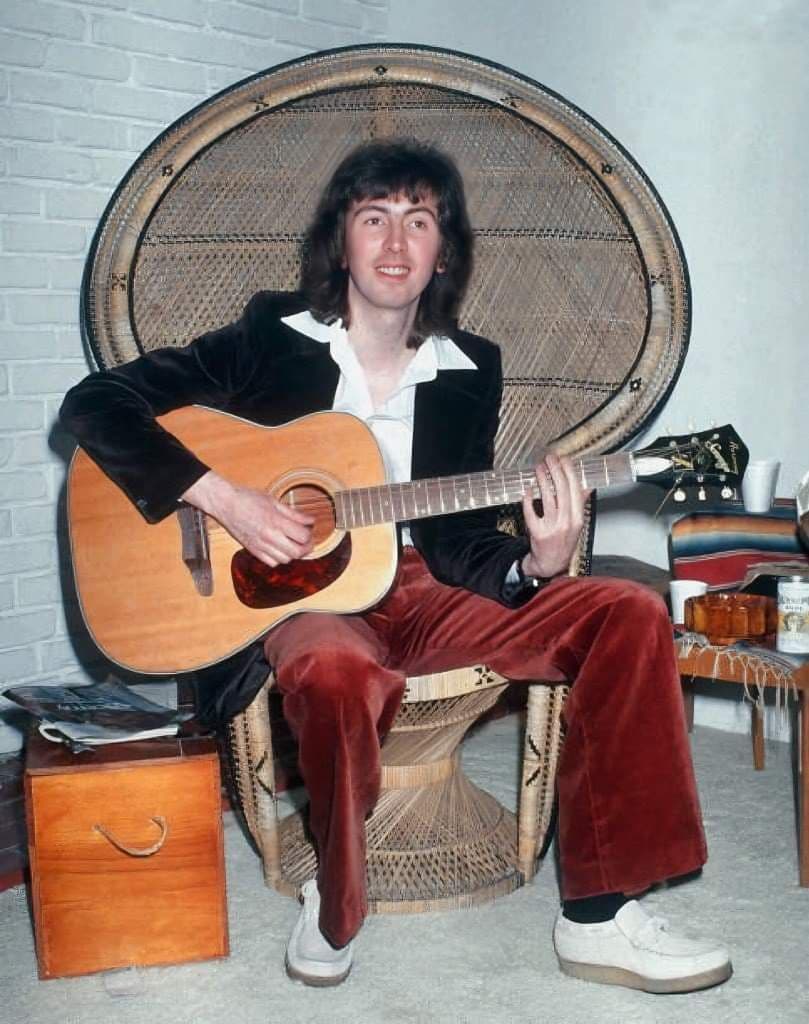
A fleeting year of illusions, where love, mystery, and destiny slip quietly through your hands
When “Year of the Cat” was released in 1976, it did not storm the charts overnight—it drifted in, almost like the very character it describes. Yet, in time, it became the defining work of Al Stewart, a song that lingers not because it demands attention, but because it gently refuses to be forgotten. The track reached No. 5 on the Billboard Hot 100 in the United States and No. 8 on the UK Singles Chart, marking the highest-charting single of Stewart’s career. It also anchored the album Year of the Cat, which remains his most commercially successful release.
There is something quietly cinematic about “Year of the Cat”—a sense that you are not just listening, but watching a story unfold in soft focus. The song’s origins trace back to an earlier Stewart composition titled “Foot of the Stage,” but it was transformed entirely during collaboration with producer Alan Parsons, whose meticulous studio craftsmanship helped shape its lush, layered sound. Parsons, fresh from engineering Pink Floyd’s The Dark Side of the Moon, brought a clarity and spaciousness that allowed every instrument—from the iconic saxophone solo to the gentle piano passages—to breathe.
The phrase “Year of the Cat” itself draws from the Vietnamese zodiac, where the cat replaces the rabbit found in the Chinese calendar. For Stewart, the title became a metaphor rather than a literal reference—a symbol of elusive charm, unpredictability, and quiet independence. The song tells the story of a chance encounter between a man and a mysterious woman in what feels like a sunlit European city—perhaps Paris, perhaps somewhere imagined. She is enigmatic, cultured, and slightly out of reach, and he is drawn into her orbit almost against his will.
But this is not a conventional love story. There is no grand declaration, no resolution. Instead, there is a sense of drifting—of time slipping by unnoticed. The man follows her through galleries and cafés, caught in a moment that feels both significant and strangely hollow. By the time he realizes what is happening, the moment has already passed. The “year of the cat” becomes a quiet warning: some encounters are not meant to last, only to leave a lingering impression.
Musically, the track unfolds with remarkable patience. It begins with a delicate piano intro before gradually building into a rich arrangement that includes acoustic guitar, orchestral textures, and one of the most memorable saxophone solos of the decade. That saxophone—smooth, reflective, almost wistful—does not interrupt the song; it extends its emotional core, giving voice to what the lyrics only suggest. It is the sound of realization arriving too late.
What sets Al Stewart apart is his literary approach to songwriting. Influenced by history, cinema, and storytelling, he crafts songs that feel more like short novels than pop singles. In “Year of the Cat,” he avoids direct emotional statements, instead allowing imagery and subtle detail to carry the weight. Lines about morning light, film locations, and passing glances create a tapestry that listeners fill with their own memories.
Looking back, the song captures something deeply universal: the moments in life that seem small at the time but echo long after they are gone. It speaks to the quiet intersections of fate and choice, where a single decision—or indecision—can shape the way we remember an entire chapter of our lives.
Decades later, “Year of the Cat” remains more than a hit song. It is a mood, a memory, a fragment of time preserved in melody. It does not shout its meaning; it lets you discover it slowly, perhaps years after the first listen. And when it finally settles in, it feels less like a song you’ve heard—and more like something you’ve lived through.