
A Glam-Era Memory of Love That Arrives Fast and Disappears Faster
_“Miss Hit And Run” captures the fleeting thrill of attraction in the shimmering sound of 1970s pop, where desire and distance collide in a single heartbeat.
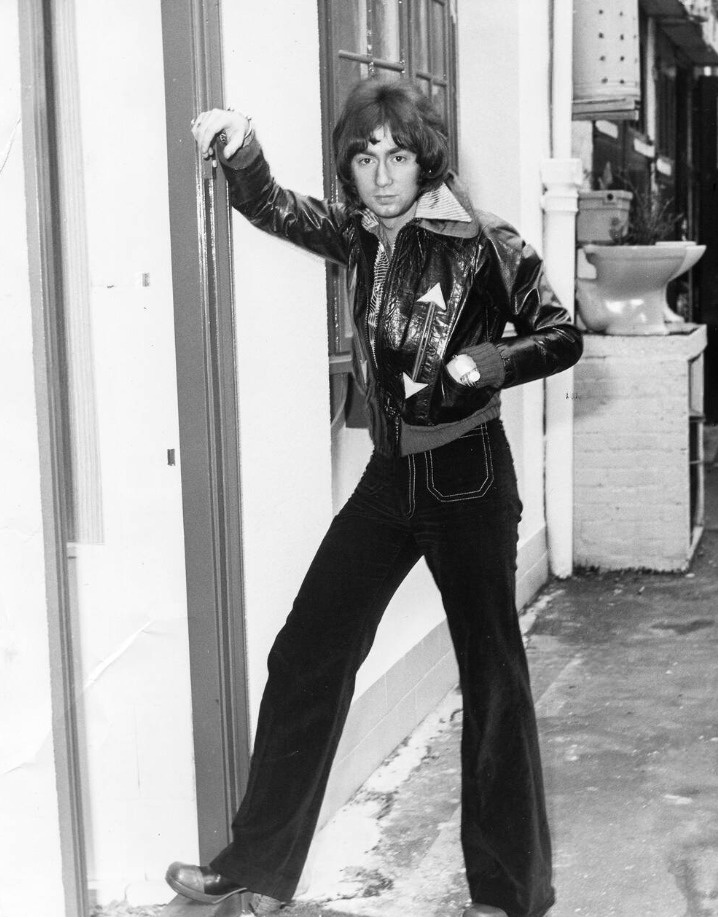
In the ever-shifting landscape of early–mid 1970s British pop, few artists embodied the bright, glittering energy of the era quite like Barry Blue. A singer, songwriter, and producer with an instinct for hooks that linger long after the final note fades, he carved out a distinctive space between glam rock’s theatrical flash and the polished accessibility of mainstream pop. Released in 1974, “Miss Hit And Run” arrived during a creative peak for Blue, following the success of earlier hits such as “Dancin’ (on a Saturday Night)”, which had already established him as one of the era’s most reliable hitmakers.
Upon its release, “Miss Hit And Run” reached No. 26 on the UK Singles Chart (1974), a respectable showing in a fiercely competitive musical landscape dominated by glam rock giants, emerging disco influences, and the lingering echoes of classic rock storytelling. While it did not scale the highest peaks of the charts, its presence within the Top 30 reflected something equally important: endurance. It was a song that lived in jukeboxes, radio rotations, and the background of everyday life, quietly embedding itself into memory rather than demanding attention through spectacle alone.
At its core, “Miss Hit And Run” is built on a metaphor that feels both playful and quietly melancholic. The “hit and run” figure is not a literal character, but rather a symbol of emotional transience—someone who enters a life suddenly, intensifies everything, and then vanishes just as quickly. In the hands of Barry Blue, this concept is wrapped in an upbeat arrangement, creating a fascinating contrast between sound and sentiment. The melody dances forward with a buoyant rhythm, yet beneath it lies a subtle ache: the recognition that not all connections are meant to last.
This duality is part of what gives the song its lasting charm. Many listeners at the time would have been drawn first to its catchy structure—tight percussion, bright instrumentation, and a vocal delivery that feels effortlessly confident. But with time, the lyrics reveal a more reflective layer. The song quietly acknowledges the emotional residue left behind when excitement fades too quickly. It is not bitterness that defines it, but rather a kind of resigned understanding, as though the narrator has learned to accept the nature of brief encounters.
The mid-1970s context is essential here. This was a period when pop music was becoming increasingly expressive, yet still grounded in radio-friendly brevity. Barry Blue, working as both performer and songwriter, had a keen sense of how to balance commercial appeal with narrative detail. His work often carried a sense of storytelling economy—no wasted words, no unnecessary ornamentation—just sharp, memorable ideas wrapped in melodic form.
Listening today, “Miss Hit And Run” feels like a postcard from a time when pop music moved with a different kind of innocence. There is no digital gloss, no overproduction—only the warmth of analog recording and the immediacy of performance. For those who lived through the era, it may recall evenings when music drifted from radios into kitchens and living rooms, becoming part of the atmosphere of daily life rather than a separate event.
Ultimately, the enduring appeal of “Miss Hit And Run” lies in its emotional honesty disguised as light entertainment. It reminds us that even the briefest encounters can leave lasting impressions, and that pop music, at its best, captures not just moments of joy, but the subtle sadness that often follows them. In that sense, Barry Blue did more than craft a hit—he preserved a feeling that time has not entirely erased.