
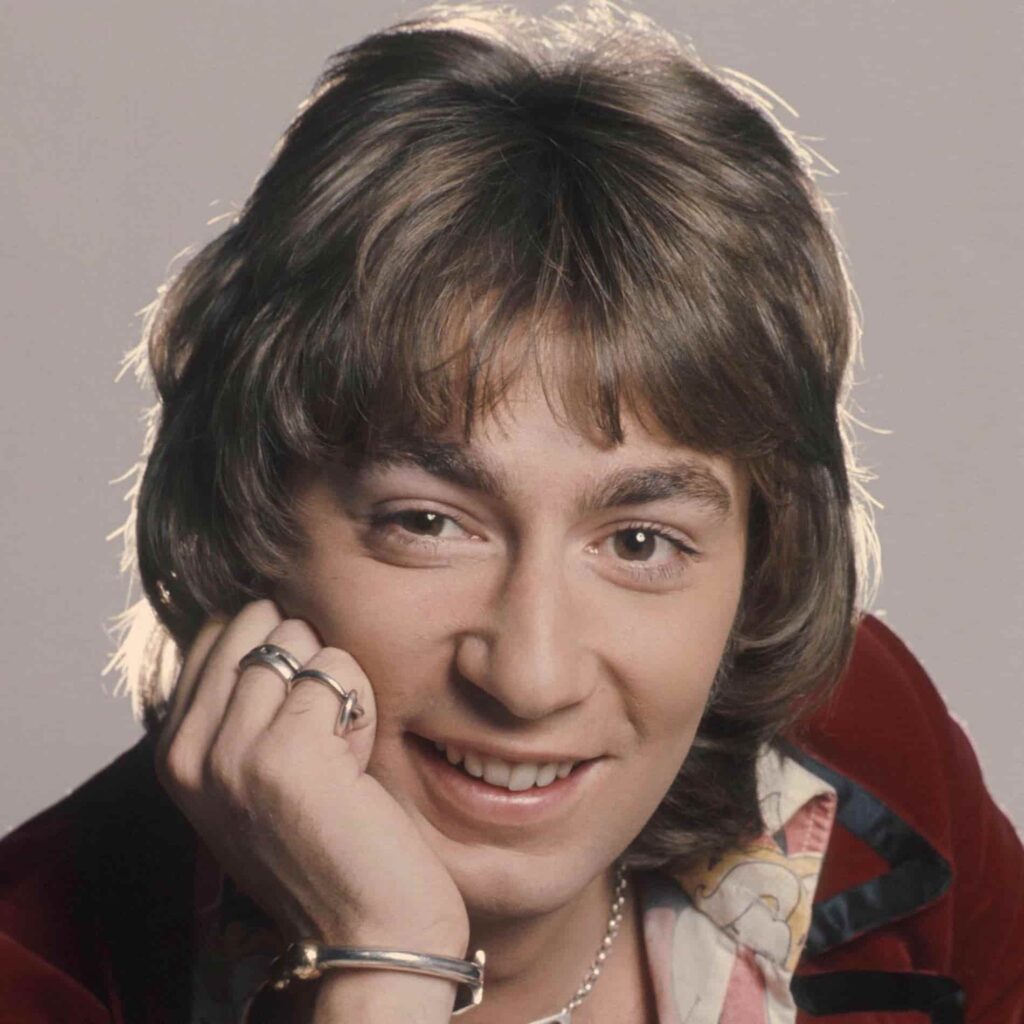
A Bright, Youthful Call to Dance That Captures the Spirit of Early ’70s Pop Optimism and Fleeting Romance
Released in 1973, “Do You Wanna Dance?” by Barry Blue arrived at a moment when British pop was rediscovering its playful, effervescent charm. The song climbed to No. 7 on the UK Singles Chart, marking one of the high points of Blue’s career as both a performer and a songwriter. Issued as a standalone single during his brief but memorable chart run, it followed the success of his earlier hit “Dancin’ (On a Saturday Night)”, helping cement his place in the glittering mosaic of early 1970s pop.
At first listen, “Do You Wanna Dance?” feels deceptively simple—an upbeat invitation wrapped in catchy melodies and a buoyant rhythm. But beneath its bright surface lies a snapshot of a very specific cultural moment. The early ’70s were a time when pop music leaned into escapism, offering listeners a reprieve from the uncertainties of the world. Blue’s song captures that fleeting sense of youthful spontaneity—the idea that, for a few minutes on the dance floor, nothing else matters.
The story behind the song is closely tied to Barry Blue’s own trajectory in the music industry. Before stepping into the spotlight, he had already built a reputation as a songwriter, contributing to hits for other artists. His transition into performing his own material gave his work a more personal edge. In “Do You Wanna Dance?”, one can hear not just a crafted pop tune, but a performer relishing the immediacy of connection with his audience. The song’s directness—its simple question repeated like a refrain—feels almost like a conversation across time, echoing through decades.
Musically, the track is rooted in the glam-pop sensibility of the era, though it leans less on flamboyance and more on warmth. There is a gentle innocence in its arrangement: crisp percussion, melodic hooks, and a vocal delivery that feels earnest rather than theatrical. It stands as a reminder that not all hits of the period needed spectacle; sometimes, sincerity was enough.
Lyrically, the meaning of “Do You Wanna Dance?” revolves around the universal language of connection. The act of dancing becomes a metaphor—an opening gesture, a step toward companionship, perhaps even the beginning of something deeper. There is no grand narrative, no dramatic twist; instead, the song thrives on its simplicity. It speaks to those small, almost forgotten moments—catching someone’s eye across a room, the nervous excitement of asking for a dance, the quiet hope that the answer will be yes.
For many who remember the era, songs like this are more than just recordings; they are fragments of memory. The sound of Barry Blue’s voice, the rhythm of the track, even the phrasing of its chorus can evoke images of dance halls, radio evenings, and the subtle glow of a time when music felt both personal and communal. It belongs to a generation of songs that did not aim to change the world, but rather to accompany it—to provide a soundtrack for ordinary moments that, in hindsight, feel extraordinary.
In the broader context of 1970s pop, “Do You Wanna Dance?” may not carry the weight of a defining anthem, yet its charm lies precisely in that modesty. It is a reminder that music does not always need to be profound to be meaningful. Sometimes, a simple question—set to the right melody—can linger far longer than expected.
Looking back now, the song stands as a gentle echo from another time, one that continues to resonate not because of its complexity, but because of its honesty. And perhaps that is its greatest achievement: it invites us, even now, to pause for a moment and remember what it felt like to say yes to something as simple—and as significant—as a dance.