
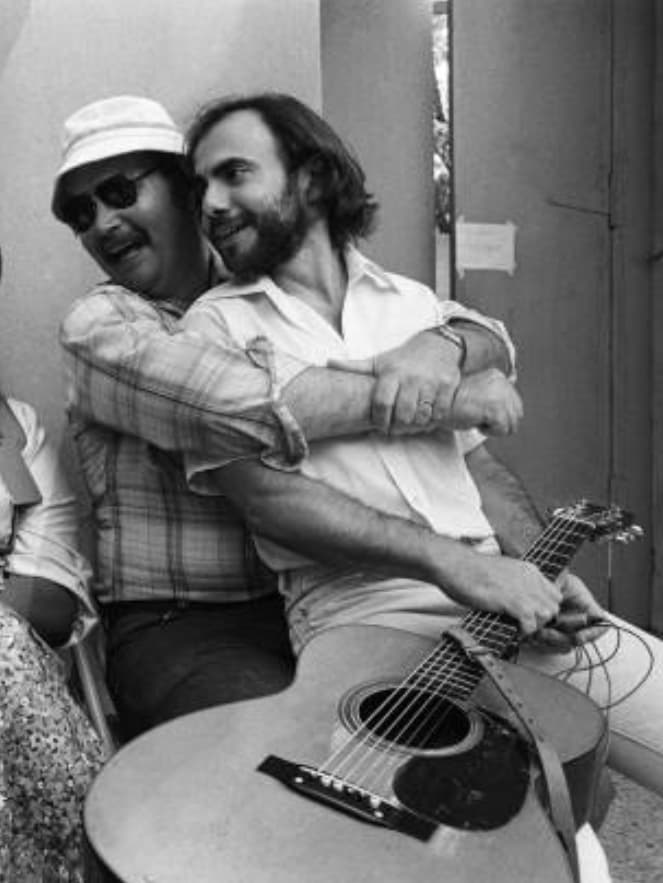
Steve Goodman on Austin City Limits 1978: A Timeless Portrait of Joy, Talent, and Resilience
Few performances capture the spirit of an artist as completely as Steve Goodman’s appearance on Austin City Limits in 1978. Decades later, the footage remains a powerful reminder of the remarkable talent, warmth, and enthusiasm that made Goodman one of the most beloved figures in American folk music.
At the time of the recording, Goodman was already recognized as an exceptional songwriter and performer. Best known for writing the classic song City of New Orleans, he possessed a rare ability to combine technical brilliance with an inviting, down to earth stage presence. The 1978 performance showcases those qualities in full. His guitar playing is agile and expressive, while his energy seems boundless. Every song is delivered with genuine passion, reflecting an artist who clearly loved being on stage.
What makes the performance especially moving today is the knowledge of how limited Goodman’s time would be. Diagnosed with leukemia as a young man, he spent much of his life confronting a serious illness. Yet little of that burden appears in the footage. Instead, viewers see a musician overflowing with vitality, humor, and determination. There is an unmistakable sense that Goodman embraced every opportunity to perform, creating music with a joy that continues to resonate nearly half a century later.
The recording also serves as a reminder of the respect Goodman earned throughout the music community. Over the course of his career, he formed friendships with many influential artists, including John Prine, Jimmy Buffett, Arlo Guthrie, David Bromberg, and Jethro Burns. Even Bob Dylan contributed to one of Goodman’s albums without receiving credit. Such connections reflected not only Goodman’s musical gifts but also the admiration he inspired among his peers.
Sadly, Steve Goodman passed away in 1984 at the age of just 36. His death marked the loss of a singular voice in American music, a performer whose creativity and charisma left a lasting impression on everyone fortunate enough to encounter his work. Yet the Austin City Limits appearance stands as evidence that his legacy extends far beyond the years he was given.
More than a historical recording, the 1978 performance is a celebration of an artist who refused to let adversity define him. It captures a musician at work, doing what he loved most, and doing it with extraordinary skill and infectious enthusiasm. Nearly fifty years later, Steve Goodman’s music continues to inspire, proving that great artistry can transcend time and that a life measured in years is not always measured by its impact.